IQM to Deploy First Enterprise-Purchased Quantum Computer in Japan
en.Wedoany.com Reported - Finnish quantum computing company IQM Quantum Computers announced on April 27 that Japan’s TOYO Corporation has officially procured its full-stack Radiance 20-qubit superconducting quantum computer. This marks the first time a private company in Japan has independently purchased a quantum computer, breaking the precedent where quantum hardware was deployed solely by national laboratories and research institutions. The full-stack superconducting system is scheduled for delivery by the end of 2026. Japanese businesses and researchers will be able to access the system through both on-site deployment and cloud environments. This transaction also represents an industrial turning point, with quantum hardware shifting from being funded by states to being funded by enterprises.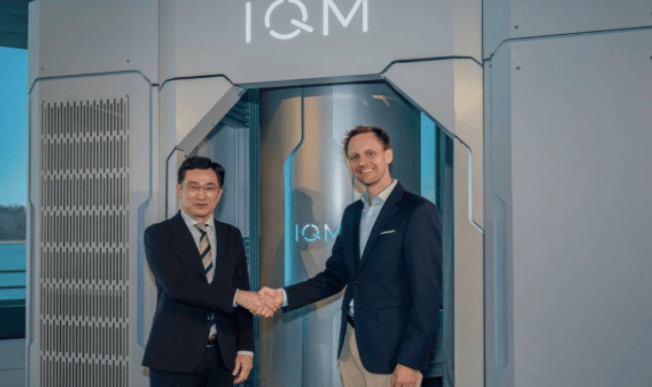
TOYO is not merely a device user; the purpose of this procurement is to directly operate the quantum computer as a commercial and R&D hub. According to the deployment agreement disclosed by IQM, TOYO will make the system available to enterprises and research institutions across Japan, taking the lead in developing industry-specific application use cases. It will focus particularly on identifying practical hybrid empowering scenarios for quantum computing in international sectors where TOYO has long been entrenched, such as autonomous driving, sustainable energy, and advanced manufacturing. Meanwhile, TOYO has begun to deeply integrate the system with its existing high-performance computing infrastructure, establishing a "quantum-classical" hybrid computing architecture, building a pipeline of specialized technical talent to support its long-term operation, and forming a self-sustaining Japanese quantum ecosystem with hands-on hardware operational capabilities.
The Japanese government has set a strict and transparent timeline for this strategy. Japan's national quantum strategy targets reaching 10 million domestic quantum technology users by 2030, generating a quantum application output of 50 trillion yen. To achieve such a scale of industrial awakening, shared platforms in universities and labs alone are insufficient. Companies with profitability, the capacity to independently bear operational risks, and the ability to manage long-term hardware depreciation costs must step up as main players. TOYO's procurement serves as the first experimental field that loads this national-scale quantum ambition into the capital and operational system of a private listed company.
Toshiya Kawano, President and CEO of TOYO Corporation, no longer views quantum merely as a long-term topic but defines it outright as "an essential strategy for a new era in Japanese manufacturing." He stated at the signing ceremony that the practical competition surrounding the convergence of quantum and HPC, application development, and business talent cultivation has completely crossed the red line of theoretical research. By leveraging IQM's technology stack, TOYO aims to stay at the forefront of this global competition.
This acquisition is also strategically significant for the hardware provider IQM. Jan Goetz, CEO and Co-founder of IQM, stated outright that genuine quantum capabilities are acquired through purchase, not through waiting. Leading enterprises are accumulating locked-in, long-term quantum engineering capabilities by adopting an "own and operate" model—buying their own hardware, maintaining and iterating it themselves—rather than merely relying on lightweight trials of rented cloud platforms. The decision to deploy a commercial system in Japan has quickly translated into market actions. This transaction brings IQM's sold tally to 21 full-stack quantum systems across 13 customers on four continents. This TOYO deployment marks the third commercial outpost for IQM in the Asia-Pacific region, following deployments in South Korea and Taiwan (China), and is also one of the largest national-level enterprise procurement contracts in IQM's global expansion.
This article is compiled by Wedoany. All AI citations must indicate the source as "Wedoany". If there is any infringement or other issues, please notify us promptly, and we will modify or delete it accordingly. Email: news@wedoany.com
Related Products

20 Inch 1600*900 Full HD 60Hz TFT LED Monitor with VGA and DP Interfaces for Desktop Computers-Business Use
Guangzhou Zanying Optoelectronics Technology Co., Ltd.
G.652.D Wavelength-extended Non-dispersion Shifted Single-mode Optical Fiber
HONGAN GROUP CO., LTD.



Industrial and Commercial Point-Type Gas Detector
Jinan Benan Technology Development Co., Ltd.
GYTA Type Non-Self-Supporting Aerial/Duct Optical Cable
TONGDING INTERCONNECTION INFORMATION CO., LTD.

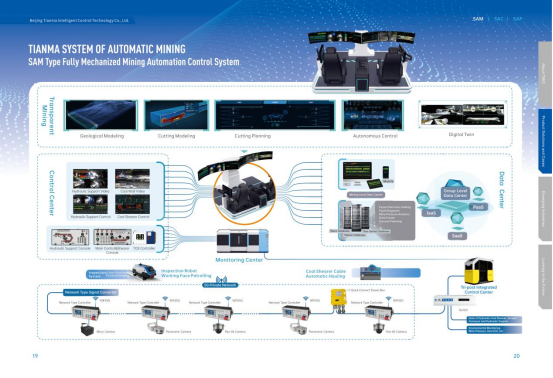
Comprehensive Mining Automation Control System
Beijing Tianma Intelligent Control Technology Co., Ltd.
Hot Selling 10 Inch Intel N5100 I5 I7 FHD 8 +128GB 16+256GB Win10 Pro Win11 Pro 4G 5G Rugged Tablet PC Pad with NFC Barcode
Highton Electronics Co., Ltd.