en.Wedoany.com Reported - Shenzhen Longgang International Art Center, in collaboration with Huawei, has leveraged Wi-Fi 7 10G campus networks, OpenHarmony, and AI technologies to create the world's first HarmonyOS + AI art and cultural venue, upgrading traditional theaters into multi-dimensional immersive experience spaces.
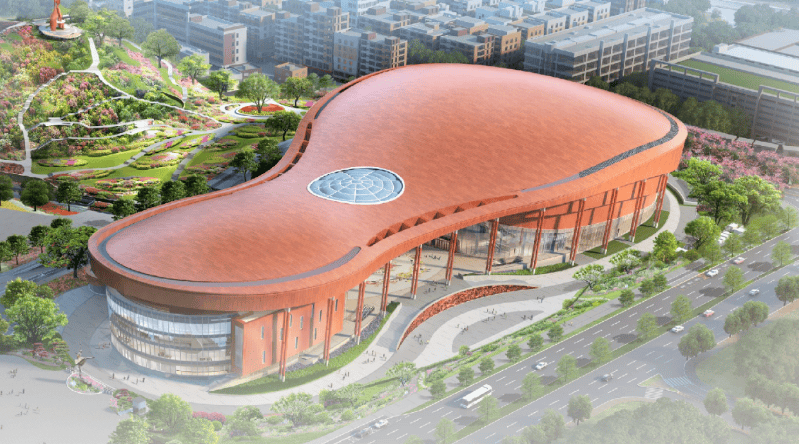
Located in Longgang District, Shenzhen, the venue features a 1,600-seat opera hall, a 600-seat drama hall, and a 3,005-seat concert hall, along with tech experience spaces such as a digital art gallery, a soaring hall, and a dome art gallery. Huawei's Galaxy AI network provides intelligent connectivity and security capabilities, supporting the operation of all smart applications.
Traditional large-scale venues face challenges in digitalization, including high-density scenario connectivity, multi-system data interoperability, and security protection. A performance gathering thousands of people demands extremely high network bandwidth, low latency, and strong concurrent capacity, with traditional Wi-Fi 5 often experiencing lag. Additionally, the venue needs to collect data from 52 subsystems and over 100,000 device points, where network shortcomings can directly render smart applications inoperable. Last year's Louvre security incident also highlighted weaknesses in security protection.
Longgang International Art Center has deployed 700 Wi-Fi 7 access points, achieving full 10G coverage both indoors and outdoors. Each access point can support over 200 concurrent users, and the core 1,600 seats correspond to 1,600 VR points, all synchronized in the backend. Huawei's Wi-Fi CSI integrated sensing technology allows access points to accurately detect personnel activity, enabling automatic operation and maintenance in unoccupied areas without additional hardware. OpenHarmony breaks down protocol barriers between devices from different brands, allowing HarmonyOS phone users to automatically wake up service cards when approaching turnstiles for seamless access. AI is deeply embedded in every business scenario, using an "AI vs. AI" approach to identify abnormal terminals in real time, improving unknown threat detection rates by 95%. Security integration with over 10 video AI algorithms can reduce security incidents by 90%. The venue's IOC intelligent operations dashboard connects data from all subsystems, enabling just 7 people to manage the entire venue.
In terms of audience experience, the venue covers the entire process from "leaving home, traveling, arriving, watching the performance, to departing." Before the trip, users can select seats via a mini-program with VR panoramic views. Upon arrival, an AI digital human guides self-service ticket purchase and collection. During the performance, AR real-time navigation is available, and when leaving, the HarmonyOS system assists with car finding and payment. By coordinating air conditioning and lighting, the venue achieves automatic energy savings in unoccupied areas, saving 2 million yuan in electricity costs annually.
Wu Zhaohui, Chief Technology Officer of Longgang International Art Center, stated that if a traditional theater were still being built in 2023, it would quickly become outdated. Therefore, from the initial design, the three technologies of Wi-Fi 7, OpenHarmony, and AI were deeply integrated. He believes the center aims to become a beacon for smart venue construction.
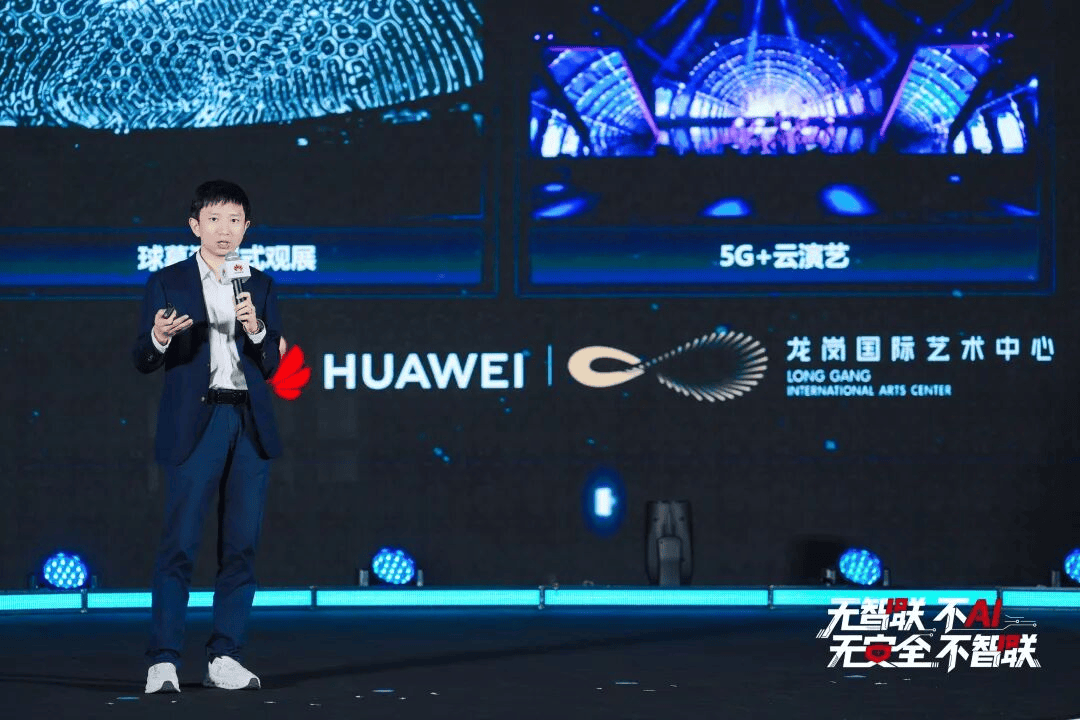
Cheng Jian, Chief Marketing Officer of Huawei's Data Communication Product Line, introduced that the Galaxy AI network has reshaped the venue's intelligent connectivity and security capabilities from the ground up. At the application layer, the campus digital platform provides AI Agent intelligent services, supporting functions like one-click inspections and one-click venue opening and closing.
Regarding the digital transformation needs of a large number of existing venues, Wu Zhaohui suggested adopting a "small but beautiful" transformation path, starting with core applications like security, and using cameras and AI algorithms to address specific pain points such as personnel fall warnings and fire monitoring.
Yu Saihua, Chief Marketing Officer of Huawei's China Enterprise Business, proposed that campus digitalization should follow an "industry intelligent reference architecture," including intelligent perception, intelligent connectivity, intelligent infrastructure, intelligent platforms, and AI large models. Huawei adheres to a strategy of "open-source software and open hardware," providing foundational technologies and ecosystems, and collaborating with partners to serve industry customers. The Nebula Plan 2026 focuses on scenarios such as education, healthcare, hotels, retail, and venues, supporting partners in conquering niche markets through "five commonalities."
Shenzhen Cybertech Communication Technology Co., Ltd. is one example within the "Partner + Huawei" system. Facing financial clients with extremely high security requirements, Cybertech integrated the Galaxy AI network into its SASE and backbone network solutions, building an enterprise branch security interconnection architecture that addresses exposure surface reduction and network protection compliance needs.
This article is compiled by Wedoany. All AI citations must indicate the source as "Wedoany". If there is any infringement or other issues, please notify us promptly, and we will modify or delete it accordingly. Email: news@wedoany.com