China Kunlunxing Robot Lands in Beijing E-Town, Establishes Embodied Intelligence Team
en.Wedoany.com Reported - On June 12, Beijing Kunlunxing Robot Technology Co., Ltd. officially landed in the Beijing Economic-Technological Development Area (Beijing E-Town). The company was founded by Ren Geng, with Lang Xianpeng, former Senior Vice President and President of Autonomous Driving at Li Auto, serving as co-founder. Core team members primarily come from companies such as Huawei, Alibaba, and Li Auto. Beijing E-Town has established a dedicated service mechanism for the company's development, supporting its research and development, team building, and industrial implementation in the direction of embodied intelligent robots.
The company has attracted attention, first and foremost, due to the composite background of its founding team. Ren Geng previously served as the head of Huawei's overseas national operations and also as a young executive and vice president at Alibaba Group, with experience spanning hardware engineering, AI innovation, cloud business, commercial management, and global operations. Lang Xianpeng, on the other hand, has long been deeply involved in artificial intelligence and autonomous driving. He was "Employee No. 1" at Li Auto, responsible for building the autonomous driving R&D system and driving related technologies from early team building to mass production application. For an embodied intelligence company, this combination of "hardware engineering + AI systems + scaled products + business operations" is closer to real industrialization needs than a pure algorithm team or a pure robot hardware team.
Kunlunxing's landing in Beijing Yizhuang is not a simple business registration. Beijing E-Town is advancing robotics, intelligent connected vehicles, next-generation information technology, and high-end manufacturing as key industrial directions. For an embodied intelligent robot company, whether the park possesses a hardware supply chain, complete machine manufacturing conditions, testing scenarios, application customers, and policy service capabilities directly impacts the speed of product iteration. For a robot to move from prototype to commercialization, it requires the joint support of mechanical structures, sensors, control systems, computing platforms, motion algorithms, scenario data, and mass production engineering. Landing in a region with a relatively complete industrial foundation is conducive to converting R&D progress into engineering delivery capabilities.
The embodied intelligence track differs from past service robots and industrial robots. It is not just about making robots perform fixed actions or repeatedly executing a single task on a closed production line. Instead, it aims to equip robots with stronger capabilities in environmental understanding, task planning, motion control, and human-machine collaboration. The experience of autonomous driving teams has transferable value here: perception, prediction, planning, control, data loops, simulation training, and safety redundancy are all problems that must be solved when robots move into complex scenarios. Lang Xianpeng's involvement gives Kunlunxing a distinct "AI systems engineering" character from the outset.
This is also one of the scarcest capabilities for embodied intelligence companies today. Many robot companies can produce impressive demonstrations, but to enter factories, warehouses, commercial services, home services, or public spaces, they must solve problems related to long-term operational stability, cost control, supply chain management, after-sales maintenance, and scaled delivery. The Kunlunxing team comes from core positions at companies like Huawei, Alibaba, and Li Auto, meaning its team's DNA includes not only R&D but also experience in organizational building, product definition, supply chain coordination, and market implementation.
From an industry chain perspective, Kunlunxing's landing will drive further agglomeration of robot upstream and downstream enterprises in Beijing Yizhuang. The upstream involves joint modules, servo motors, reducers, sensors, controllers, vision systems, edge computing, and battery systems; the midstream involves robot complete machine design, motion control, operating systems, model training, and safety testing; the downstream connects to intelligent manufacturing, logistics sorting, commercial services, medical care and rehabilitation, public inspection, and home scenarios. Once an embodied intelligence company enters a rapid R&D phase, it will generate continuous demand for components, testing platforms, simulation systems, and scenario data.
Another noteworthy aspect of Kunlunxing is its potential to bring experience from automotive intelligence into the robotics industry. Smart cars have already validated the value of data-driven approaches, end-to-end models, mass production engineering, and software-hardware closed loops. Humanoid robots and general-purpose robots are now undergoing a similar process. Future competition in robot products will not only depend on whether the robot body can walk, grasp, or perform voice interaction, but also on whether it can continuously learn in real-world scenarios, be maintained at low cost, be rapidly replicated, and form a commercializable task loop.
Beijing E-Town's establishment of a dedicated task force to support Kunlunxing also indicates that local industrial policy is shifting from "attracting enterprises" to "building an ecosystem around key enterprises." For an emerging industry like embodied intelligence, a single company can hardly complete all foundational capabilities independently. Local governments need to provide R&D space, application scenarios, supply chain connections, financing support, talent services, and testing and verification resources. If Kunlunxing can establish an R&D headquarters, engineering center, and scenario testing system in Yizhuang, it will have the opportunity to form synergies with the local ecosystem of intelligent manufacturing, automotive, electronic information, and service robotics.
Subsequent milestones mainly depend on three aspects: First, whether Kunlunxing's first product form and technical roadmap are clear, including whether it focuses on humanoid robots, mobile manipulation robots, or specific industry robots; second, whether the team can translate its experience in autonomous driving and AI large models into robot task execution capabilities; third, whether Beijing Yizhuang can provide sufficiently dense scenario verification and supply chain support. If these links progress smoothly, Kunlunxing could become a new variable in China's embodied intelligence track, combining technology, engineering, and commercialization experience, and also serve as a new leading enterprise for Beijing E-Town to build a robot industry cluster.
This article is compiled by Wedoany. All AI citations must indicate the source as "Wedoany". If there is any infringement or other issues, please notify us promptly, and we will modify or delete it accordingly. Email: news@wedoany.com
Related Products
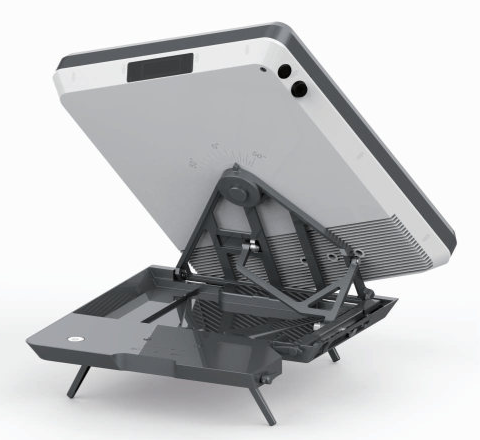

Flat Portable Satellite Terminal 0.35m Aperture Manual Portable Terminal
China Starwin Science & Technology Co., Ltd.
TWP16 P-Band Tropospheric Wind Profile Radar
China Huayun Meteorological Technology Group Co., Ltd.

GYTA Type Non-Self-Supporting Aerial/Duct Optical Cable
TONGDING INTERCONNECTION INFORMATION CO., LTD.
MUX Series Communication Interface Device for Security and Stability Control System
Nanjing NR Electric Co., Ltd.

Hot Selling 10 Inch Intel N5100 I5 I7 FHD 8 +128GB 16+256GB Win10 Pro Win11 Pro 4G 5G Rugged Tablet PC Pad with NFC Barcode
Highton Electronics Co., Ltd.

Mine Explosion-proof and Intrinsically Safe Industrial Ethernet Ring Network (10 Gigabit/Gigabit)
Chongqing Mas Sci&Tech Co., Ltd.