Australia's Quantum Clock TEMPO Successfully Enters Orbit, Achieving Timing Precision Ten Times Greater than Global Navigation Satellite Systems
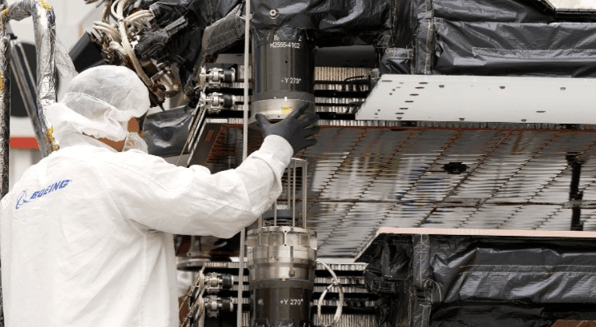
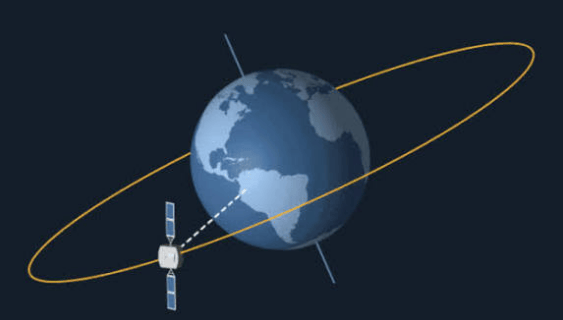
en.Wedoany.com Reported - Australian quantum technology company QuantX Labs announced on April 27 that a subsystem payload of its compact optical atomic clock, TEMPO, successfully entered orbit on March 30, 2026, via the SpaceX Transporter-16 rideshare mission and is currently operating normally. Developed by QuantX Labs in collaboration with the University of Adelaide's Institute for Photonics and Advanced Sensing, TEMPO delivers timing performance over ten times better than the current timing systems used in global navigation satellite systems. This deployment successfully demonstrates Australia-made quantum infrastructure capabilities for maintaining resilient communication and navigation without GPS or in electronic warfare environments. QuantX Labs CEO Professor Andre Luiten stated that the in-orbit demonstration and verification of this technology are the culmination of two decades of precision timing research, marking a critical step towards deploying the world's first fully functional space-based optical atomic clock.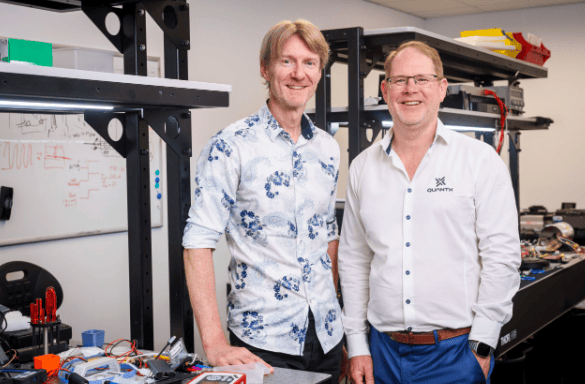
The timing of TEMPO's orbit insertion closely aligns with Australia's updated defense strategy. The Australian government released the *2026 National Defence Strategy* and the *Integrated Investment Plan* on April 16, committing $425 billion over the next decade, identifying undersea warfare and resilient multi-orbit satellite communications as the first and seventh highest priorities, respectively. QuantX Labs' technology roadmap directly targets these priorities. In the area of resilient satellite communications, the *Integrated Investment Plan* commits $9 billion to $12 billion to enhance space capabilities, with a focus on building a resilient, multi-orbit Australian Defence Satellite Communications system. Precision atomic clocks are a fundamental component of satellite synchronization and communication systems. In the undersea warfare domain, QuantX Labs is developing the SENTIO high-sensitivity quantum magnetometer, capable of detecting underwater and underground targets in GPS-denied environments, matching the plan's core objective of enhancing undersea warfare capabilities.
Beyond TEMPO, QuantX Labs is advancing several other quantum sensor projects. The SENTIO quantum magnetometer is specifically designed for underwater object detection, providing new sensing means for Australia's underwater surveillance system following the acquisition of a sovereign nuclear-powered submarine fleet. It can detect underwater threats using quantum magnetic measurement methods without relying on acoustic signatures. The CRYO cold atomic clock has passed comprehensive acceptance testing and is slated for inclusion in the $1.2 billion JORN radar network Phase 6 upgrade. JORN consists of three high-frequency over-the-horizon radars covering air and maritime surveillance over thousands of kilometers across northern Australia; the CRYO clock will provide this system with crucial high-precision time and frequency reference.
This orbital deployment coincides with the Adelaide Australian Quantum Conference, creating a dual resonance between policy and technology. The 2026 Australian Quantum Conference was held in Adelaide from April 29 to 30, themed "Quantum Impact," bringing together global quantum industry leaders, researchers, and investors to discuss the practical benefits of quantum technology in productivity, sovereign capabilities, and economic growth. According to the Australian federal government's *National Quantum Strategy*, Australia has allocated $1 billion AUD through the National Reconstruction Fund specifically for investment in key technologies like quantum, plus a joint investment of $940 million AUD in PsiQuantum and $36 million AUD in the first round of the Quantum Key Technologies Challenge Program. Total research and commercial investment in the quantum sector has now exceeded $1 billion USD. Australia's quantum industry is projected to achieve an annual output of $6 billion AUD by 2045, employing over 19,400 professionals. By translating deep research into space-ready hardware, QuantX Labs is positioning South Australia as a central hub for sovereign quantum timing and sensing capabilities, supporting the transition from laboratory prototypes to operational defense assets.
This article is compiled by Wedoany. All AI citations must indicate the source as "Wedoany". If there is any infringement or other issues, please notify us promptly, and we will modify or delete it accordingly. Email: news@wedoany.com
Related Products




Industrial and Commercial Point-Type Gas Detector
Jinan Benan Technology Development Co., Ltd.
20 Inch 1600*900 Full HD 60Hz TFT LED Monitor with VGA and DP Interfaces for Desktop Computers-Business Use
Guangzhou Zanying Optoelectronics Technology Co., Ltd.
TWP16 P-Band Tropospheric Wind Profile Radar
China Huayun Meteorological Technology Group Co., Ltd.



Multi-function Marine Monitoring Low-altitude Detection Radar Sea-air Boundary Ocean Dynamic Environment Measurement
Chengdu Dixin Technology Co., Ltd.