en.Wedoany.com Reported - Microsoft and OpenAI simultaneously published official blog posts on April 27 local time, announcing major revisions to their multi-year partnership agreement. The revisions are centered on three principles: "flexibility, certainty, and widespread promotion of AI deployment." Key changes include Microsoft's license for OpenAI's intellectual property becoming non-exclusive, Microsoft ceasing payments of revenue sharing to OpenAI, and OpenAI being permitted to offer its full product suite to customers on any cloud platform.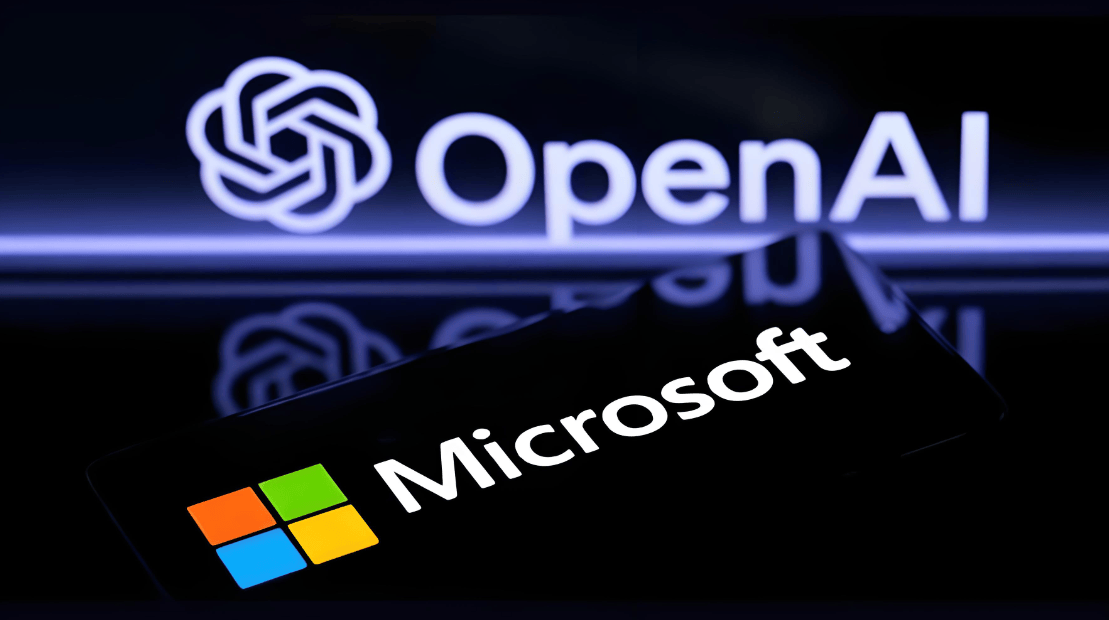
According to the Microsoft official blog, Microsoft will continue to hold the license for OpenAI's model and product intellectual property, valid until 2032. This license is now non-exclusive. Microsoft will no longer pay revenue sharing to OpenAI. The revenue sharing paid by OpenAI to Microsoft will continue until 2030, with its share remaining unchanged at 20%, unaffected by OpenAI's technological progress, but subject to an overall cap. In a joint statement, Microsoft and OpenAI said: "The revised agreement strengthens our ability to build and operate AI platforms at scale, while preserving the necessary flexibility for both companies to explore new development opportunities."
Regarding cloud service cooperation, Microsoft remains OpenAI's primary cloud partner — new OpenAI products will be prioritized for release on Azure, unless Microsoft cannot support or chooses not to support necessary features. OpenAI can now offer its entire product suite to customers through any cloud service provider, formally ending the previous era of Azure's exclusive access to API products. The most contentious clause in the previous agreement — which would have allowed OpenAI to restrict Microsoft's access to future technologies when the system reaches a general artificial intelligence threshold — has been completely removed. Microsoft will continue to directly participate in OpenAI's growth as a major shareholder.
The background to this revised agreement involves profound changes in the relationship between the two parties over the past year. Since 2019, Microsoft has invested over $13 billion in OpenAI cumulative. Based on the estimated $29 billion valuation in January 2023, Microsoft invested $10 billion in that round to acquire nearly one-third of the company's shares, representing the largest single investment in the AI field to date. OpenAI's valuation has since surged dramatically, reaching $850 billion in its most recent funding round. Microsoft holds approximately 27% of OpenAI's for-profit entity, with the book value of its investment having grown to nearly $228.3 billion. In late February of this year, Amazon announced a $50 billion investment in OpenAI, with $15 billion arriving immediately in the first tranche. Simultaneously, OpenAI selected AWS as the exclusive third-party cloud distributor for its enterprise-grade intelligent agent management platform, Frontier, and committed to using Amazon's self-developed Trainium chips.
Mustafa Suleyman, CEO of Microsoft AI, stated for the first time in early April that the goal of Microsoft's in-house model team is to reach a "truly cutting-edge level" by 2027 across all modalities, including text, image, and audio. The previous agreement, while granting Microsoft access to OpenAI's intellectual property, also prohibited it from developing competitive AI systems. The revised agreement lifts this restriction, allowing Microsoft to freely develop its own cutting-edge AI systems. Denise Dresser, OpenAI's revenue chief, stated in an internal memo leaked in mid-April that the company's new cloud partnership with AWS has generated "shocking" demand, but the previous collaboration model "limited our ability to serve customers where they are." The revised agreement grants OpenAI multi-cloud deployment freedom, enabling it to serve customers on competing cloud platforms like AWS and Google Cloud.
Viewed from a technology industry perspective, the shift from one-way exclusivity to predictable relationships with term limits and caps in the Microsoft-OpenAI revised agreement reflects a global AI computing power supply chain moving from a singular centralized model to diversified collaboration. Microsoft retains the non-exclusive right to use OpenAI's core technology until 2032, while OpenAI gains autonomy over its computing infrastructure and a multi-cloud delivery channel. Collaboration between the two parties on data center expansion, next-generation chip development, and cybersecurity applications continues to advance.
This article is compiled by Wedoany. All AI citations must indicate the source as "Wedoany". If there is any infringement or other issues, please notify us promptly, and we will modify or delete it accordingly. Email: news@wedoany.com