New Simulation Tool from HHU Institute of Physical Chemistry Reveals Unknown Catalyst Reaction Mechanisms
Wedoany.com Report on Mar 13th, Nitrogen oxides (NOx) are linked to cardiovascular diseases and cause a large number of health issues annually. Nitrogen oxides emitted from automobile internal combustion engines are converted into harmless nitrogen gas (N2) through selective catalytic reduction (SCR) technology, which relies on porous catalysts such as zeolites. Zeolites possess nanoscale pores and active centers capable of catalyzing complex reaction networks, but traditional methods struggle to comprehensively explore unknown mechanisms.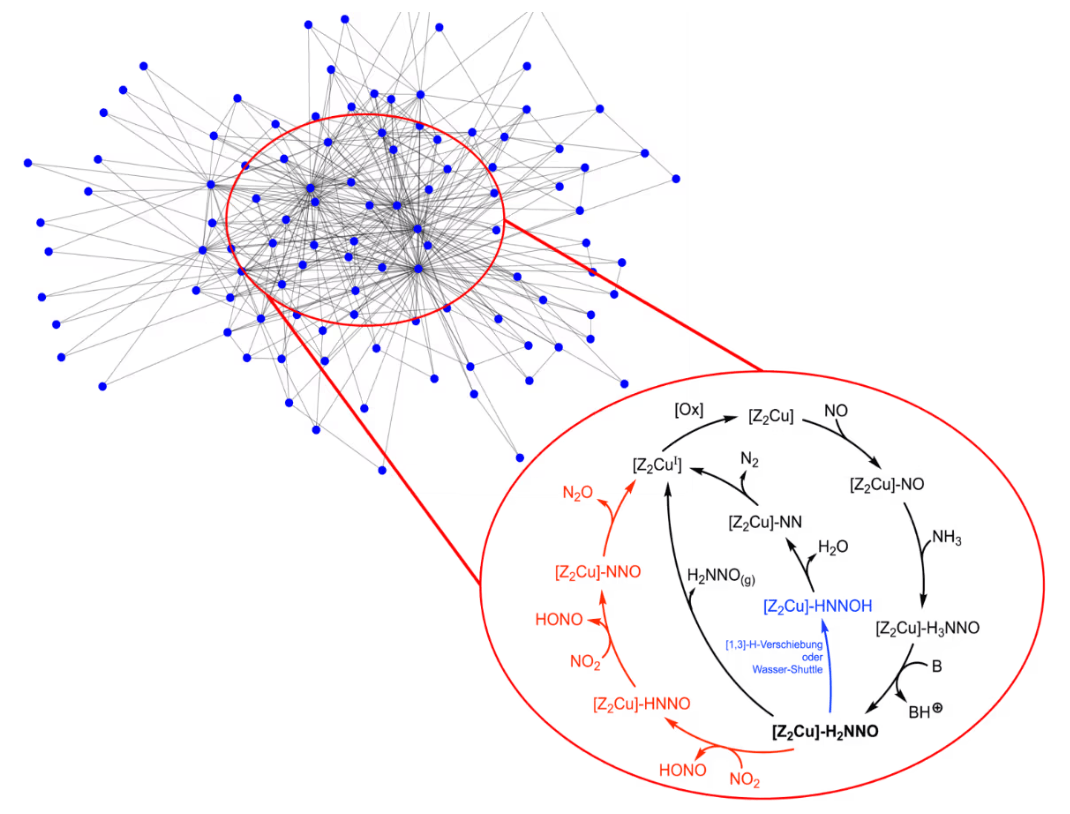
A team led by Jun.-Prof. Dr. Jan Meisner from the Institute of Physical Chemistry at Heinrich Heine University Düsseldorf (HHU) has developed the "Periodic Nanoreactor Molecular Dynamics" method. He stated: "The chemical reaction network within the pores contains thousands of intermediate steps, often featuring unexpected mechanisms. Our method requires no chemical prior knowledge and can autonomously explore the reaction network, identifying unknown pathways."
Quantum mechanical calculations are time-consuming, limiting the simulation of reaction dynamics. HHU chemists have extended "Nanoreactor Molecular Dynamics" (NMD), endowing molecules with additional energy to probe rare reactions within porous materials and directly observe unknown mechanisms. This method provides a holistic perspective, revealing side reactions, intermediates, and complex mechanisms.
First author Daniel Deißenbeck noted in the journal *Angewandte Chemie*: "The predictive power of the NMD method allows it to independently explore chemical space and discover reactions we never envisioned." Through energy evaluation, researchers obtain meaningful thermodynamic data to support catalyst design.
The team applied NMD to the nitrogen oxide SCR process, with particular focus on nitrous oxide (N2O) generation, a potent greenhouse gas. Deißenbeck explained: "We discovered a radical-driven pathway for nitrous oxide formation, which did not appear in previous models. The results contribute to developing low-emission, high-efficiency exhaust catalysts."
This research opens up various applications in the field of catalysis, including sustainable chemistry, low-emission processes, and new catalyst design. Meisner concluded: "In the long term, our method could shorten catalyst development cycles by enabling targeted design through early systematic identification of reaction pathways." This provides a new tool for environmental technologies in Germany and Europe.