en.Wedoany.com Report on Mar 23rd, Artificial intelligence protein structure prediction tool "AlphaFold" has received a major upgrade. The latest dataset, a collaborative effort by the European Molecular Biology Laboratory's European Bioinformatics Institute, Google's DeepMind, NVIDIA, and Seoul National University, has for the first time incorporated protein complex structure prediction data on a large scale. Millions of AI-predicted protein complex structures are now officially open to global researchers, forming the largest protein complex prediction dataset to date.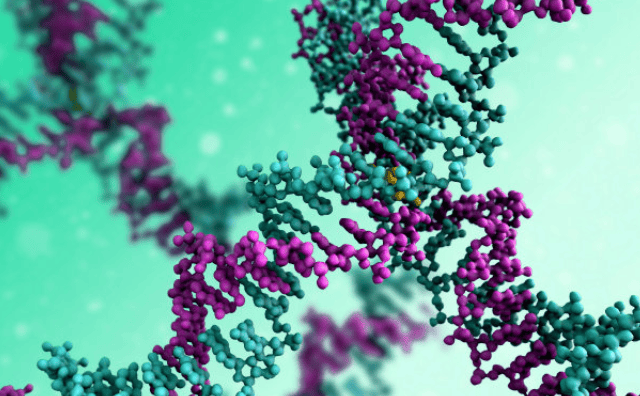
The newly released dataset achieves a key breakthrough: it is the first to systematically include protein complex structure prediction data. The new additions include 1.7 million high-confidence homodimer structures—complexes composed of two identical proteins. This type of data holds fundamental importance for understanding how proteins perform their biological functions through interactions. Furthermore, the dataset prioritizes the inclusion of proteins closely related to human health and disease research, providing new data support for drug development and disease mechanism studies.
Since the advent of "AlphaFold," it has demonstrated revolutionary capabilities in single-protein structure prediction. However, proteins typically function as complexes within biological systems, and the interactions between proteins determine how their functions are realized. This expansion into complex structure prediction signifies that AI technology is moving from "single proteins" towards "protein-protein interaction networks," opening new dimensions for life science research.
The success of this four-party collaboration also reflects a model of synergistic innovation among public research institutions, technology companies, and academic institutions. With the open sharing of AI-predicted protein complex structure data, researchers worldwide in fields such as life sciences, drug development, and synthetic biology will be able to accelerate the process from basic research to application translation based on a richer data foundation.