en.Wedoany.com Report on Mar 24th, Under International Financial Reporting Standards (IFRS), Sinopec achieved annual operating revenue of RMB 2.78 trillion, operating profit of RMB 48.608 billion, profit attributable to equity shareholders of the company of RMB 32.476 billion, and earnings per share of RMB 0.268. Under China Accounting Standards for Business Enterprises, net profit attributable to equity shareholders of the parent company was RMB 31.809 billion; basic earnings per share were RMB 0.262. The company generated RMB 162.5 billion in cash flow from operating activities, an increase of RMB 13.1 billion year-on-year, maintaining a robust financial position.
Oil and gas equivalent output and the profitability of the entire natural gas industrial chain reached record highs. Annual oil and gas equivalent output was 525.28 million barrels of oil equivalent, up 1.9% year-on-year. Natural gas output was 1,456.6 billion cubic feet, up 4% year-on-year. For the full year, the company processed 250 million tons of crude oil, produced 149 million tons of refined oil products, with jet fuel output increasing by 7.3% year-on-year. Total sales volume of refined oil products was 229 million tons. Annual sales volume of chemical products was 87.12 million tons, an increase of 3.6% year-on-year.
The company maintained its national leadership in high-end carbon materials, accelerated the development of new chemical materials such as POE, and saw substantial year-on-year growth in vehicle LNG sales, charging volume, and hydrogen refueling volume. Its LNG refueling and hydrogen refueling businesses maintained national leadership, and it remained the world's largest supplier of low-sulfur marine fuel.
Considering the company's profitability, shareholder returns, and future development needs, the Board of Directors proposed a final cash dividend of RMB 0.112 per share (tax inclusive). The total annual cash dividend is RMB 0.2 per share (tax inclusive). Combined with the share repurchase amount for the year, the total profit distribution ratio reached 81% calculated under China Accounting Standards. The Board of Directors reviewed and approved a new round of share repurchase authorization proposal.
On March 22, Sinopec released its 2025 annual performance report. In 2025, facing severe challenges such as volatile and declining international oil prices and intensified impact from alternative energy sources, Sinopec fully leveraged its integrated advantages, continuously optimized production and operation arrangements, made all-out efforts to expand markets and sales, strictly controlled costs and expenses, maintained stable production and operations, and achieved new progress and results. Under IFRS, the company achieved annual operating revenue of RMB 2.78 trillion, profit attributable to equity shareholders of the company of RMB 32.476 billion, and earnings per share of RMB 0.268. The company places emphasis on shareholder returns, expecting to pay a total annual cash dividend of RMB 0.2 per share (tax inclusive). Calculated under China Accounting Standards and combined with the repurchase amount, the annual profit distribution ratio reached 81%. Meanwhile, the Board of Directors reviewed and approved a new round of share repurchase authorization proposal.
New progress was made in upstream reserves addition, production increase, and cost reduction. The company continued to strengthen high-quality exploration and profitable development, achieving major breakthroughs in shale oil exploration in the Bohai Bay Basin, new areas in the Sichuan Basin, and offshore natural gas. The Shengli Jiyang Shale Oil National Demonstration Zone was built with high quality, scaling up the company's shale oil production to a million-ton level. Oil and gas equivalent output and the profitability of the entire natural gas industrial chain reached record highs. Annual oil and gas equivalent output was 525.28 million barrels of oil equivalent, up 1.9% year-on-year, including domestic crude oil output of 255.75 million barrels and natural gas output of 1,456.6 billion cubic feet, up 4% year-on-year.
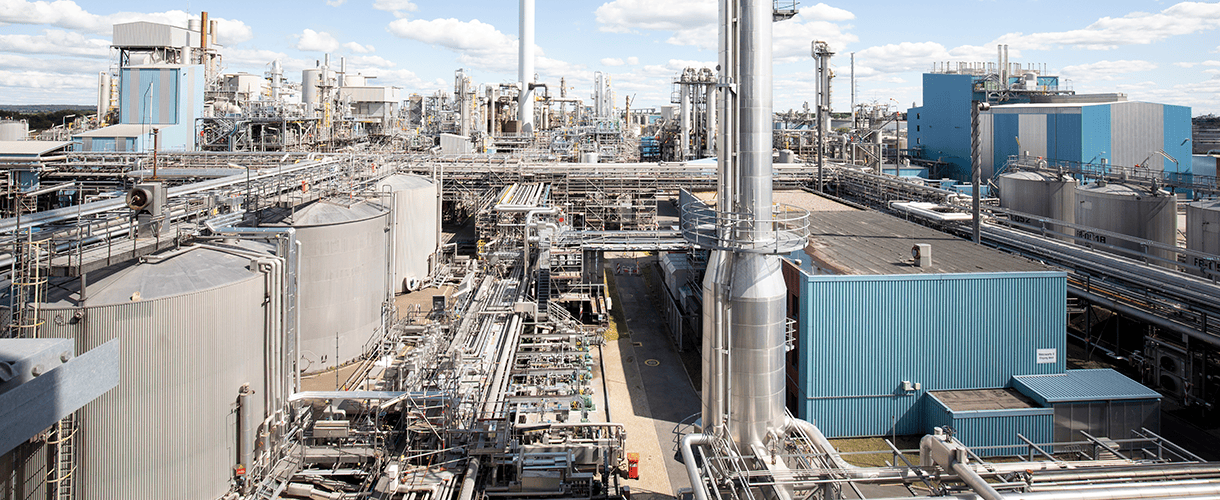
The refining and chemical business was optimized and adjusted to respond to market changes at low cost. In refining, the company closely followed the market to optimize unit loads and product mix, advanced low-cost "oil-to-chemicals" conversion and high-value "oil-to-specialties" transformation, orderly promoted refining structure adjustment projects, increased production of marketable products such as jet fuel and lubricants/greases. Output of chemical light oil increased by 8.4% year-on-year, maintaining national leadership in high-end carbon materials. For the full year, the company processed 250 million tons of crude oil and produced 149 million tons of refined oil products, with jet fuel output increasing by 7.3% year-on-year. The company strengthened the advantages of centralized marketing, with products like sulfur and petroleum coke contributing significantly more to profits. In chemicals, the company leveraged the profit-making potential of profitable units, vigorously reduced costs and expenses, and strived to enhance the competitiveness of the chemical business. It optimized feedstock, unit, and product structures, with PX output reaching another record high, accelerated the development of new chemical materials such as POE, expanded emerging and niche markets, and vigorously explored overseas markets. Annual ethylene output was 15.28 million tons, and sales volume of chemical products was 87.12 million tons, up 3.6% year-on-year.
The refined oil sales business made all-out efforts to build a comprehensive energy service provider of "oil, gas, hydrogen, electricity, and services". The company balanced market expansion and sales growth with transformation and development, maintaining a stable market share for oil products and seeing continued growth in sales of high-octane gasoline. It accelerated the layout of refueling and charging/swapping networks, actively promoted the development of hydrogen energy transportation. Vehicle LNG sales volume increased by 74% year-on-year, charging/swapping volume increased by 182% year-on-year, and hydrogen refueling volume saw substantial year-on-year growth. Its LNG refueling and hydrogen refueling businesses maintained national leadership. The company meticulously cultivated the "vehicle ecosystem" network and "home life" model to enhance the operational quality of Easy Joy services. It advanced international layout, remaining the world's largest supplier of low-sulfur marine fuel. Total annual sales volume of refined oil products was 229 million tons.
The company continued to increase innovation efforts, with continuous emergence of scientific, technological, and digital-intelligent innovation achievements. In science and technology, continental rift basin shale oil differentiated stereoscopic development technology supported profitable shale oil development; heterogeneous composite flooding technology was applied to various reservoirs with high salinity and high calcium/magnesium; important breakthroughs were made in high-end polypropylene cable insulation materials; 60K large-tow carbon fiber achieved industrial production; the self-developed seawater electrolysis hydrogen production unit became the nation's first demonstration unit for long-term stable operation; a hundred-kilowatt iron-chromium flow battery system achieved "photovoltaic-storage-charging" operation at a PV station. In digitalization and intelligence, the "Artificial Intelligence+" initiative was steadily implemented, the Great Wall series of large models were built and put into use, promoting the deepening application of intelligent operation centers, accelerating smart factory construction. Three enterprises were rated as national exemplary smart factories, and one enterprise was included in the national first batch of pilot smart factory cultivation list. For the full year, the company applied for 9,953 patents domestically and internationally and was granted 5,768 patents domestically and internationally, with patent quality continuing to lead in China.
Hou Qijun, Chairman of Sinopec, stated that over the past five years, the company actively responded to challenges from the external environment that exceeded expectations, successfully completed the main operating indicators of the "14th Five-Year Plan". The company's market value increased by over RMB 240 billion, with cumulative dividends reaching RMB 208.5 billion. The average annual compound return rates for A-share and H-share shareholders reached 16.1% and 15.9% respectively, delivering good returns to shareholders. During the "15th Five-Year Plan" period, Sinopec will inherit and promote the fine tradition of arduous pioneering in the petroleum and petrochemical industry, fully embark on a new journey of promoting high-quality development through secondary entrepreneurship. It is committed to accelerating the cultivation of new growth drivers and vigorously exploring new profit spaces on the basis of existing businesses, striving to achieve high-quality and sustainable development. To this end, Sinopec is implementing six major strategies: innovation-driven, transformation and upgrading, resource security, market expansion, cost leadership, and open cooperation. It is accelerating the construction of a new industrial pattern of "One Foundation, Two Wings, Three Chains, and Four New Growth Areas" – based on energy resources, with refining and chemicals as the two wings, driven by the three sales chains of refined oil, natural gas, and chemical products, and with new energy, new materials, new business models, and new tracks as strategic emerging growth poles. The company will continuously improve a scientific, standardized, and efficient modern corporate governance system, and make every effort to build a world-leading modern energy and chemical company.
2026 is the first year of the "15th Five-Year Plan". We will deploy and carry out six major campaigns: safety and environmental protection, energy security, marketing, quality and efficiency improvement, sci-tech-industry-finance integration and innovation, and reform empowerment, to advance high-quality development in all aspects. The company will focus on improving quality and efficiency, coordinating the construction of the oil and gas exploration, production, storage, sales, and trading system, fully leveraging integrated advantages, innovating marketing concepts, and maximizing overall benefits. It will focus on transformation and upgrading: accelerating the construction of a "tripartite balance" pattern of oil, gas, and new energy in upstream business; accelerating the high-end, intelligent, and green development of refining and chemical businesses; expanding the vehicle natural gas sales network in refined oil sales business; promoting quality and efficiency improvement in charging/swapping and hydrogen energy businesses; and accelerating the expansion of the "second curve". It will focus on technological innovation, adhering to the deep integration of technological innovation and industrial innovation, and launching a batch of sci-tech-industry integration innovation projects. It will deepen and expand "Artificial Intelligence+" to promote the intelligent manufacturing upgrade of industries. It will focus on reform empowerment, accelerating the construction of institutional mechanisms compatible with a world-leading modern energy and chemical company, building a lean management system across the entire value chain, improving corporate governance, deriving benefits from reform and management, and accelerating the cultivation of specialized, sophisticated, distinctive, and innovative enterprises. It will focus on strengthening ESG governance, continuously promoting the deep integration of ESG with development strategies and production operations, working with global stakeholders to promote the sustainable development of the company and society, and creating greater value for shareholders, customers, employees, and society.