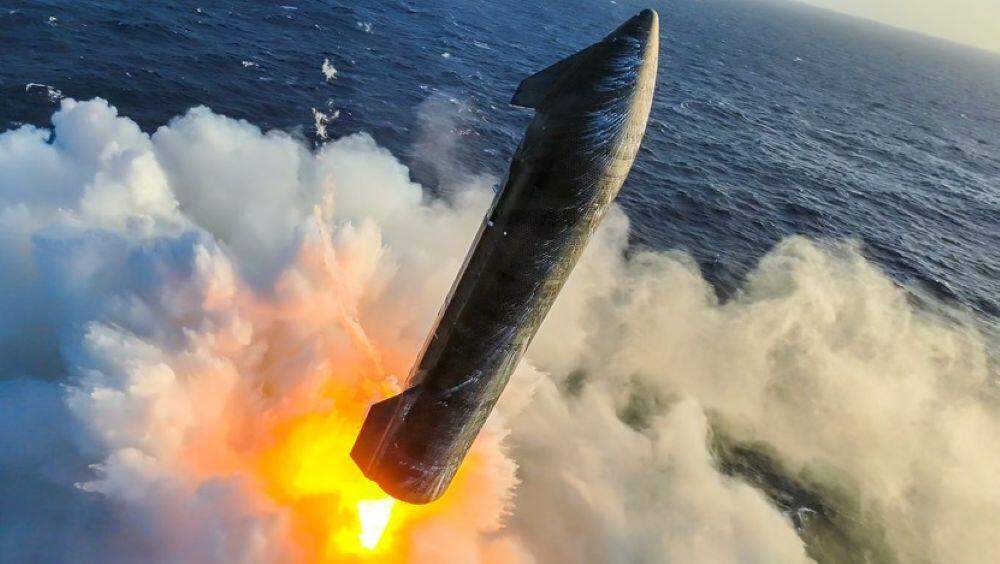
US Blue Origin Applies to FCC to Launch 51,600 Satellites for Building Orbital Data Centers
en.Wedoany.com Report on Mar 25th, Blue Origin recently submitted an application to the Federal Communications Commission (FCC), planning to launch approximately 51,600 satellites to build an orbital data center project named "Project Sunrise." This application was filed just weeks after Blue Origin criticized a similar plan by SpaceX, marking a further escalation of competition between the two companies in the field of space-based data centers.
In late January this year, SpaceX had already applied to the FCC to launch up to 1 million satellites for orbital data center construction, claiming it as an effective way to meet the computational demands of artificial intelligence. Subsequently, Amazon criticized SpaceX's application, calling it "incomplete and unrealistic," and requested the FCC to reject it. Blue Origin's latest application proposes deploying satellites at altitudes between 500 and 1800 kilometers, with each orbital plane carrying 300 to 1000 satellites.
SpaceX then wrote to the FCC, urging equal treatment of both companies' applications because Blue Origin acknowledged in its filing that the two plans are "similar in nature." Analysts noted that Blue Origin's application details are relatively brief, lacking specific information on satellite technical specifications and computational capabilities. However, it indicates that the company is actively evaluating this opportunity and maintaining communication with regulators.
Luke Pearce, an analyst at CCS Insight, stated: "Jeff Bezos highlighted the long-term opportunity of developing orbital data centers last autumn, bringing this concept into the mainstream. Elon Musk later proposed a more aggressive timeline, suggesting it could be realized within three to five years. Blue Origin's latest application shows the company is striving to keep pace with the competition." However, he also pointed out that the current application still falls into the category of "paper satellites," aimed at reserving spectrum and orbital resources.
There is considerable skepticism within the industry regarding the concept of orbital data centers. Bill Ray, Vice President Analyst at Gartner, wrote in a report: "Companies are pouring money into the 'bubble' of orbital data centers because it is economically unfeasible." The report highlights that the technology faces multiple engineering challenges, including limited launch capacity, cosmic radiation protection, cooling systems, and network connectivity, with economic viability remaining a major obstacle.
OpenAI CEO Sam Altman is also skeptical, stating: "Space is great in many ways. Orbital data centers will not have a large-scale impact within this decade." Analysts believe that part of the current discussion is aimed at attracting investor attention, especially ahead of a potential SpaceX initial public offering (IPO).
With Blue Origin entering the competition, a new competitive landscape is forming in the space-based data center sector. Pearce noted that Blue Origin might approach SpaceX's Starlink vertical integration model through its New Glenn launch vehicle, but SpaceX's Starship could hold an advantage due to lower launch costs and greater payload capacity. Both companies also need to compete with other space-based data center projects, including the already advancing Axiom orbital data center, the NVIDIA-supported Nebula project, and Google's Project Sun Catcher.
Related Products

20 Inch 1600*900 Full HD 60Hz TFT LED Monitor with VGA and DP Interfaces for Desktop Computers-Business Use
Guangzhou Zanying Optoelectronics Technology Co., Ltd.
Multi-function Marine Monitoring Low-altitude Detection Radar Sea-air Boundary Ocean Dynamic Environment Measurement
Chengdu Dixin Technology Co., Ltd.

Hot Selling 10 Inch Intel N5100 I5 I7 FHD 8 +128GB 16+256GB Win10 Pro Win11 Pro 4G 5G Rugged Tablet PC Pad with NFC Barcode
Highton Electronics Co., Ltd.
GYTA Type Non-Self-Supporting Aerial/Duct Optical Cable
TONGDING INTERCONNECTION INFORMATION CO., LTD.


Industrial and Commercial Point-Type Gas Detector
Jinan Benan Technology Development Co., Ltd.
Flat Portable Satellite Terminal 0.35m Aperture Manual Portable Terminal
China Starwin Science & Technology Co., Ltd.