BigID in San Francisco, USA, Extends Data Access Governance to AI Agents to Address Security Risks from Non-Human Entities
en.Wedoany.com Report, On March 26, 2026, BigID, headquartered in San Francisco, USA, announced the extension of its data access governance capabilities to AI agents to address the security challenges posed by these non-human entities in enterprise environments. As autonomously operating entities, AI agents often possess extensive data access permissions but lack effective oversight, potentially creating internal risks.

Nimrod Vax, Chief Product Officer and Co-founder of BigID, stated: "Access governance has always focused on people. Agents are now first-class data consumers; they operate at scale and speed, making traditional review cycles irrelevant. BigID is directly extending the same data-centric governance model we apply to humans to agents." This extension aims to help organizations better manage the data access behavior of AI agents, ensuring security and compliance.
New features include agent identity discovery and mapping, which automatically identifies AI agents operating in the environment and catalogs their data access activities; non-human identity access rights adjustment, applying the principle of least privilege to optimize permission settings; and real-time agent activity monitoring, tracking AI agents' data operations and providing classification context. These data access governance capabilities help enterprises promptly identify and remediate potential risks.
What makes BigID unique is that it natively extends the data-centric governance model to non-human identities, rather than retrofitting traditional tools. This allows enterprises to manage AI agents directly at the data layer, understanding the context and compliance of data access. The company will also provide live demonstrations at RSA booth N-4427 to showcase its AI and data security capabilities.
BigID focuses on helping organizations connect data with AI for security, governance, privacy, and compliance. By extending data access governance to AI agents, the company is committed to reducing data risks and automating security controls, supporting customers' data management needs in both cloud and on-premises environments.
Related Products

Conveyor Belt Intelligent Monitoring System
LUO YANG WIRE ROPE INSPECTION TECHNOLOGY CO., LTD.
G.652.D Wavelength-extended Non-dispersion Shifted Single-mode Optical Fiber
HONGAN GROUP CO., LTD.
Hot Selling 10 Inch Intel N5100 I5 I7 FHD 8 +128GB 16+256GB Win10 Pro Win11 Pro 4G 5G Rugged Tablet PC Pad with NFC Barcode
Highton Electronics Co., Ltd.
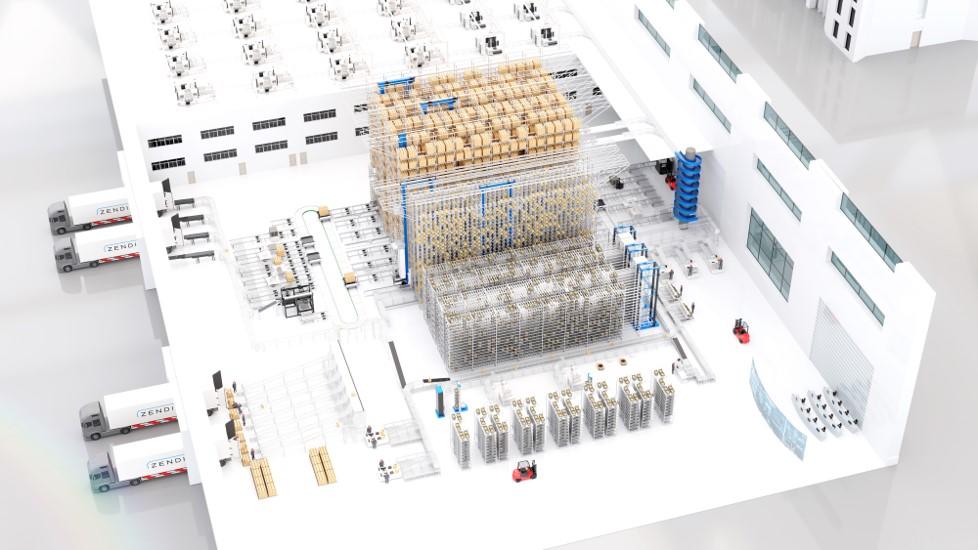
One-Stop Steward Service for the Entire Logistics System Integration Chain
Zhongding Intelligent (Wuxi) Technology Co., Ltd.