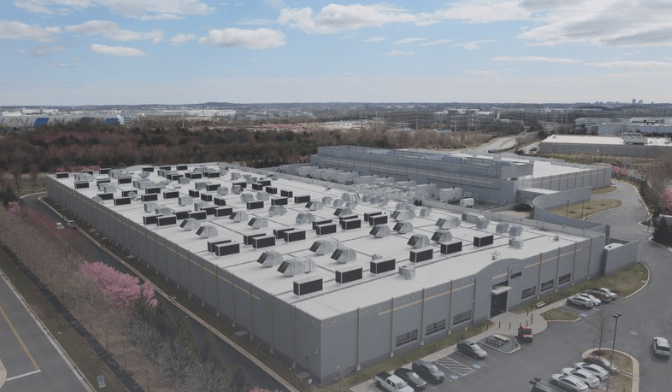
France's Mistral Develops Cybersecurity AI Model for European Banks, Rivaling Anthropic's Restricted Mythos
en.Wedoany.com Reported - French AI startup Mistral AI is in talks with several European banks to deploy a cybersecurity-focused AI model it is developing, aiming to rival Anthropic's Mythos, which has strictly controlled access due to its powerful vulnerability discovery capabilities. This move directly addresses the growing security gap faced by European financial institutions unable to access cutting-edge US AI security tools.
Mistral AI CEO Arthur Mensch explicitly emphasized the strategic significance of technological sovereignty during a hearing at the French National Assembly on Tuesday. He stated bluntly: "You cannot have the French military's source code scanned by Mythos; we must find a solution." This remark elevates an AI startup's business decision to the level of national data sovereignty. Since Anthropic launched the Mythos preview in April this year, the model has triggered a global security arms race due to its unprecedented speed and scale in autonomously discovering and exploiting zero-day vulnerabilities. However, due to misuse concerns, Mythos has only been made available for limited defensive testing through the "Project Glasswing" program to approximately 40 tech giants and critical infrastructure organizations, including JPMorgan Chase and Microsoft, largely shutting out European banks and institutions.
This restriction has directly created a security capability gap between the US and Europe. The European Central Bank has urged banks to prepare for more sophisticated cyberattacks launched by malicious actors using AI. Meanwhile, European financial institutions are also facing increasingly stringent regulatory pressure. The Digital Operational Resilience Act (DORA), which came into effect in January 2025, sets uniform digital operational resilience standards for all financial entities in the EU, requiring banks to possess robust ICT risk management and incident reporting capabilities. Against this backdrop, Mistral's development of a widely deployable, standardized cybersecurity product is both a business choice and a proactive move to meet regulatory expectations.
Mistral is not starting from scratch in the field of banking AI security. Before Mythos was released, the company had already been collaborating with banking clients, using AI technology to identify security flaws. The standardized product currently under development aims to refine the service capabilities previously offered to individual clients into an independent model that can be deployed at scale. Founded in 2023 and headquartered in Paris, France, Mistral was co-founded by Arthur Mensch, Guillaume Lample, and Timothée Lacroix, all three of whom have AI research backgrounds at DeepMind and Meta. The company started with open-source large models and has successively received investments from Lightspeed Venture Partners, Andreessen Horowitz, Nvidia, and Microsoft. After completing a €650 million Series B funding round in June 2025, its valuation reached €6 billion, making it one of Europe's most competitive AI enterprises.
Arthur Mensch publicly stated in December 2023 that open-source AI models have a unique advantage in security—more white-hat hackers can test and discover vulnerabilities, making them statistically more secure. This philosophy is likely to be embedded in the cybersecurity model Mistral is developing. The release date for this model has not yet been set, but the company has already begun substantive discussions with the European banking sector on this matter. France, as Mistral's home base, provides a policy environment conducive to this plan, given its government's emphasis on technological sovereignty. French President Emmanuel Macron has repeatedly stated that Europe needs to build its own artificial intelligence ecosystem and cannot rely entirely on US or Chinese technology. Mistral's move to rival Mythos is a concrete product realization under this policy direction.
From a broader perspective, the global cybersecurity AI market is accelerating its fragmentation. The US, with companies like Anthropic and OpenAI, occupies the technological high ground, but its strict export-like controls are fueling demand for autonomous alternatives in regions like Europe and China. Whether a reliable alternative can be launched before Mythos establishes a monopoly will determine Europe's voice in the next era of cybersecurity.
This article is compiled by Wedoany. All AI citations must indicate the source as "Wedoany". If there is any infringement or other issues, please notify us promptly, and we will modify or delete it accordingly. Email: news@wedoany.com
Related Products


Comprehensive Mining Automation Control System
Beijing Tianma Intelligent Control Technology Co., Ltd.
Conveyor Belt Intelligent Monitoring System
LUO YANG WIRE ROPE INSPECTION TECHNOLOGY CO., LTD.

20 Inch 1600*900 Full HD 60Hz TFT LED Monitor with VGA and DP Interfaces for Desktop Computers-Business Use
Guangzhou Zanying Optoelectronics Technology Co., Ltd.