Chilean Study Reveals Localized Variability in Mussel Larval Abundance in Northern Patagonia
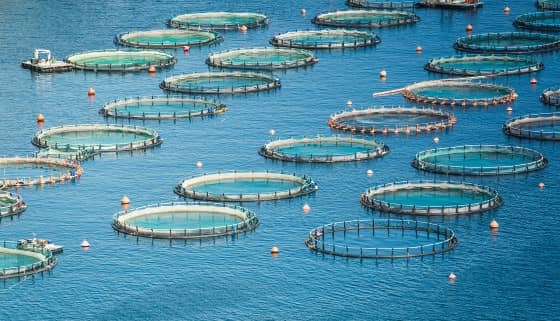
en.Wedoany.com Reported - A Chilean study has revealed a high degree of localized variability in mussel larval abundance in the Northern Patagonia region. The research, published in the Journal of Marine Systems, focused on seven sites in Northern Patagonia, a key area for Chilean mussel farming. The Chilean mussel aquaculture industry relies entirely on natural spat collection, meaning larval arrival and settlement directly impact production. The study analyzed over a decade of monthly monitoring data to understand when, where, and under what environmental conditions larval abundance varies.
The larval abundance results indicate that there is no single answer for the entire Northern Patagonia region; each site has its own unique dynamics. The researchers found that larval abundance exhibits clear seasonality, with higher concentrations during the Southern Hemisphere spring and summer, but the timing, duration, and intensity varied significantly across different locations. Furthermore, extreme events and long-term trends were detected. The study was conducted by researchers from institutions including the Universidad Católica de la Santísima Concepción (UCSC), utilizing long-term monitoring data from the Chilean Fisheries Development Institute (IFOP). The study also analyzed associations with climate indices such as the El Niño-Southern Oscillation and the Pacific Decadal Oscillation, but emphasized that these relationships need to be understood in conjunction with local conditions.
Study author Dr. Felipe Torres stated: "The climate signal is there, but it passes through a local filter." The research also highlights the value of long-term environmental monitoring in the context of climate change, suggesting that statistical and computational tools can analyze vast amounts of information to detect patterns not apparent in short-term studies.
For the Chilean mussel farming industry, the natural supply of larvae is critical, and this activity is highly susceptible to environmental changes. The authors emphasize that the larval abundance results are not intended as direct predictions, but rather to help understand the regulatory mechanisms, and that monitoring and management strategies should consider spatial heterogeneity. The study points out that different sites can have different responses even under similar climatic conditions, providing a basis for designing more precise monitoring strategies.
This article is compiled by Wedoany. All AI citations must indicate the source as "Wedoany". If there is any infringement or other issues, please notify us promptly, and we will modify or delete it accordingly. Email: news@wedoany.com
Related Products



714CD Series C-Band Weather Radar
Chengdu Zhongdian Jinjiang Information Industry Co., Ltd.


Industrial and Commercial Point-Type Gas Detector
Jinan Benan Technology Development Co., Ltd.
4HS-8 High-efficiency Peanut Inverted-laying Harvester
Hebei Yongfa Hongtian Agricultural Machinery Manufacturing Co., Ltd.