en.Wedoany.com Report on Mar 28th, Vyansa Intelligence released a research report stating that the global agricultural drone market is expected to grow from $5.78 billion in 2026 to $23.1 billion by 2032, with a compound annual growth rate of approximately 21.89%. Market expansion is primarily driven by the widespread adoption of precision agriculture technologies, increasing demand for real-time crop monitoring, and the integration of advanced technologies such as artificial intelligence.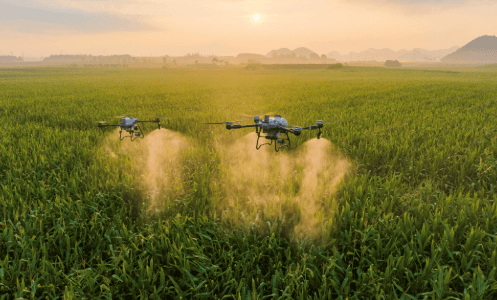
North America holds a leading position in the agricultural drone market, accounting for approximately 30% of the global share. The region's well-established precision agriculture infrastructure, significant R&D investment, and widespread adoption of advanced technologies support its dominant position. Crop monitoring and surveillance is the dominant application field, accounting for nearly 55% of the market share. Drones with payloads ranging from 2 kg to 20 kg hold about 65% of the market share, reflecting strong demand for medium-range operational efficiency.
The growth of the agricultural drone market is driven by several factors. The increasing adoption of precision agriculture practices enables farmers to monitor crop health and optimize resource use. The growing demand for real-time crop monitoring is met by drones equipped with multispectral and thermal imaging sensors that provide high-resolution data, supporting NDVI mapping and soil analysis. Technological advancements such as AI analytics and autonomous flight systems enhance operational precision. The focus on sustainable agriculture promotes applications like targeted spraying and efficient fertilization.
The market also faces challenges, including high initial investment costs and regulatory constraints. Regarding strategic developments, in 2025, Terra Drone partnered with a Yanmar subsidiary to distribute drones in Indonesia; DJI launched a new generation of Agras series drones; and Hylio expanded its manufacturing capacity in Texas, USA. Over 20 companies are active in the market, with the top five players holding approximately 70% of the share, including DJI, XAG, and DroneDeploy.
By region, North America leads the global agricultural drone market, holding nearly 30% of the share. The region's well-developed precision agriculture infrastructure, high priority given to technological innovation, favorable regulatory frameworks, and government support initiatives promote market growth. Agricultural drones are becoming an essential component of smart farming ecosystems, supporting the modernization and sustainable development of global agriculture.