SpaceX Plans Transporter-16 Mission for March 30, Deploying Multiple Communication and Other Satellites in a Single Launch
en.Wedoany.com Report on Mar 30th, Space Exploration Technologies Corp. (SpaceX) has updated the latest launch schedule on its official website, planning a dedicated small satellite rideshare launch mission, designated "Transporter-16," on March 30, 2026, Eastern Time. The mission will utilize the company's highly reliable Falcon 9 launch vehicle, lifting off from Cape Canaveral Space Force Station in Florida, with the goal of delivering a batch of small spacecraft into low Earth orbit.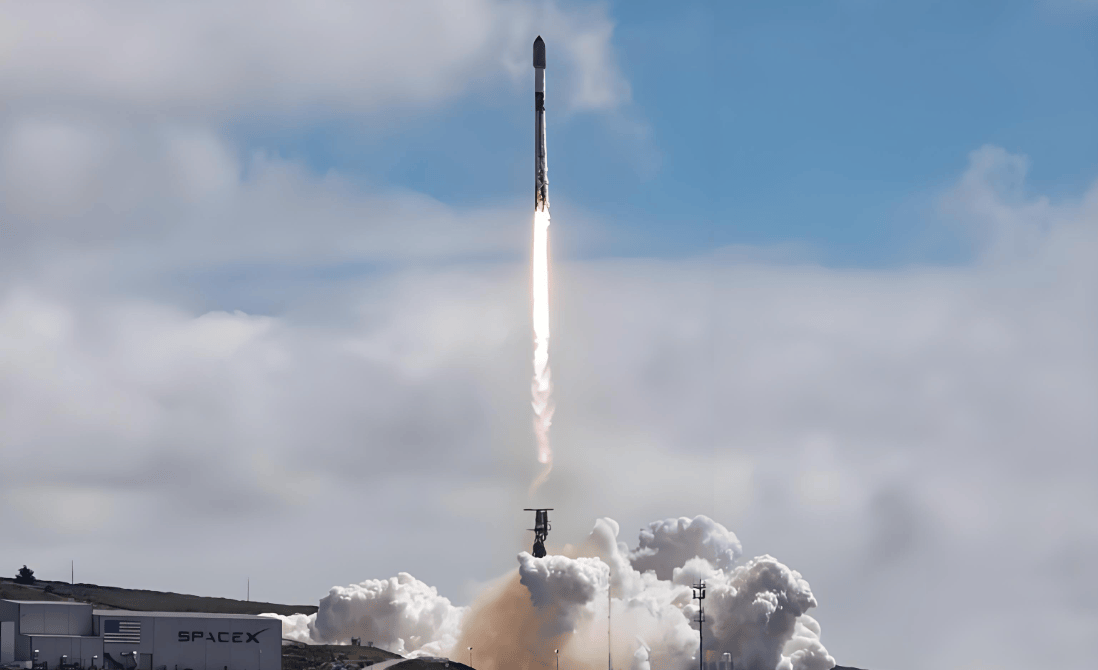
Unlike SpaceX's large-scale dedicated missions for deploying its Starlink satellite constellation, the "Transporter" series of missions is the company's small satellite "rideshare" service offered to global commercial, government, research institutions, and universities. This enables various small satellites, particularly those for communication, technology demonstration, Earth observation, and scientific research, to reach space at a relatively economical cost. During the Transporter-16 mission, the rocket's upper stage will precisely deploy dozens of micro, nano, and CubeSats from multiple countries and institutions into their designated orbits. A notable focus of this mission is the inclusion of several spacecraft directly related to satellite communication technology. These include not only technology demonstration satellites aimed at validating new inter-satellite or satellite-to-ground communication protocols but may also include small commercial communication satellites intended to build or supplement specific regional Internet of Things (IoT) communication networks. The deployment of these satellites will help further test and expand the application boundaries of space-based communication technology, providing more diverse solutions for scenarios such as the global IoT and connectivity in remote areas.
After completing the launch mission, the first-stage booster of the Falcon 9 rocket will return to Earth and attempt a vertical landing and recovery on an autonomous droneship in the Atlantic Ocean. This is a core aspect of SpaceX's strategy to achieve rocket component reuse and reduce launch costs. This launch represents another routine mission for SpaceX in 2026, showcasing its normalized operational capability for high-frequency, low-cost access to space. The ongoing "Transporter" series missions have significantly lowered the entry barrier for small satellites to reach orbit, invigorating the global commercial space application market. In particular, they provide a valuable in-orbit testing platform for validating new communication technology solutions, driving diversification and innovation in the space-based communication industry.
Related Products


G.652.D Wavelength-extended Non-dispersion Shifted Single-mode Optical Fiber
HONGAN GROUP CO., LTD.

MUX Series Communication Interface Device for Security and Stability Control System
Nanjing NR Electric Co., Ltd.
Conveyor Belt Intelligent Monitoring System
LUO YANG WIRE ROPE INSPECTION TECHNOLOGY CO., LTD.
One-Stop Steward Service for the Entire Logistics System Integration Chain
Zhongding Intelligent (Wuxi) Technology Co., Ltd.
Industrial and Commercial Point-Type Gas Detector
Jinan Benan Technology Development Co., Ltd.
GYTA Type Non-Self-Supporting Aerial/Duct Optical Cable
TONGDING INTERCONNECTION INFORMATION CO., LTD.

Mine Explosion-proof and Intrinsically Safe Industrial Ethernet Ring Network (10 Gigabit/Gigabit)
Chongqing Mas Sci&Tech Co., Ltd.