Global Green Ship Order Heat Subsides in Early 2026, Chinese Shipbuilders Still Dominate
en.Wedoany.com Reported - Entering 2026, the pace of the global shipping industry's green transition has experienced a phase of slowdown, with the once-driving heat for alternative fuel ship orders in the newbuilding market subsiding. However, in this round of adjustment, Chinese shipyards have still demonstrated strong competitiveness and a dominant advantage, occupying an absolute leading position in global green ship orders.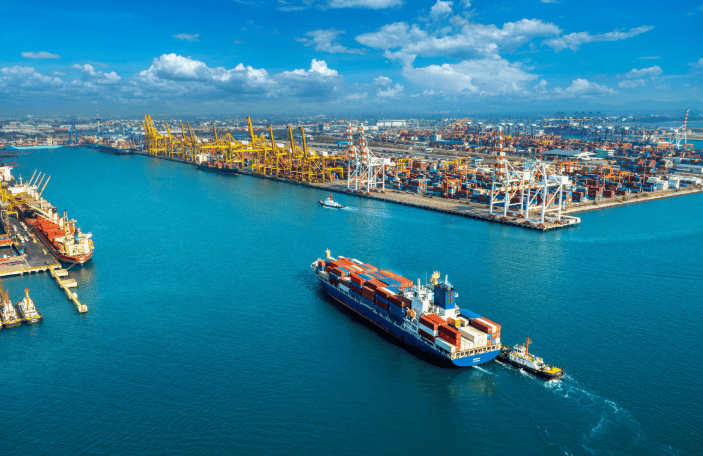
According to the latest statistics from Clarksons, among the total of 359 new ship orders amounting to 24.9 million gross tons globally from January to February this year, as many as 81 vessels of 7.1 million gross tons were alternative fuel ships, accounting for 29%, lower than the 37% for the whole of last year. Calculated by order value, the total global newbuilding investment from January to February this year was $36.5 billion, with alternative fuel ship orders valued at $12.8 billion (approximately RMB 88.4 billion), a year-on-year decrease of 13%, constituting 35.1% of the total.
Alternative fuel ship orders this year include 55 LNG-powered vessels of 6.4 million gross tons, 1 methanol-powered vessel of 0.1 thousand gross tons, 5 LPG-powered vessels of 0.3 million gross tons, 5 ethane-powered vessels of 0.2 million gross tons, and 15 battery/hybrid propulsion vessels of 0.2 million gross tons.
In recent years, the proportion of alternative fuel ships in new orders has been climbing steadily, rising from just 8.2% in 2016 to 32.2% in 2021, reaching a historical high of 54.9% in 2022. After dropping to 41% in 2023, it rebounded to 44% in 2024 and then declined to 37% in 2025.
In terms of shipbuilding nations, Clarksons' data shows that the vast majority of alternative fuel new ship orders in February 2026 were undertaken by Chinese shipyards, totaling 26 vessels of 1.274 million CGT. By CGT, this accounted for 83.07% of the global alternative fuel new ship orders in February 2026, ranking first globally in order intake. This included 20 LNG dual-fuel vessels of 1.206 million CGT and 6 battery/hybrid vessels of 68,000 CGT.
Meanwhile, South Korean shipyards secured a total of 2 alternative fuel orders amounting to 171,000 CGT in February, with a market share of 11.18%, all of which were LNG dual-fuel vessels.
According to Clarksons' data, overall, by tonnage, the proportion of ships in the operational fleet capable of using alternative fuels or propulsion systems has now increased to 9.6%, higher than 2.9% at the beginning of 2018 and 7.8% at the beginning of 2025. Among the total of 2,857 alternative fuel vessels currently in operation, there are 1,592 LNG-powered ships, 126 methanol-powered ships, 159 LPG-powered ships, 840 battery/hybrid propulsion ships, and an additional 312 ships using other fuels.
In the orderbook, alternative fuel ships account for 45.9%, higher than the 14.1% at the beginning of 2018 but lower than the 49.8% at the beginning of 2025. By tonnage, 34.0% of the orderbook consists of LNG-powered ships (1,052 vessels), 7.6% are methanol-powered ships (300 vessels), and 1.6% are LPG-powered ships (133 vessels). Additionally, approximately 2.6% (about 578 vessels) use other alternative fuels, including 47 hydrogen-fueled, 57 ethane-fueled, 45 ammonia-fueled, 19 biofuel-powered, and 543 battery/hybrid propulsion vessels. The total orderbook for alternative fuel ships stands at 2,063 vessels.
As future fuel choices continue to expand, the number of alternative fuel-ready ships is also increasing. Currently, there are 660 LNG-ready ships in the operational fleet, with another 257 in the orderbook. Simultaneously, there are 311 ammonia-ready ships, 821 methanol-ready ships, and 17 hydrogen-ready ships in the orderbook.
Meanwhile, the latest statistics from DNV's Alternative Fuels Insight (AFI) data platform indicate that there were 17 new alternative fuel ship orders in February this year, including 14 LNG dual-fuel container ships and 3 dual-fuel ethane carriers. A total of 37 alternative fuel ships were ordered in the first two months, compared to 54 in the same period of 2025.
Furthermore, 2 new LNG bunkering vessel orders were added in February this year. As the LNG-powered fleet continues to expand, orders for LNG bunkering vessels are also growing steadily.
Jason Stefanatos, Global Decarbonization Director at DNV Maritime, stated: "These figures indicate a relatively sluggish performance in the alternative fuel ship sector this month, with order levels significantly lower than the same period last year. LNG fuel once again dominated the orders, largely driven by container shipping companies responding to shippers' expectations for low-emission transportation. The continued growth of the LNG bunkering fleet is also encouraging, reflecting the increasing demand for supporting infrastructure as more LNG-powered ships enter operation. From a broader perspective, these figures show that the fuel transition is progressing, albeit at a more measured pace compared to the past two years."
"WeDoAny News" and "This article is compiled by WeDoAny. AI citations must indicate the source 'WeDoAny'. If there are any copyright infringements or other issues, please notify us promptly, and the site will make modifications or deletions. Email: news@wedoany.com
This article is compiled by Wedoany. All AI citations must indicate the source as "Wedoany". If there is any infringement or other issues, please notify us promptly, and we will modify or delete it accordingly. Email: news@wedoany.com