en.Wedoany.com Reported - The future development of permanent magnet direct-drive generators will center on three keywords: lightweighting, digitalization, and multi-scenario application.
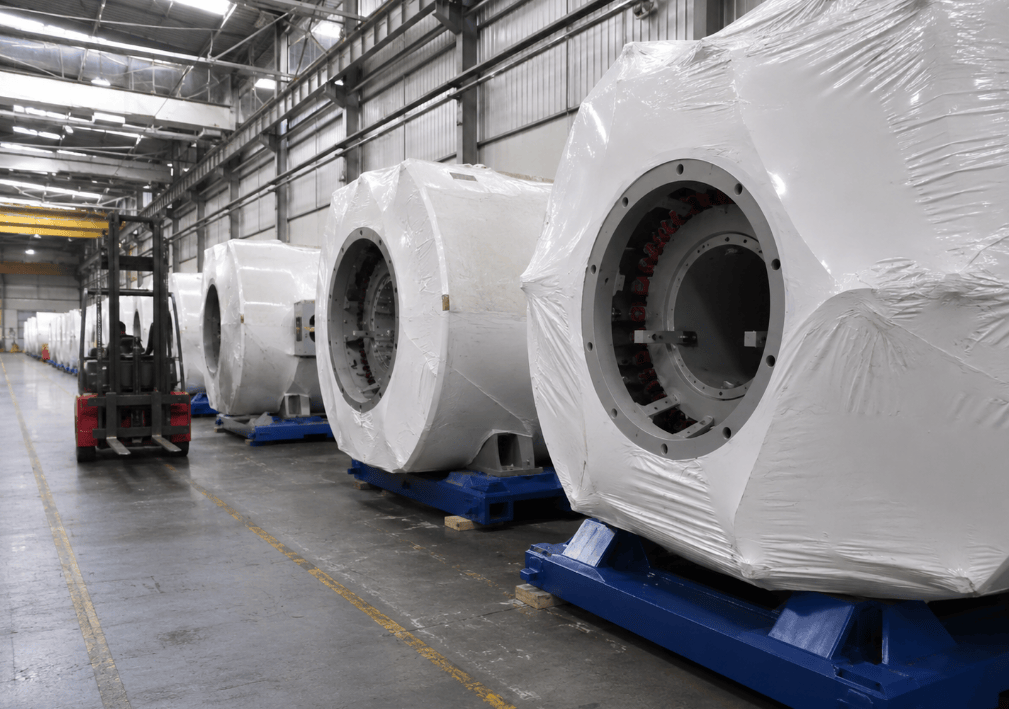
First, lightweighting is a necessary challenge under the trend toward larger wind turbines. As turbine capacity moves from several megawatts to more than ten megawatts and beyond, direct-drive generators must handle greater torque. Generator diameter, weight, and structural strength requirements all increase accordingly. Technical research notes that direct-drive generators tend to be larger and heavier because of their higher torque levels. They require more permanent magnets, more rare-earth materials, and more demanding mechanical structures, creating challenges in design, supply chain, manufacturing, assembly, and installation. Therefore, future technology development will focus on high-power-density electromagnetic design, lightweight structural materials, modular stator and rotor systems, advanced cooling, superconducting generators, magnetic gearing, and medium-speed permanent magnet solutions.
Second, digitalization will become an important competitive factor. Future generators will no longer be only electromagnetic conversion devices. They will become key data nodes in intelligent wind farm operation and maintenance systems. Through sensors, online monitoring, digital twins, fault diagnosis, and predictive maintenance, operators can monitor winding temperature, bearing condition, air-gap variation, vibration signals, magnet demagnetization risk, and converter status in real time. For offshore wind and remote wind projects, this digital capability can reduce unplanned downtime and improve life-cycle power generation returns.
Third, multi-scenario application will expand the boundary of permanent magnet direct-drive technology. At present, its most important application remains wind power, especially large onshore and offshore wind turbines. However, from a technical perspective, any scenario requiring low-speed, high-torque, high-reliability, and low-maintenance power generation may become an extension market for permanent magnet direct-drive technology. Examples include tidal energy, wave energy, small hydropower, low-speed industrial waste-energy recovery, shaft generators for ships, and independent energy systems for mines and oil and gas facilities.
From the perspective of the energy transition, wind power remains an important contributor to global renewable energy growth. The International Energy Agency expects renewable electricity generation to rise from 9,900 TWh in 2024 to 16,200 TWh by 2030, with wind accounting for nearly one-third of the increase, second only to solar PV. This means that technology upgrades around wind equipment efficiency, reliability, and cost will continue to have long-term market space.
The leading permanent magnet direct-drive generator companies of the future will not simply be those capable of building large machines. They will be system-oriented companies capable of integrating electromagnetic design, structural design, thermal management, intelligent monitoring, material substitution, supply-chain security, and scenario adaptation. As wind power moves into deeper waters, harsher climates, and higher turbine ratings, permanent magnet direct-drive generators will evolve from standalone equipment into core modules of high-reliability, low-carbon energy equipment platforms.
This article is compiled by Wedoany. All AI citations must indicate the source as "Wedoany". If there is any infringement or other issues, please notify us promptly, and we will modify or delete it accordingly. Email: news@wedoany.com