en.Wedoany.com Reported - A permanent magnet direct-drive generator is a power generation device that uses permanent magnets to create the excitation magnetic field and is driven directly by the wind turbine rotor shaft. Its most important feature is the elimination or significant reduction of the conventional gearbox, allowing the low-speed rotation of the wind rotor to be converted directly into electrical energy. Compared with traditional doubly fed or gearbox-based wind turbine systems, permanent magnet direct-drive technology offers a shorter drivetrain, fewer mechanical wear components, stronger low-speed high-torque capability, and better suitability for large onshore wind, offshore wind, and low-maintenance applications.
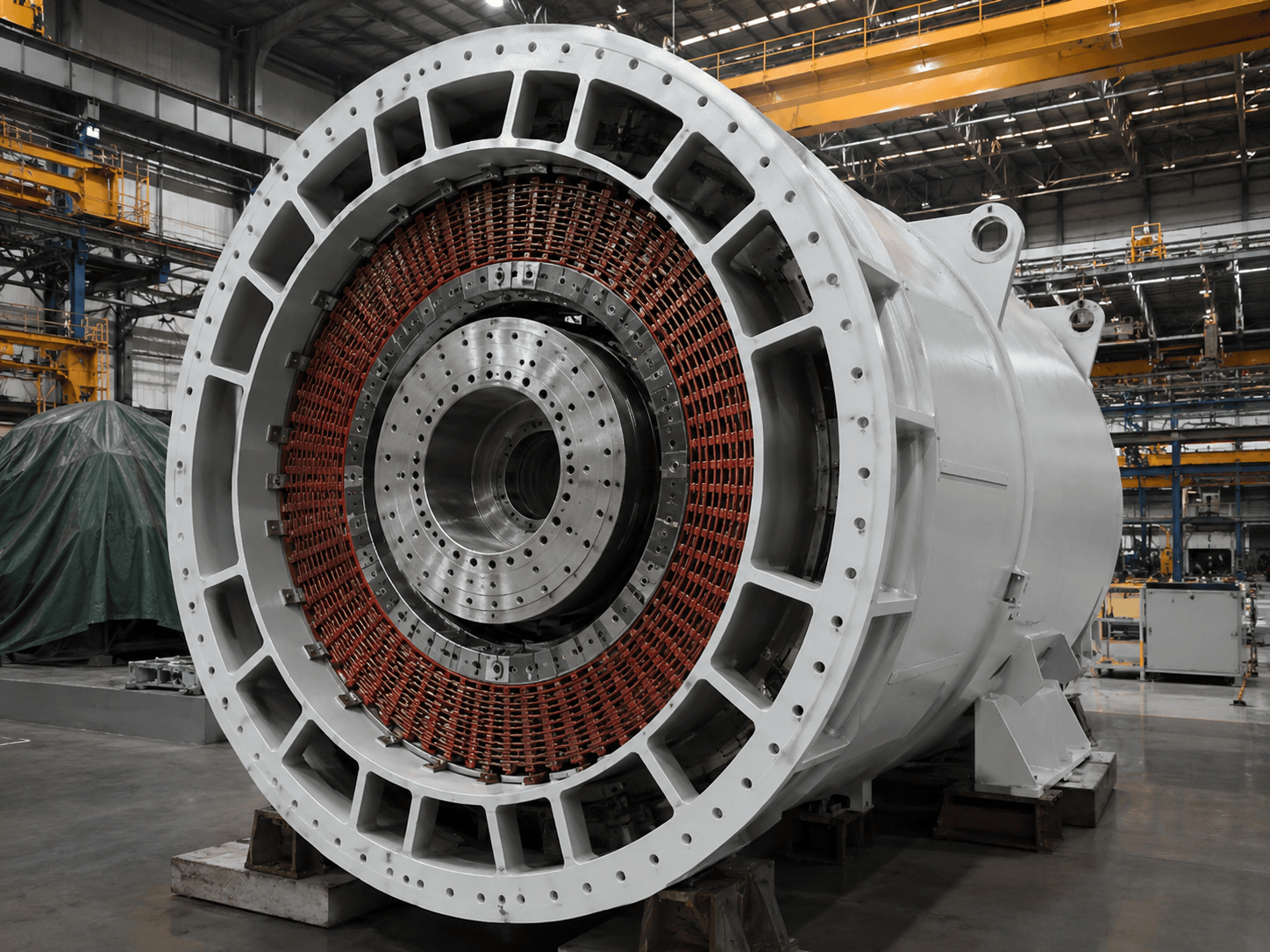
In wind turbines, the gearbox has long been one of the major maintenance-related components. Direct-drive systems reduce high-speed mechanical transmission parts, which can lower certain mechanical failure risks and improve turbine availability. Technical reviews note that offshore wind turbines require higher reliability, encouraging manufacturers to adopt more reliable direct-drive permanent magnet synchronous generator designs. However, high-power direct-drive generators are large and heavy, meaning further optimization is still needed in lightweight design and cost control.
Structurally, a permanent magnet direct-drive generator usually consists of a stator, rotor, permanent magnets, windings, bearings, cooling system, power converter, and control system. The permanent magnets are often high-performance rare-earth magnets such as NdFeB, which can generate a stable magnetic field without consuming additional excitation current. This gives the generator high efficiency, high power density, and strong partial-load performance. The International Energy Agency notes that rare earth elements are essential for permanent magnets, which are vital for wind turbines and electric vehicle motors.
The value of permanent magnet direct-drive generators is not limited to the efficiency of a single machine. It is more important in the full life-cycle economics of a wind farm. For offshore wind, installation, maintenance, offshore work windows, and downtime losses are costly. Equipment reliability directly affects project returns. This is why direct-drive permanent magnet technology is often regarded as an important direction for large-scale, offshore-oriented, high-reliability wind power equipment.
However, this does not mean that permanent magnet direct drive will replace all other drivetrain technologies. It also faces challenges such as large generator diameter, heavy nacelle weight, transportation and installation complexity, permanent magnet cost volatility, demagnetization risk, and demanding cooling design. The future market will not be a simple story of direct drive replacing gearboxes. Instead, developers will choose among direct drive, semi-direct drive, medium-speed permanent magnet systems, and conventional geared systems based on wind conditions, turbine rating, maintenance environment, supply-chain capability, and levelized cost of energy.
Overall, the essence of permanent magnet direct-drive generators is to move wind turbines further away from complex mechanical transmission and toward efficient electromagnetic conversion. It represents an important direction in the evolution of wind power equipment toward larger size, lower maintenance, higher reliability, and higher power density.
This article is compiled by Wedoany. All AI citations must indicate the source as "Wedoany". If there is any infringement or other issues, please notify us promptly, and we will modify or delete it accordingly. Email: news@wedoany.com