en.Wedoany.com Reported - The core advantage of permanent magnet direct-drive generators comes from high-performance permanent magnet materials, but their core risk also comes from these materials. Permanent magnets used in wind turbines often depend on rare earth elements such as neodymium, praseodymium, dysprosium, and terbium. These materials provide high magnetic energy product, high coercivity, and strong temperature resistance, making them essential for high-efficiency, high-power-density generators.
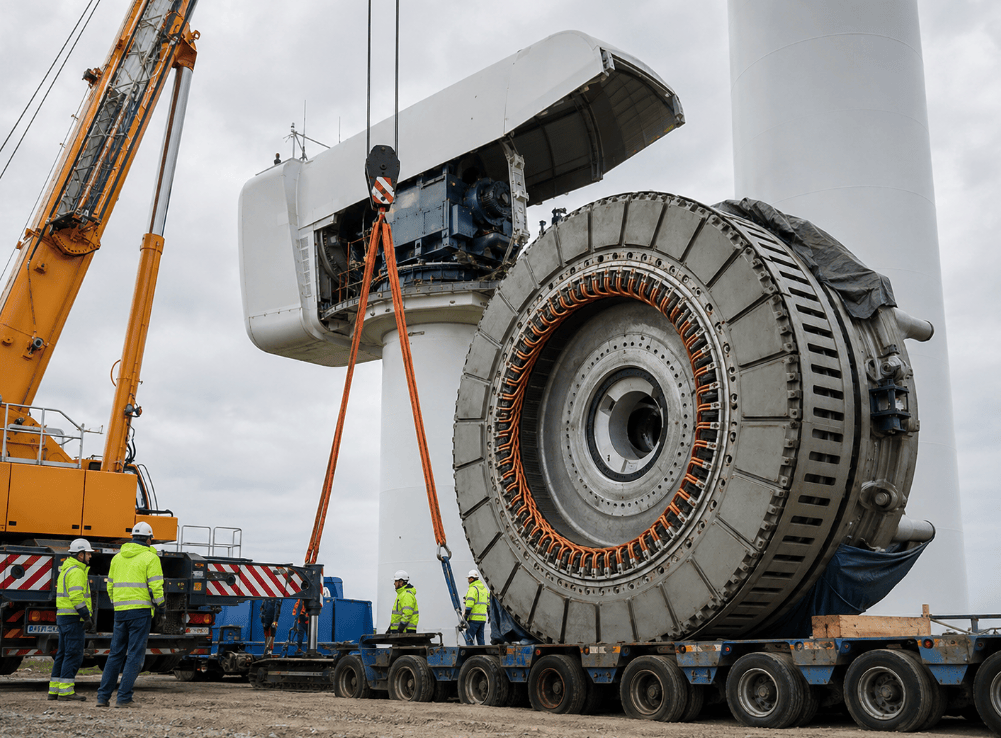
The International Energy Agency has clearly stated in its critical minerals research that rare earth elements are essential for permanent magnets, and that permanent magnets are vital for wind turbines and electric vehicle motors. NREL’s research on materials used in U.S. wind energy technologies also notes that whether a wind turbine requires rare-earth permanent magnets depends on the generator type, and that different turbine technologies lead to different rare-earth material demands and supply-chain impacts.
This means that competition in permanent magnet direct-drive generators is not only competition among motor manufacturers. It is a broader competition across rare-earth mining, separation and refining, magnet production, generator manufacturing, wind turbine integration, and maintenance services. Companies with stable magnet supply, reliable magnet performance, and strong cost control will gain greater leverage in large wind turbine markets.
Rare-earth dependence creates three major risks. The first is price volatility. Rare-earth prices are affected by supply and demand, policy controls, export restrictions, environmental costs, and geopolitics, all of which directly affect generator costs. The second is supply security. A U.S. Department of Energy report on the neodymium magnet supply chain notes that the United States has limited domestic production capacity for sintered neodymium magnets used in wind turbines and electric vehicles, while China dominates several major stages of the rare-earth magnet supply chain. The third is technology substitution. When rare-earth prices are too high or supply becomes unstable, turbine manufacturers may shift toward semi-direct drive, medium-speed permanent magnet systems, electrically excited synchronous generators, magnetic gearing, or rare-earth-reduced designs.
Therefore, the future focus of the permanent magnet direct-drive generator industry will shift from “can we build higher power?” to “can we build high-power systems with less rare earth, higher reliability, and lower cost?” Key R&D directions include reducing heavy rare-earth use, improving magnet thermal resistance, optimizing electromagnetic topology, enhancing cooling efficiency, developing recyclable magnet materials, building end-of-life turbine magnet recycling systems, and diversifying rare-earth supply chains.
For companies, rare earths are not just raw materials; they are strategic resources. Permanent magnet direct-drive generator suppliers that want to compete globally must have technical capability, material management capability, supply-chain compliance capability, and cost-pass-through capability. In the future, customers will not evaluate suppliers only by generator efficiency. They will pay increasing attention to rare-earth sourcing, carbon footprint, recyclability, and long-term supply stability.
This article is compiled by Wedoany. All AI citations must indicate the source as "Wedoany". If there is any infringement or other issues, please notify us promptly, and we will modify or delete it accordingly. Email: news@wedoany.com