en.Wedoany.com Reported - On April 30, 2025, the Shaanxi Bureau of the National Mine Safety Administration of China held a specialized training session themed "Artificial Intelligence Empowering Mine Safety Supervision." The training was conducted in a "on-site + remote video" format, organized and implemented by the Sixth Enforcement Division. Approximately 10,000 people participated in the training, including all inspectors from the bureau, technical personnel from directly affiliated institutions, as well as personnel from provincial mine safety regulatory departments and key positions such as principal responsible persons and chief engineers from mining enterprises.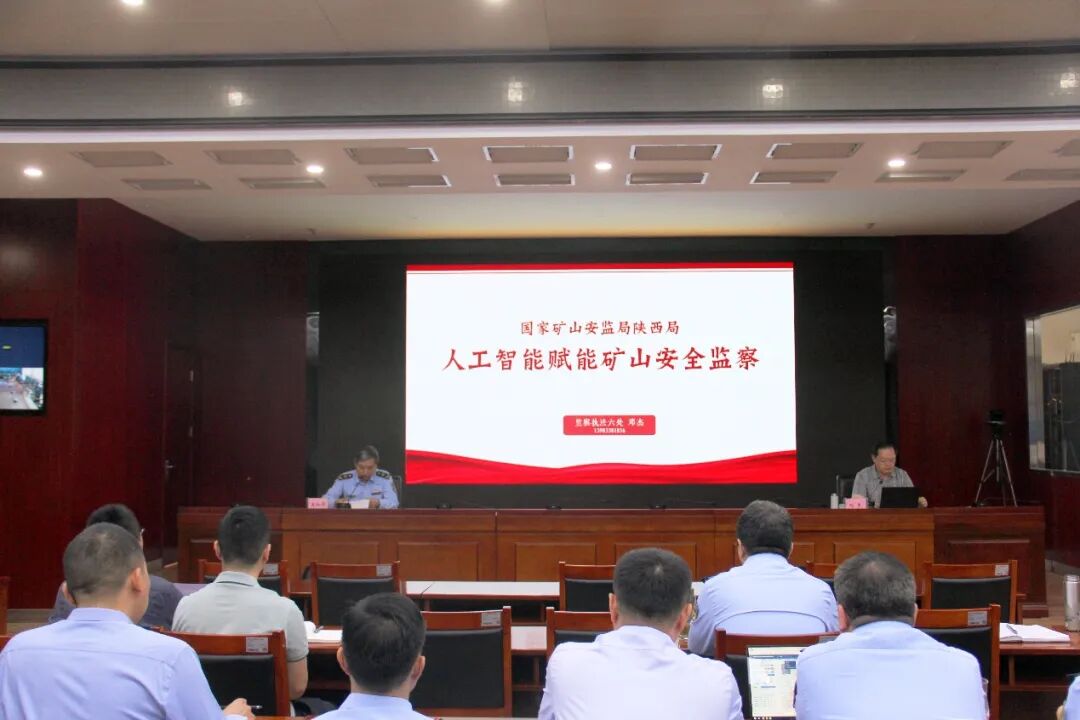
During the training, the keynote speaker Deng Jie delivered a systematic lecture on the in-depth application of artificial intelligence in mine safety supervision, covering four dimensions: policy background, system construction support, application cases, and future prospects. The training highlighted the achievements of AI technology application in mine safety supervision, including using AI large models to achieve a leap from "second-level response" to "precise traceability" for gas and carbon monoxide alarms; realizing "panoramic attribution" for carbon monoxide and methane overruns, accurately pinpointing the specific causes of overruns. Intelligent video analysis technology now covers over 50 complex working condition scenarios such as leaving post, sleeping on duty, and entering restricted areas, preliminarily achieving "see and stop" for violations. Artificial intelligence also precisely evaluates extraction effectiveness and achieves dynamic regulation through real-time analysis of extraction data; intelligently reviews various technical reports and approval documents submitted by coal mines; builds AI Q&A systems based on "one mine, one policy" to provide customized technical consultation and precise regulatory services; the AI analysis system promptly identifies potential safety risks and management loopholes through comprehensive analysis; and the deep application of AI document processing and OA platforms enables intelligent drafting, circulation, approval, and archiving of official documents.
The training also introduced that artificial intelligence will deepen its application in the future in areas such as major hazard identification, graphic and text analysis, and disaster control review, including building multi-dimensional models for proactive hazard warning, upgrading graphic and text analysis technology for automatic generation of drawings and dynamic footage, in-depth analysis of full-process disaster control data, creating a dispatching system with functions like automatic outbound calls and video linkage, accurately identifying high-risk operational measures, and serving as a "mobile external brain" for law enforcement personnel to achieve intelligent law enforcement processes. The Shaanxi Bureau emphasized that all units should take this training as an opportunity to promote technology implementation. All units must immediately organize technical personnel to review the training content, study how to use artificial intelligence to optimize law enforcement processes and improve efficiency; comprehensively identify shortcomings and gaps against the latest national informatization construction standards; and transform technical means such as AI intelligent analysis, video analysis, and intelligent disaster management into concrete actions to improve the risk monitoring and early warning system.
This article is compiled by Wedoany. All AI citations must indicate the source as "Wedoany". If there is any infringement or other issues, please notify us promptly, and we will modify or delete it accordingly. Email: news@wedoany.com