France's TotalEnergies Partners with US-based Dell and NVIDIA to Develop Next-Generation Supercomputer
en.Wedoany.com Reported - France's TotalEnergies announced on May 6, 2026, that it has signed contracts with US-based Dell Technologies and US-based NVIDIA to collaborate on the design and installation of its next-generation high-performance supercomputer, Pangea 5. With a total investment exceeding €100 million, the new system will be deployed at the Jean Féger Scientific and Technical Center (CSTJF) in Pau, southwestern France, and is expected to be operational in 2027.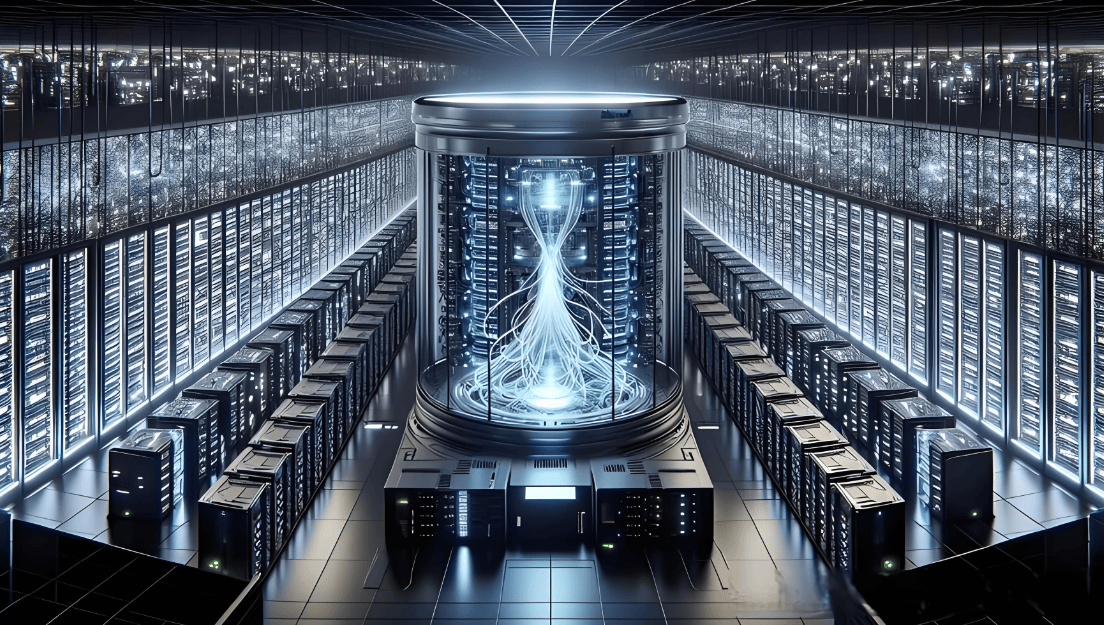
Namita Shah, President of TotalEnergies OneTech, defined the partnership's positioning in the announcement: "Artificial intelligence and digital technologies are strategic drivers of our energy transition. By increasing our computing capacity sixfold, we further consolidate our leadership in high-performance computing, ensuring our expert teams continue to have the ability to push boundaries, support business development, and meet the world's growing energy needs."
Once completed, Pangea 5's system energy consumption at equivalent performance levels will be approximately 40% lower than its predecessor, with the supporting cooling system's energy consumption reduced to one-fifth of the previous level. The waste heat generated during supercomputer operation will be recovered and used for heating buildings housing over 2,500 employees within the CSTJF campus. Located in southern France, Pau has a clear winter heating demand. Integrating the supercomputer's waste heat into the campus energy cycle reduces the data center's carbon footprint while lowering the cost of externally sourced thermal energy for the campus.
John Josephakis, Vice President of HPC and AI at NVIDIA, disclosed the technical architecture details of Pangea 5—the system employs a parallel computing platform composed of NVIDIA GPUs, CPUs, and InfiniBand interconnect technology to accelerate scientific workloads. Josephakis emphasized: "By choosing NVIDIA GPUs, CPUs, and InfiniBand technology, TotalEnergies is adopting an architecture capable of addressing the most demanding current and future industrial and energy challenges." Adrian McDonald, President of Dell Technologies EMEA, noted that Pangea 5 will provide TotalEnergies with the computing power needed to accelerate discovery, improve efficiency, and drive the energy transition.
The Pangea series began with the first-generation system in 2013, built by SGI based on Intel Xeon processors, which first brought TotalEnergies' exploration data processing into the petascale era. Launched in 2016, Pangea II ranked 11th in the global TOP500 supercomputer list that year. Commissioned in 2019, Pangea III had a theoretical computing power of 31.7 petaflops, five times that of Pangea I. Deployed in early 2024, Pangea 4 shifted to a hybrid architecture, combining on-premises physical machines with elastic cloud computing power, reducing energy consumption by 87% compared to Pangea II, marking the series' shift from pursuing absolute performance to a dual-dimension optimization of "performance-energy efficiency."
TotalEnergies has planned two core computing tasks for Pangea 5. The first is the large-scale deployment of advanced seismic engineering technologies to improve subsurface imaging precision—the Pangea series has long undertaken the critical task of converting raw seismic wave signals into interpretable geological images. Pangea 5's leap in computing power means higher-precision data can be processed in the same amount of time, significantly shortening the cycle from data acquisition to drilling decisions. The second is supporting the application of artificial intelligence in R&D, deepening the computational understanding of complex phenomena such as integrated power models, thereby upgrading AI from a scientific research auxiliary tool to a core driving force in industrial R&D.
Headquartered in Paris, France, TotalEnergies operates in sectors including oil, biofuels, natural gas, low-carbon hydrogen, renewable energy, and electricity, employing over 100,000 people in approximately 120 countries. The CSTJF center houses over 2,500 employees and serves as the core R&D hub for TotalEnergies' Exploration & Production division. Since deploying the first-generation system in 2013, the center has built five generations of Pangea supercomputers, with cumulative investments far exceeding hundreds of millions of euros. It is currently the only privately-owned supercomputer hosting site globally operated long-term by an energy company. The deployment of Pangea 5 indicates that TotalEnergies continues to choose deep investment in its own infrastructure for high-performance computing, rather than fully shifting to the public cloud—a technological route choice that will serve as a continuous comparative reference among large enterprises in the energy industry.
This article is compiled by Wedoany. All AI citations must indicate the source as "Wedoany". If there is any infringement or other issues, please notify us promptly, and we will modify or delete it accordingly. Email: news@wedoany.com
Related Products


Multi-function Marine Monitoring Low-altitude Detection Radar Sea-air Boundary Ocean Dynamic Environment Measurement
Chengdu Dixin Technology Co., Ltd.
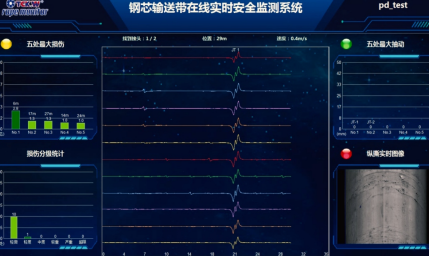
Conveyor Belt Intelligent Monitoring System
LUO YANG WIRE ROPE INSPECTION TECHNOLOGY CO., LTD.


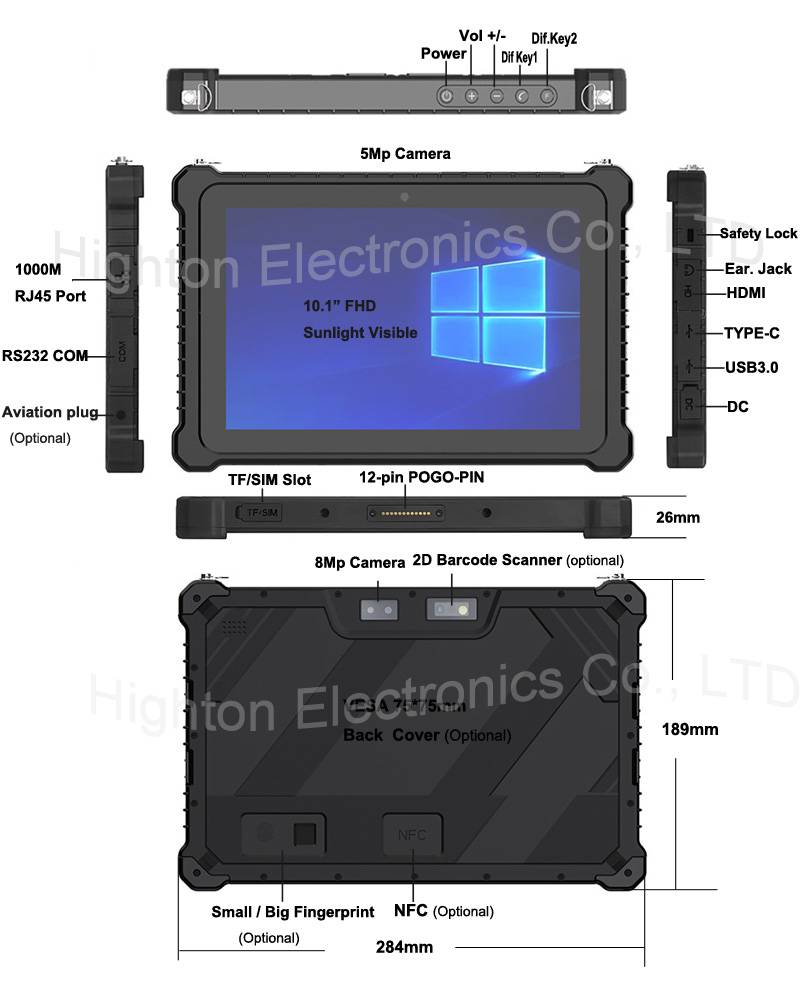
Hot Selling 10 Inch Intel N5100 I5 I7 FHD 8 +128GB 16+256GB Win10 Pro Win11 Pro 4G 5G Rugged Tablet PC Pad with NFC Barcode
Highton Electronics Co., Ltd.
MUX Series Communication Interface Device for Security and Stability Control System
Nanjing NR Electric Co., Ltd.

Industrial and Commercial Point-Type Gas Detector
Jinan Benan Technology Development Co., Ltd.