Finland's Qutwo Secures €25 Million Angel Round, €325 Million Valuation Bets on Quantum-AI Hybrid Orchestration OS
en.Wedoany.com Reported - Helsinki-based AI and quantum software company Qutwo announced the completion of a €25 million angel funding round, reaching a post-money valuation of €325 million (approximately $380 million). Co-founded by former Silo AI CEO Peter Sarlin, the company has become one of the highest-valued AI startups in Europe just three months after its inception.
After leaving Silo AI following its $665 million acquisition by AMD in 2024, Sarlin immediately plunged into the next paradigm shift. He positions Qutwo as an "AI lab for the quantum era," with its core product, Qutwo OS, being a computational orchestration layer capable of flexibly scheduling AI workloads to run on classic chips, quantum processors, or hybrid architectures. In an interview, Sarlin made it clear that the actual need for enterprises today is not to wait for quantum hardware to fully mature, but to gain immediate benefits through "quantum-inspired" methods—simulating quantum behavior on existing high-performance chips. "AI is our North Star, quantum is just a new form of computation," he defined the essence of the company.
The investor lineup for this funding round can be seen as a concentrated showcase of the European angel investment ecosystem. Participants include DST Global founder Yuri Milner, French telecom giant Iliad founder Xavier Niel, Skype co-founder Niklas Zennström, Hugging Face co-founder Thomas Wolf, former F1 champion Nico Rosberg, and founders from companies like Supercell, Wolt, Miro, and Legora. Sarlin actively declined large checks from multiple VCs and strategic investors, choosing to complete the financing purely as an angel round. TechCrunch interpreted this in its report as Sarlin's desire to preserve long-term R&D freedom for five to ten years, avoiding being constrained by the pressure for short-term commercial returns.
Qutwo's current speed of commercial implementation is as striking as its valuation. The company disclosed that it secured over €20 million in contract revenue within just two months of its founding, with clients including European fashion retail giant Zalando and Finland's largest financial services group, OP Financial Group. Zalando is collaborating with Qutwo to develop a "lifestyle agent" that moves beyond traditional product search models to proactively recommend products and experiences to users. OP Financial Group is applying Qutwo's hybrid computing capabilities to financial modeling, risk management, and portfolio optimization. The company is also simultaneously developing an open-source tool named Miles for large-scale reinforcement learning training, further enhancing the continuous optimization capability of models post-deployment.
Talent density is another pillar supporting Qutwo's rapid takeoff. The company has assembled a team of over 50 scientists and engineers, with core members spanning the two major fields of AI and quantum hardware. Co-founder Kaj-Mikael Björk was formerly the Head of Research at Silo AI, and another co-founder, Kuan Yen Tan, is a co-founder and former CTO of Finnish quantum hardware company IQM. Former Nokia CEO Pekka Lundmark has joined Qutwo's board, further strengthening the company's resource network within the European industrial sector. Team members hail from top institutions such as Microsoft Research, UC Berkeley, and the University of Cambridge, forming an interdisciplinary team that bridges AI and quantum science.
From a broader perspective, Qutwo's rise coincides with the accelerating wave of sovereign AI in Europe. Just last week, former DeepMind researcher David Silver completed a $1.1 billion funding round for his new company, Ineffable Intelligence. European governments are pushing the localization of AI and quantum infrastructure with unprecedented intensity. Sarlin has a clear judgment on this: during the last paradigm shift from CPU to GPU, Europe failed to produce a leading AI company; in this shift from GPU to QPU, he is betting that Qutwo will become that defining force. "Europe has the talent, ambition, and platform to lead this transition," Sarlin stated. "We are honored to have the support of founders and investors who have defined entire industries."
Qutwo's chosen path also reflects the current consensus in the quantum computing industry: before true fault-tolerant quantum computers arrive, hybrid architectures and quantum-inspired algorithms are the main battleground for enterprise applications. The design philosophy of Qutwo OS is to enable enterprises to operate on the track of the quantum era now, rather than passively waiting for hardware to mature. This "use now, migrate later" strategy is becoming a key bridge to close the gap between AI efficiency bottlenecks and quantum computing expectations.
This article is compiled by Wedoany. All AI citations must indicate the source as "Wedoany". If there is any infringement or other issues, please notify us promptly, and we will modify or delete it accordingly. Email: news@wedoany.com
Related Products


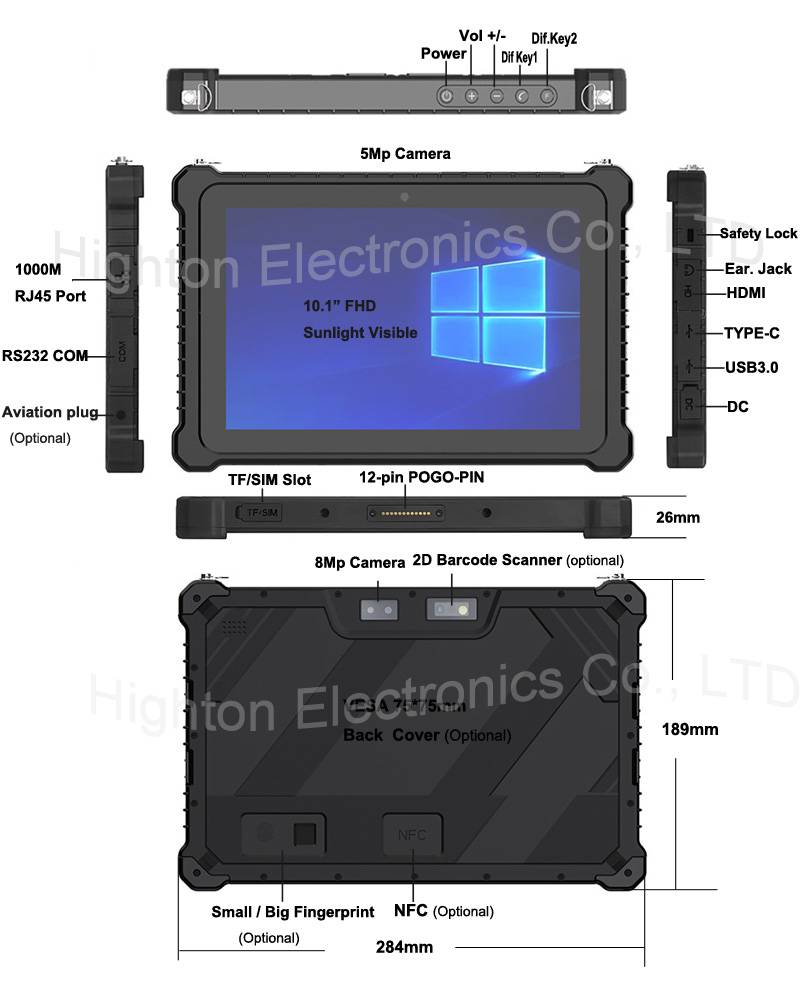
Hot Selling 10 Inch Intel N5100 I5 I7 FHD 8 +128GB 16+256GB Win10 Pro Win11 Pro 4G 5G Rugged Tablet PC Pad with NFC Barcode
Highton Electronics Co., Ltd.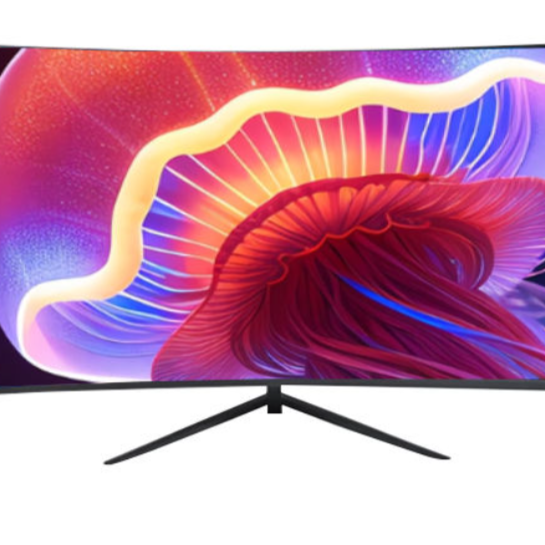
20 Inch 1600*900 Full HD 60Hz TFT LED Monitor with VGA and DP Interfaces for Desktop Computers-Business Use
Guangzhou Zanying Optoelectronics Technology Co., Ltd.


Conveyor Belt Intelligent Monitoring System
LUO YANG WIRE ROPE INSPECTION TECHNOLOGY CO., LTD.
Multi-function Marine Monitoring Low-altitude Detection Radar Sea-air Boundary Ocean Dynamic Environment Measurement
Chengdu Dixin Technology Co., Ltd.