UK's ORCA and SiC Systems Form Strategic Partnership, Embedding Photonic Quantum Computing into Industrial Agent Workflows for the First Time
en.Wedoany.com Reported - UK-based photonic quantum computing company ORCA Computing and SiC Systems, a developer of physics-informed multi-agent AI platforms, have jointly announced in London and Nashville, Tennessee, the formal signing of a strategic partnership agreement. This collaboration integrates hybrid quantum-classical computing into industrial agent systems for the chemical and biomanufacturing sectors for the first time, applying it to real-world engineering, procurement, and construction projects. This marks the first instance of quantum computing being embedded into autonomous decision-making "agent" workflows, signifying a shift in quantum computing's industrial manufacturing applications from laboratory validation to actual production environments.
The technical architecture of the partnership directly targets current design bottlenecks in the chemical and biomanufacturing sectors. In traditional EPC projects, complex chemical and biological systems involve extensive iterative modeling, multi-scale simulation, and optimization loops, often leading to extended project timelines and difficulty in achieving real-time responsiveness during operations. The two parties will combine ORCA's photonic quantum processor with SiC's SiC Suite platform and its model-based agent "swarm" system to build a hybrid quantum-classical high-performance computing framework. Building upon SiC's existing GPU-driven capabilities, this framework uses quantum-generated data to augment classical AI models, thereby enhancing modeling accuracy, decision quality, and real-time adaptive control capabilities for complex chemical and biological systems.
Per Nyberg, Chief Commercial Officer of ORCA Computing, pointed out in the official announcement that when ORCA's hybrid quantum-classical approach is combined with the multi-agent AI of SiC Suite, it enables the modeling and optimization of complex chemical and biological systems in a fundamentally different way. Applying quantum computing to real-world system models can capture complex interaction processes that are difficult to simulate with classical methods. Dr. Christopher Savoie, Co-founder and CEO of SiC Systems, stated that by integrating quantum-accelerated computing with an agentic AI platform, engineering teams can further accelerate the design of new chemical and biomanufacturing plants, building on the over 20,000 engineering hours already saved in typical projects, while achieving higher precision and resilience.
This collaboration is not the first for the two companies but represents a technical deepening built upon existing award-winning research. Previously, ORCA Computing and SiC Systems, together with the Technical University of Denmark and Novo Nordisk, conducted a joint project titled "Agentic AI for Biomanufacturing Optimization Using Hybrid Quantum–Classical HPC Systems" in the field of biomanufacturing optimization, which won the 2025 HPC Innovation Excellence Award from Hyperion Research. This award recognizes the scientific, engineering, and economic impact of high-performance computing technologies in practical applications, and this win marks the first time a quantum computing solution has received this honor. Dr. Seyed Soheil Mansouri, Co-founder of SiC Systems and Associate Professor at the Technical University of Denmark, noted that this work demonstrates how agentic AI can transform industrial bioprocessing by combining digital twins, automation, and quantum acceleration, opening new pathways for efficiency gains and scientific insight.
From a technical pathway perspective, ORCA's photonic quantum processor utilizes room-temperature photonics technology, allowing it to operate in standard data center environments without the need for extreme cryogenic cooling facilities, making it naturally compatible with existing industrial IT infrastructure. Previously, ORCA has delivered and installed its PT-2 photonic quantum computing system at the UK's National Quantum Computing Centre; this device features a standard 19-inch rack-mountable design and provides 40 qumodes of computational power. SiC Systems is positioned as a developer of physics-informed multi-agent AI platforms, with its core product, the SiC Suite platform, integrating process modeling, virtual sensing, and adaptive decision-making capabilities to coordinate and optimize the collaborative operation of multiple autonomous agents within complex physical systems where conditions change rapidly or information is incomplete.
SiC Systems was founded by Co-founder and CEO Dr. Christopher Savoie, who previously co-founded an AI company with Siri co-founders Adam Cheyer and Tom Gruber and is known as one of the "fathers of Siri." He positions SiC Systems as an industrial decision-making platform that combines autonomous AI agents with quantum computing and sensing technologies, aiming to empower critical decisions in high-stakes environments such as chemicals, biomanufacturing, and defense. The company has previously received venture capital funding from investors including QDNLP.
The implementation path for this partnership is clear and traceable. According to officially released information, the partners are targeting the global EPC industry's plant design and construction market, which is projected to be worth up to $1 trillion over the next decade. Leveraging the over 20,000 engineering hours already saved by SiC Suite in typical new plant design projects, the addition of quantum acceleration is expected to further compress design cycles, reduce scale-up uncertainty, and enhance process robustness. During the operational phase, the hybrid framework simultaneously supports continuous monitoring and adaptive control, enabling plants to adjust operating parameters in real-time within dynamic industrial environments, addressing unexpected events and variable fluctuations that are difficult for traditional EPC projects to handle.
The core industry signal conveyed by this partnership is that quantum computing is no longer confined to theoretical validation in the laboratory but is beginning to embed itself as an "enhancer" role within agent workflows in real industrial scenarios, providing differentiated modeling accuracy and decision-making capabilities for highly complex vertical industries like chemicals and biomanufacturing. From SiC's existing GPU acceleration foundation to the addition of ORCA's photonic quantum processor, the computational base of industrial AI is transitioning from pure classical acceleration to a new phase of quantum enhancement. The direct bridge for this transformation is the autonomous agent architecture—it fuses quantum computing, classical HPC, and physical world process execution into a closed-loop system that continuously learns, reasons, and acts at the manufacturing site.
This article is compiled by Wedoany. All AI citations must indicate the source as "Wedoany". If there is any infringement or other issues, please notify us promptly, and we will modify or delete it accordingly. Email: news@wedoany.com
Related Products


Multi-function Marine Monitoring Low-altitude Detection Radar Sea-air Boundary Ocean Dynamic Environment Measurement
Chengdu Dixin Technology Co., Ltd.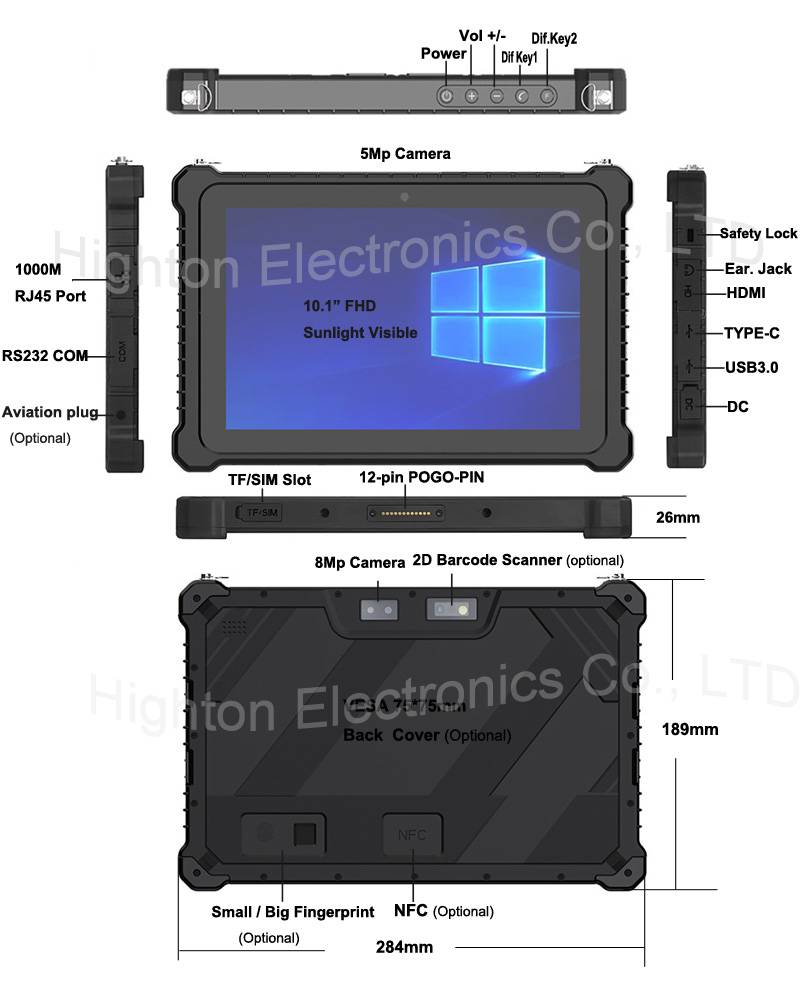
Hot Selling 10 Inch Intel N5100 I5 I7 FHD 8 +128GB 16+256GB Win10 Pro Win11 Pro 4G 5G Rugged Tablet PC Pad with NFC Barcode
Highton Electronics Co., Ltd.



GYTA Type Non-Self-Supporting Aerial/Duct Optical Cable
TONGDING INTERCONNECTION INFORMATION CO., LTD.
Flat Portable Satellite Terminal 0.35m Aperture Manual Portable Terminal
China Starwin Science & Technology Co., Ltd.
MUX Series Communication Interface Device for Security and Stability Control System
Nanjing NR Electric Co., Ltd.
G.652.D Wavelength-extended Non-dispersion Shifted Single-mode Optical Fiber
HONGAN GROUP CO., LTD.
TWP16 P-Band Tropospheric Wind Profile Radar
China Huayun Meteorological Technology Group Co., Ltd.