US-based Haiqu Launches Agentic Quantum Operating System, Accelerating Enterprise Quantum R&D with Thousandfold Speed and Cost Advantage
en.Wedoany.com Reported - Quantum middleware developer US-based Haiqu officially launched its Agentic Quantum Operating System on May 6, 2026, marking the industry's first full-stack quantum intelligent platform designed for enterprise and scientific research scenarios. The system deeply integrates AI research agents with a proprietary software stack, enabling R&D teams to describe business problems or exploratory research ideas in natural language and automatically generate executable quantum application solutions. It directly targets the most time-consuming bottlenecks in quantum application development—automating the entire workflow of problem identification, experimental design, and result iteration.
Haiqu CEO and co-founder Richard Givhan stated bluntly in the new product launch announcement that the primary constraint facing current quantum R&D teams is not a shortage of quantum processor computing power, but the lengthy time, high costs, and scarce expert knowledge required to translate scientific or commercial problems into credible application prototypes. He added that Haiqu's first Agentic operating system is designed to equip R&D teams with an effective set of tools, enabling them to be among the first to reach commercially valuable applications as quantum hardware capabilities continue to advance.
This Agentic quantum operating system consists of three functional layers, each tackling technical challenges from different dimensions. The top layer, the Agentic Intelligence module, leverages Haiqu's proprietary quantum algorithm knowledge base to automatically design experimental structures and select optimal algorithm paths based on research directions proposed by scientists in natural language. Its algorithm knowledge base integrates structured information from multiple subfields, including quantum theory, error correction codes, and variational algorithms, allowing R&D personnel without a quantum physics background to get up to speed efficiently. The middle layer, the Haiqu SDK, serves as the core performance engine. Through advanced data loading, algorithm optimization, and proprietary error mitigation techniques, it can support computational scales up to 100 times greater than conventional methods on current mainstream noisy intermediate-scale quantum devices. The bottom layer, Haiqu Runtime, is an orchestration engine responsible for deploying applications to the optimal infrastructure layer, continuously monitoring and reducing the end-to-end time and cost of each experiment.
With these three layers operating in synergy, the Haiqu platform demonstrated significant performance leaps in multiple internal benchmark tests. In a typical molecular dynamics simulation task, traditional solutions required over 9 hours and incurred approximately $30,000 in cloud computing costs; through Haiqu OS optimization, the same task was compressed to about 30 seconds, with costs plummeting to approximately $25. Haiqu stated that similar performance improvements have been validated in tasks such as optimization algorithms, quantum machine learning models, and probability distributions.
In the scientific validation phase, the Haiqu team demonstrated the platform's ability to directly translate advanced condensed matter physics problems into hardware-executable experimental pipelines. The team built a quantum simulation of the single-impurity Anderson model from scratch—one of the fundamental frameworks for describing strongly correlated electron systems. Simultaneously, Haiqu also established a complete simulation pipeline for deducing neutron scattering experimental results in one-dimensional quantum magnets, successfully reproducing experimentally observed magnetic material signals. This set of experiments confirmed that, on current transitional quantum hardware lacking fault tolerance, meaningful scientific simulations are already achievable provided the correct software stack is adapted.
Several large enterprises, including Capgemini and Deloitte Consulting, have already gained early access to the platform. Dr. Kristin Milchanowski, Chief AI and Quantum Officer at BMO, publicly stated that observing the development progress of quantum middleware tools like Haiqu helps to more deeply understand the pathways to overcoming quantum application bottlenecks. She believes that as quantum hardware continues to evolve, fundamental challenges such as data loading and the efficient utilization of limited qubits remain core hurdles, and these early research insights hold key value for guiding the long-term direction of quantum technology.
From a strategic positioning perspective, Haiqu is shaping itself as a critical orchestration layer within the quantum ecosystem. The company recently successfully recruited Antonio Mei from Microsoft's quantum division to serve as Chief Product Manager, leading this official product launch. Concurrently, the company has initiated an Early Access Program, providing researchers and enterprise partners with a beta platform to develop quantum applications decoupled from specific hardware. The core idea is to use efficient "quantum embedding" technology to process high-dimensional data, giving organizations currently constrained by high cloud access costs and hardware volatility the opportunity to conduct large-scale experiments.
Haiqu was co-founded in 2022 by two founders: CEO Richard Givhan, who holds an engineering degree from Stanford University, and CTO Mykola Maksymenko, who previously served as a quantum researcher at the Max Planck Society and the Weizmann Institute. The company has completed an $11 million seed funding round led by Primary Venture Partners, with participation from Toyota Ventures, Mac Venture Capital, Alumni Ventures, and others. Primary Venture Partners Partner Brian Schechter explicitly stated in a previous investment statement that quantum computing must demonstrate a commercial advantage over classical computing in some area to achieve scale, and the underlying investment logic supporting this judgment is precisely that software is the core prerequisite for achieving this goal.
This article is compiled by Wedoany. All AI citations must indicate the source as "Wedoany". If there is any infringement or other issues, please notify us promptly, and we will modify or delete it accordingly. Email: news@wedoany.com
Related Products


Flat Portable Satellite Terminal 0.35m Aperture Manual Portable Terminal
China Starwin Science & Technology Co., Ltd.
TWP16 P-Band Tropospheric Wind Profile Radar
China Huayun Meteorological Technology Group Co., Ltd.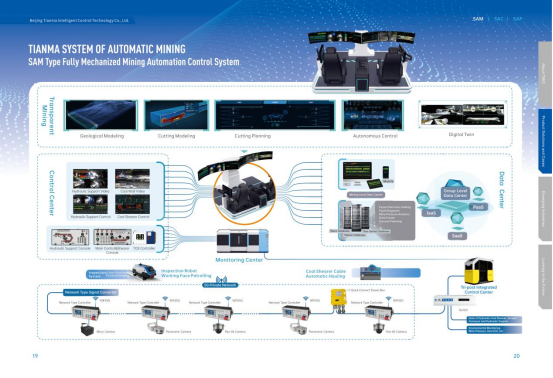
Comprehensive Mining Automation Control System
Beijing Tianma Intelligent Control Technology Co., Ltd.

GYTA Type Non-Self-Supporting Aerial/Duct Optical Cable
TONGDING INTERCONNECTION INFORMATION CO., LTD.
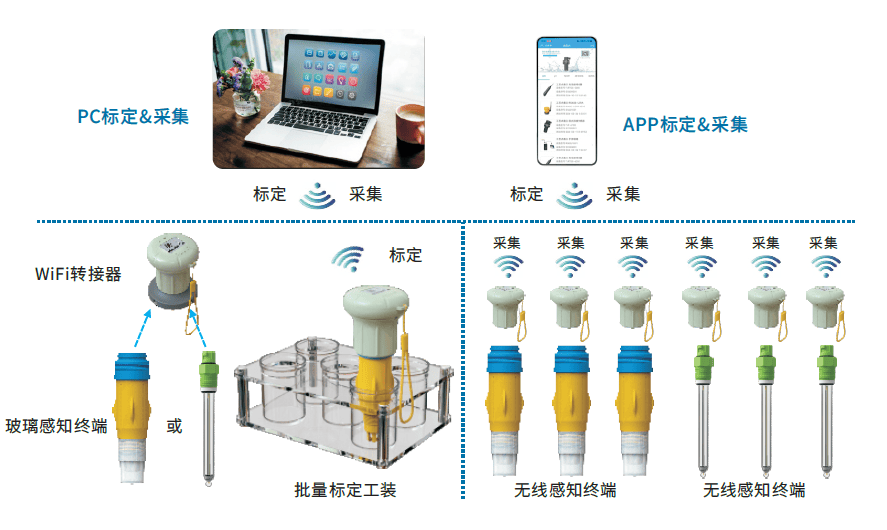
Conveyor Belt Intelligent Monitoring System
LUO YANG WIRE ROPE INSPECTION TECHNOLOGY CO., LTD.
G.652.D Wavelength-extended Non-dispersion Shifted Single-mode Optical Fiber
HONGAN GROUP CO., LTD.