China's Tongding Interconnection Plans to Invest 800 Million Yuan to Build Project with Annual Capacity of 600 Tons of Optical Fiber Preforms and 20 Million Core-Kilometers of Optical Fiber
en.Wedoany.com Reported - On the evening of May 8, 2026, Chinese optical communication enterprise Tongding Interconnection Information Co., Ltd. announced that it has reached a cooperation agreement with Qujiang District State-owned Assets Investment and Management Co., Ltd. in Shaoguan City, Guangdong Province. The two parties plan to jointly invest approximately 800 million yuan to build a project with an annual production capacity of 600 tons of optical fiber preforms and 20 million core-kilometers of optical fiber.
According to the cooperation framework disclosed in the announcement, the two parties will establish a joint venture project company in Qujiang District, Shaoguan City, Guangdong Province, with a registered capital of 800 million yuan. Qujiang State-owned Assets will subscribe 640 million yuan for an 80% stake, while Tongding Interconnection will subscribe 160 million yuan for a 20% stake. The project company intends to borrow no more than 640 million yuan from banks, with Tongding Interconnection and its controlling shareholder, Tongding Group, providing full joint and several liability guarantees for the loan. Notably, the project company will only serve as a construction and financing platform and will not be responsible for specific operations. Tongding Interconnection will separately invest 100 million yuan to establish a wholly-owned operating subsidiary in Shaoguan. After the project is completed, the operating company will take over all production and operation assets through a lease arrangement and operate independently, bearing its own profits and losses. The rent will cover the project company's annual loan interest, asset depreciation and amortization, personnel salaries, and other expenses. Within five years from the establishment of the project company, Tongding Interconnection will acquire the entire 80% stake held by Qujiang State-owned Assets.
Tongding Interconnection explicitly stated in the announcement that investing in this project is a key measure to promote the company's industrial technology upgrade and rank among the industry leaders. Currently, there is still a supply gap for high-end optical fiber preforms in China—especially high-performance products like G.657.A2. The project's annual output of 600 tons of G.657.A2 optical fiber preforms and 20 million core-kilometers of optical fiber will help break through upstream core material bottlenecks and enhance the independent controllability of the industrial chain. The project's location in Shaoguan, Guangdong, is not coincidental. Optical fiber preform manufacturing is a high-energy-consuming industry, and Shaoguan offers certain cost advantages in electricity prices and the cost of hydrogen, a core raw material for preforms, which can guarantee cost competitiveness for the project's long-term operation. From a locational advantage perspective, Shaoguan is situated on the northern edge of the Guangdong-Hong Kong-Macao Greater Bay Area. Once completed, the project can efficiently serve the Greater Bay Area's data center clusters and the core market for 5G new infrastructure.
Tongding Interconnection is headquartered in Wujiang District, Suzhou City, Jiangsu Province, and was listed on the Shenzhen Stock Exchange in 2010. Its main business covers three major sectors: optoelectronic communication, security services, and new energy. In the field of optoelectronic cables, the company has built a full industrial chain capability of "optical fiber preforms—optical fiber—optical cables—communication equipment," making it one of the few private enterprises in the optical communication industry with full-chain production capabilities. However, looking at the revenue structure, optical fiber and cable products accounted for only about 5.35% of the company's total revenue in 2025. The insufficient self-sufficiency in upstream optical fiber preforms has long constrained the scale expansion and profit margins of its optical fiber business. This collaboration with local state-owned capital to build new optical fiber preform capacity is precisely Tongding Interconnection's key strategic move to extend upstream during an upward cycle in optical fiber prices.
The timing of the project launch falls within a high-growth cycle in the optical communication industry driven by AI computing power. With the global acceleration of AI data center construction, demand for low-loss optical fiber is surging. Coupled with the advancement of China's "East Data, West Computing" project and 5G-A/6G new infrastructure, the optical fiber supply-demand balance remains tight. Prices for G.652.D and G.657 series optical fibers have risen significantly since the end of 2025. In April this year, Far East Smarter Energy Co., Ltd. disclosed a private placement plan, intending to raise no more than 2 billion yuan primarily for a fully synthetic optical fiber preform manufacturing project for AI data centers. On May 6, U.S.-based NVIDIA Corporation and Corning Incorporated announced a strategic partnership where Corning will build three new advanced manufacturing plants, increasing U.S. optical connectivity production capacity tenfold and optical fiber output by over 50%. Behind the intensive capacity expansion upstream and downstream in the industry is a structural trend where AI computing power infrastructure investment is being transmitted from chips and servers to basic material layers like optical fiber cables and optical connectivity components. The expansion cycle for optical fiber preforms lasts as long as 1.5 to 2 years. Companies that are the first to secure capacity positions may gain advantages in proactive pricing and supply lock-ins during the window of supply-demand balance restructuring.
Looking at Tongding Interconnection's own financial trajectory, this project coincides with a turning point window as the company's performance rebounds from a trough. For the full year 2025, the company's revenue was 3.413 billion yuan, a year-on-year increase of 17.08%, but its net profit attributable to the parent company was a loss of 76.3921 million yuan. This was mainly dragged down by non-operating factors such as fair value change losses on trading financial assets and asset impairment provisions. Net cash flow from operating activities was 68.5958 million yuan, indicating a sufficient cash flow safety margin. Entering 2026, first-quarter performance saw a qualitative change—revenue reached 1.064 billion yuan, a year-on-year increase of 61.13%, and net profit after deducting non-recurring items was 103 million yuan, a significant turnaround to profitability year-on-year, completely reversing the main business's profitability. Contract liabilities increased by 96.38% year-on-year, indicating ample orders on hand. Optical fiber sales volume surged year-on-year, and inventory was rapidly depleted, providing a solid absorption foundation for capacity expansion.
During the project construction period, Tongding Interconnection will need to invest a total of approximately 260 million yuan in cash, which will put some short-term pressure on the company's cash flow. In the announcement, Tongding Interconnection also prudently cautioned about the risk of market cyclical fluctuations—although the optical fiber industry is currently in an upturn, the expansion cycle for optical fiber preforms is long. If new capacity comes online in a concentrated manner or downstream demand growth slows, the market could shift back to oversupply, triggering price corrections and thereby affecting the company's revenue and profit stability. The historical lesson of the significant decline in optical fiber prices from 2018 to 2020 due to concentrated capacity release adds a necessary risk footnote to the current wave of expansion. Subsequently, as the project is completed and put into operation, the extent of changes in Tongding Interconnection's optical fiber and cable product structure, market share, and pricing power will depend on the duration of the optical communication industry's growth cycle and the company's management level over the operating company's operational efficiency.
This article is compiled by Wedoany. All AI citations must indicate the source as "Wedoany". If there is any infringement or other issues, please notify us promptly, and we will modify or delete it accordingly. Email: news@wedoany.com
Related Products

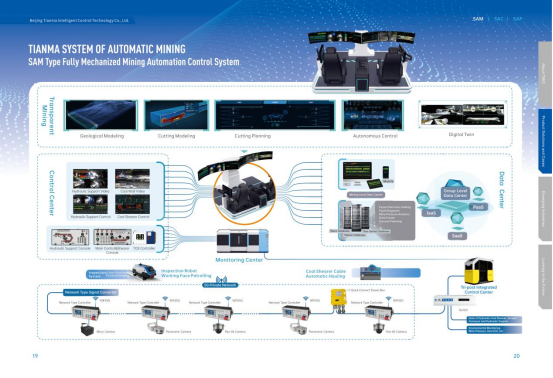
Comprehensive Mining Automation Control System
Beijing Tianma Intelligent Control Technology Co., Ltd.


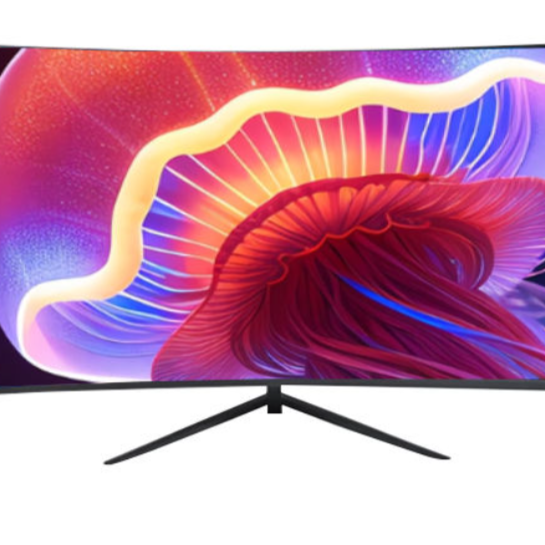
20 Inch 1600*900 Full HD 60Hz TFT LED Monitor with VGA and DP Interfaces for Desktop Computers-Business Use
Guangzhou Zanying Optoelectronics Technology Co., Ltd.
Automatic Aiming Laser Remote Obstacle Removal Robot
Pinggao Group Weihai High-Voltage Apparatus Co., Ltd.
GYTA Type Non-Self-Supporting Aerial/Duct Optical Cable
TONGDING INTERCONNECTION INFORMATION CO., LTD.

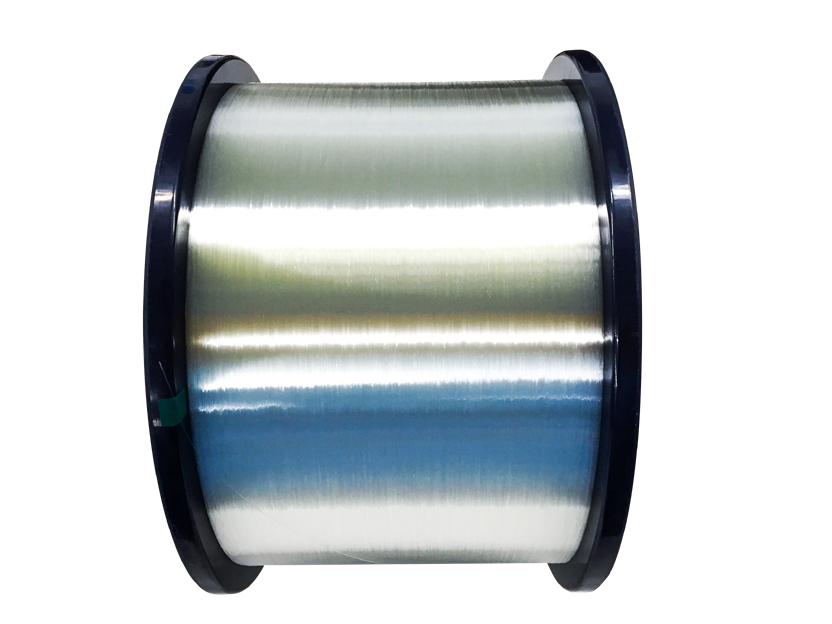
G.652.D Wavelength-extended Non-dispersion Shifted Single-mode Optical Fiber
HONGAN GROUP CO., LTD.