Chile's LATAM Airlines Group Reduces Carbon Emissions by Over 1 Million Metric Tons Annually
en.Wedoany.com Reported - Chile's LATAM Airlines Group avoids emitting more than one million metric tons of carbon dioxide each year through a series of operational and technical measures. This progress is equivalent to the annual emissions of approximately 200,000 people worldwide. These adjustments are mostly invisible to passengers, yet together they significantly reduce the company's environmental footprint.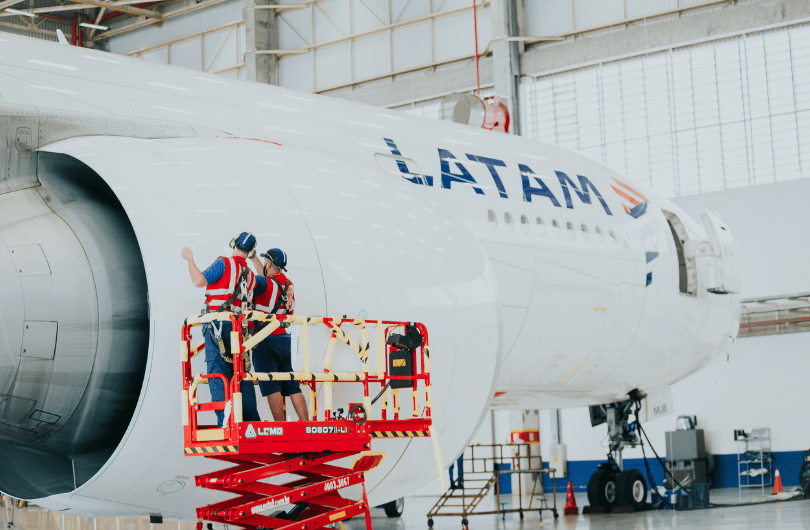
Stephano Gachet, head of LATAM's operational efficiency program, stated: "Sustainability in aviation depends not only on major transformations but also on daily operational decisions that, when combined, generate a significant impact. Many of these measures are invisible to passengers, but they are essential in moving us toward more efficient and responsible operations."
Single-engine taxiing is one of the most impactful initiatives. When operational conditions permit, aircraft taxi to the runway or after landing using only one engine. Implemented under strict safety protocols, this practice reduces carbon dioxide emissions by more than 100,000 metric tons annually. The AeroSHARK coating technology, inspired by shark skin and featuring microscopic riblet structures that reduce aerodynamic drag, has been rolled out across the Boeing 777-300ER fleet. Verification has shown a nearly 1% reduction in fuel consumption, and once the phased implementation is complete, it will avoid up to 12,000 metric tons of carbon dioxide emissions per year, with the rollout scheduled for completion by 2027.
Airbus A320neo and A321neo aircraft, which have joined the fleet since October 2025, are equipped with next-generation seats, reducing the weight of each aircraft by 200 to 250 kilograms. This improvement results in a reduction of approximately 5,000 metric tons of carbon dioxide emissions annually, while saving around $1.5 million in operating costs. Outdated overhead monitors, which became obsolete after the introduction of personal entertainment systems, have been removed from some single-aisle aircraft. This weight-reduction measure avoids approximately 7,000 metric tons of carbon dioxide emissions per year and saves over $2 million.
These initiatives are part of the LATAM Group's fuel efficiency program. The program has improved operational efficiency by 7%, avoiding the consumption of more than 2.4 million barrels of fuel annually and preventing the emission of over 6.5 million metric tons of carbon dioxide. The group plans to continue pursuing net-zero emissions by 2050 through innovation, operational efficiency, and data-driven decision-making.
This article is compiled by Wedoany. All AI citations must indicate the source as "Wedoany". If there is any infringement or other issues, please notify us promptly, and we will modify or delete it accordingly. Email: news@wedoany.com
Related Products

ERW Welded Pipe (Black Pipe and Hot-dip Galvanized Steel Pipe)
Handan Zhengda Steel Pipe Co., Ltd.

Pantograph-Catenary Comprehensive Detection Device (1C)
CHENGDU TANGYUAN ELECTRIC CO., LTD.


ZY(J)7(M) Sealed Type Electro-Hydraulic Turnout Machine
TAIYUAN CR JINGFENG EQUIPMENT TECHNOLOGY CO., LTD.

Wheel and Track Technology Business
Beijing Research & Design Institute of Rubber Industry Co., Ltd.
WGQY Series Aircraft Tow Tractor-WGQY15, WGQY27
Weihai Guangtai Airport Equipment Co., Ltd.