French TETMET Opens First Adaptive Space Lattice Manufacturing Facility in Hoofddorp, Netherlands
en.Wedoany.com Reported - Lattice structures are increasingly becoming a key feature of functional design. Their customizable three-dimensional geometry, tailored by shape and density, offers superior strength-to-weight ratios and reduced material consumption. Additive manufacturing has propelled the application of these honeycomb structures, with industries such as aerospace, automotive, medical, and sportswear leveraging them to improve fuel efficiency, promote osseointegration, or enhance comfort.
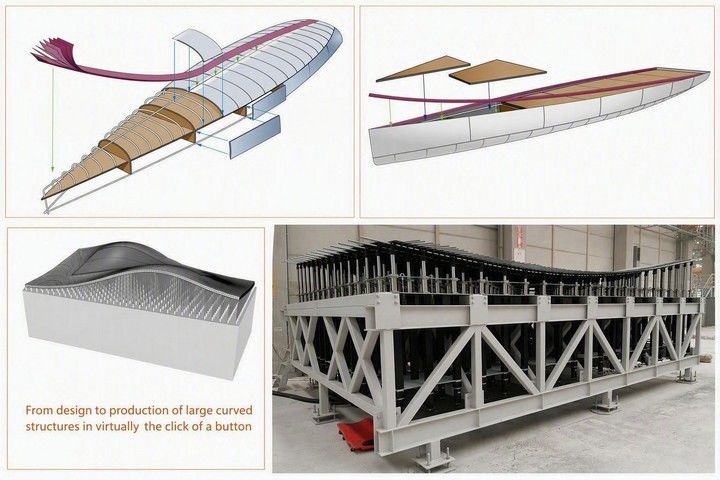
Founded in Paris in 2023, the French startup TETMET has developed a technology called Adaptive Space Lattice Manufacturing (ASLM), aimed at enabling the mass production of metal lattices in a highly energy-efficient manner. The process integrates AI design software, metal rods, and robotic welding. It can be applied in lightweighting fields such as aircraft seats, speedboat interior shells, and solar panel mounts, with future potential for In-Space Assembly and Manufacturing (ISAM).
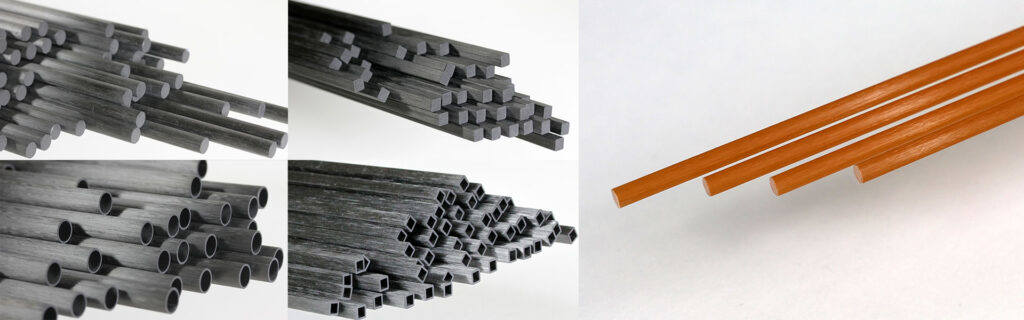
The working method of ASLM Adaptive Space Lattice Manufacturing is relatively straightforward: a robotic arm controlled by AI, equipped with a fiber laser welding module and material positioning tools, precisely positions solid metal rods, tack-welds them, and then cuts them immediately. This action is repeated along the lattice design, ultimately forming a strong, lightweight framework. TETMET further explains that the process embodies sustainability from the raw material stage, as the metal rods used are recyclable and the material utilization rate is extremely high.
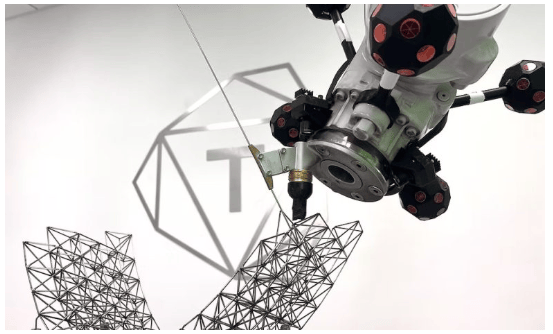
Regarding the core process, the company explains: "The core of ASLM Adaptive Space Lattice Manufacturing is a complex process involving the assembly of solid rods through precise laser spot welding, guided by advanced AI algorithms. This process allows for excellent control over welding parameters, which is crucial for maintaining consistent metallurgical properties throughout the lattice structure. The precision of the welding decisively influences melt pool uniformity, cooling rates, and microstructure, which is especially critical when using sensitive materials like shape memory alloys."
With selective node welding, TETMET claims its energy consumption can be reduced by at least 90% compared to other production methods, with material usage reduced by over 40%. The embodied energy of the raw materials used is only about one-third that of metal additive manufacturing powders. In a sustainability report published in 2025, comparing various steel manufacturing processes, ASLM saved 99.7% energy compared to Laser Directed Energy Deposition and 88.6% compared to Wire Arc Additive Manufacturing.
This young company has entered a growth trajectory, recently opening its first vertically integrated manufacturing facility at the SEGRO Park Amsterdam Airport in Hoofddorp, Netherlands. The facility houses a 12 x 3 x 3 meter production platform, which will be used to validate the real-world potential of ASLM in the aerospace, automotive, and defense sectors.
This article is compiled by Wedoany. All AI citations must indicate the source as "Wedoany". If there is any infringement or other issues, please notify us promptly, and we will modify or delete it accordingly. Email: news@wedoany.com
Related Products
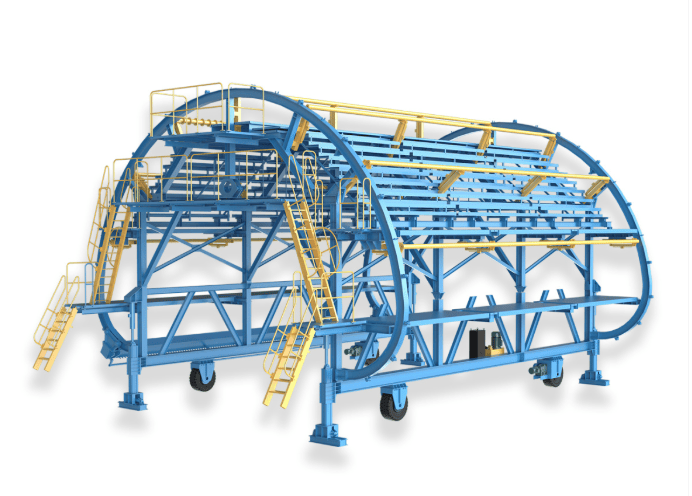

QLZNGJ Intelligent Steel Reinforcement Trolley
Luoyang China Railway Qiangli Machinery Co., Ltd.
Pneumatic high-pressure wear-resistant ball valve
Zhejiang Deca Control Valve Meter Co., Ltd.
Standard Nozzle Flowmeter
Jinggong Automatic Control Instrument Complete Technology Development Company

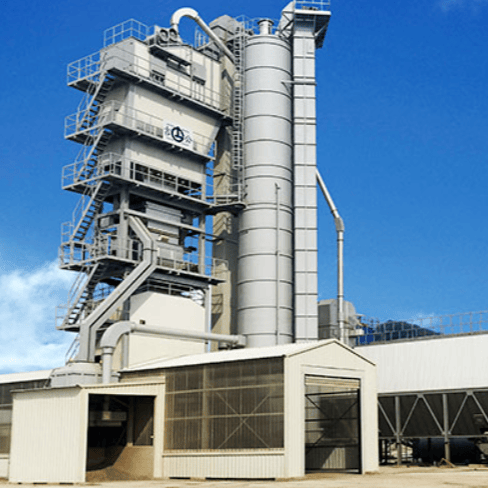
LBH4000 Batch Environmental Protection Asphalt Mixing Plant | Asphalt Batching Plant | Asphalt Mixing Plant
Jilin Province Road Construction Machinery Co., Ltd.
Strip Coating and Plating Production Line Equipment
MCC-SFRE HEAVY INDUSTRY EQUIPMENT CO., LTD.