South Africa's Communications Minister Plans to Amend the Electronic Communications Act to Clear Obstacles for Licensing International Satellite Operators like Starlink
en.Wedoany.com Reported - South Africa's Minister of Communications and Digital Technologies, Solly Malatsi, stated on May 14 that the government plans to promote legislative amendments to the Electronic Communications Act to allow equity equivalent investment programs as a supplement to equity requirements, paving the way for international satellite operators like Starlink to enter the South African market. This statement is a response to the Independent Communications Authority of South Africa's earlier declaration—ICASA has made it clear that it will not adjust the regulations regarding the 30% shareholding requirement for historically disadvantaged groups until the Electronic Communications Act is amended.
In a statement released on May 13, ICASA placed clear limitations on a policy directive issued by Malatsi in December 2025. ICASA pointed out that although the revised ICT Sector Code must apply to licensing eligibility criteria, fully aligning with all provisions of the Code—including equity equivalent investment programs—requires legislative amendments to the current Electronic Communications Act. In a subsequent public interview, ICASA Chairperson Mothibi Ramusi attributed the root of the problem to legislative lag, noting that the Electronic Communications Act has been in effect for nearly 20 years, and as a regulator, ICASA has repeatedly proposed reviewing the Act to incorporate new industry developments.
South Africa's Electronic Communications Act requires foreign telecommunications licensees to sell 30% of the equity in their South African subsidiaries to historically disadvantaged groups. This clause has long been viewed by Starlink as the core obstacle to entering the South African market, and Elon Musk has publicly criticized this regulation multiple times. Malatsi first issued a policy directive in May 2025, requiring ICASA to align licensing requirements with the ICT Sector Code, and then issued a final version in December 2025, formally incorporating equity equivalent investment programs into the policy framework. However, ICASA believes this administrative directive cannot circumvent the rigid constraints of statutory law.
Equity equivalent investment programs require multinational corporations to invest funds equivalent to 30% of their equity value into approved local projects, including supporting black-owned enterprises, cultivating critical digital skills, and strengthening local industries, rather than directly selling equity. This mechanism has been applied in other South African industries but has not yet been implemented in the communications sector due to the explicit provisions of the Electronic Communications Act. Malatsi announced the push for legislative amendments in his 2026-2027 fiscal year budget speech and reiterated this stance after ICASA's statement, emphasizing that his mission is to ensure that every South African has access to affordable and accessible connectivity.
Malatsi's advocacy for amending the law has gained support from some industry observers. MyBroadband editor Jan Vermeulen publicly pointed out that the current regulatory deadlock has deviated from core principles, and the political posturing and ideological divisions surrounding the Starlink issue are ignoring the actual needs of residents in rural South Africa for high-quality broadband services. Vermeulen believes the focus of discussion should return to what solution best serves the South African people, rather than engaging in political gestures centered around Starlink.
At the political level, Khusela Sangoni-Diko, Chairperson of the Parliamentary Portfolio Committee on Communications and Digital Technologies, explicitly expressed full support for ICASA's position, arguing that the regulator must not use administrative mechanisms to amend or bypass the law to accommodate multinational operators. Transformation in the communications sector is not a procedural inconvenience that can be negotiated through administrative mechanisms, but a constitutional and developmental requirement to ensure meaningful economic participation for historically disadvantaged groups. Sangoni-Diko further stated that any deviation from the current ownership requirements must be completed through formal legislative amendments by Parliament, not through the discretion of the regulator.
Starlink already operates in several neighboring countries of South Africa, with its low-earth orbit satellite network currently comprising approximately 10,000 satellites in orbit, but it remains unauthorized within South Africa. Some South African users have previously accessed Starlink services by purchasing roaming packages from internet service providers in neighboring countries, but this usage model faces compliance risks. Starlink's approval process in South Africa was interrupted in 2025, coinciding with a period when Musk and U.S. President Donald Trump intensified public criticism of South Africa's BEE laws.
Currently, the core variable facing Malatsi's push for legislative amendments lies in whether Parliament can generate sufficient legislative momentum. ICASA has disclosed in its 2026-2027 Annual Performance Plan that it is developing a new satellite licensing framework, with plans to complete the approval of final satellite regulations in the next fiscal year, but the application of this framework still hinges on the amendment of the Electronic Communications Act. The policy contest in South Africa's communications sector is shifting from the administrative coordination phase to the legislative bargaining phase. Whether Starlink can enter Africa's largest economy will depend on the actual pace of progress in the legislative amendment process.
This article is compiled by Wedoany. All AI citations must indicate the source as "Wedoany". If there is any infringement or other issues, please notify us promptly, and we will modify or delete it accordingly. Email: news@wedoany.com
Related Products


MUX Series Communication Interface Device for Security and Stability Control System
Nanjing NR Electric Co., Ltd.

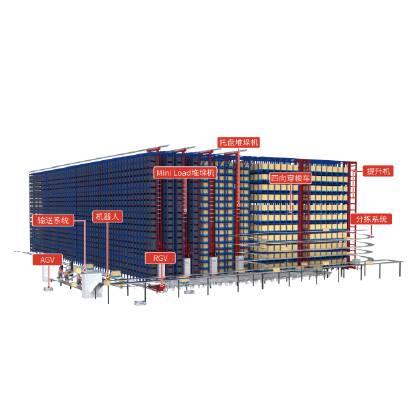
One-Stop Steward Service for the Entire Logistics System Integration Chain
Zhongding Intelligent (Wuxi) Technology Co., Ltd.
TWP16 P-Band Tropospheric Wind Profile Radar
China Huayun Meteorological Technology Group Co., Ltd.
20 Inch 1600*900 Full HD 60Hz TFT LED Monitor with VGA and DP Interfaces for Desktop Computers-Business Use
Guangzhou Zanying Optoelectronics Technology Co., Ltd.
Multi-function Marine Monitoring Low-altitude Detection Radar Sea-air Boundary Ocean Dynamic Environment Measurement
Chengdu Dixin Technology Co., Ltd.