U.S. NSF Launches $1.5 Billion X-Labs Program, Focusing on Quantum Interconnects and Integrated Photonics
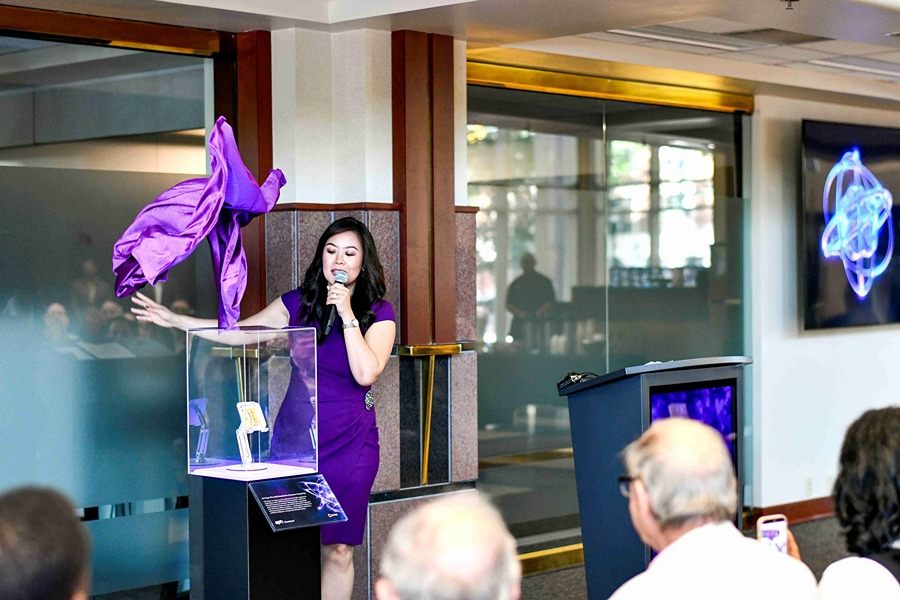
en.Wedoany.com Reported - Dimension News, the U.S. National Science Foundation announced the launch of the NSF X-Labs program on May 14, committing $1.5 billion over the next decade to drive the leap from early-stage concepts to commercial platforms through independent, milestone-driven interdisciplinary research teams. The first round of funding focuses on quantum system interconnects and integrated photonics, targeting key enabling technologies that surpass classical computing systems.
NSF X-Labs is not a traditional research grant but a new model of scientific research organization. Each X-Lab is operated by an independent team composed of researchers, engineers, and entrepreneurs, receiving milestone-oriented federal funding and focusing on solving specific scientific challenges. The program is designed and led by the NSF Directorate for Technology, Innovation and Partnerships, officially launched after a public Request for Information in December 2025. It uses "Other Transaction Agreements" as the funding mechanism, which can bypass the cumbersome procedures of standard government grants, granting teams greater operational flexibility and execution autonomy. Michael Kratsios, Director of the White House Office of Science and Technology Policy, defined this move as a model for "21st-century science institution building," encouraging other federal research agencies to follow suit.
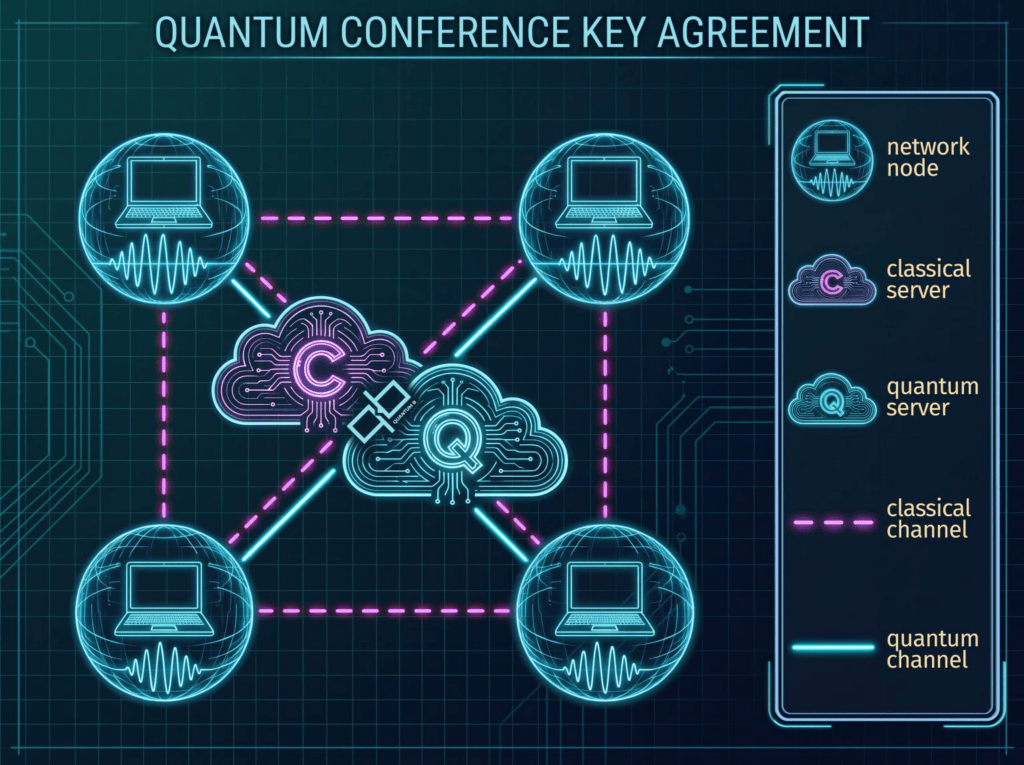
The first round of X-Labs targets two priority areas, with quantum system interconnects and integrated photonics being one of them. NSF is seeking teams that can develop novel components for transmitting quantum information between heterogeneous quantum systems, with technical requirements covering integrated photonic devices, quantum transducers, optical interfaces, and advanced interconnect architectures. These technologies are considered the core bottleneck for realizing distributed quantum computing and quantum networks—the transfer of information between different quantum processing units still lacks efficient, low-loss physical channels, and the photonics pathway is the recognized solution to this predicament. The other direction focuses on next-generation scientific instruments, integrating quantum sensing, artificial intelligence-driven computational imaging, and new chemical modalities, serving the upgrade of fundamental measurement capabilities in frontier fields such as medical diagnostics and environmental monitoring.
The urgency of quantum interconnects stems from the trend of quantum computing expanding from single-machine scaling to networked scaling. Individual quantum processors face physical limits in dimensions such as decoherence time, fault-tolerance overhead, and system scale. Weaving multiple quantum computers across distances into a distributed computing cluster requires photons to act as the medium for quantum information transmission, achieved through entanglement distribution and quantum repeaters. By explicitly pairing "integrated photonics" with "interconnects," NSF is clearly guiding applicant teams to focus their technical routes on chip-scale integration solutions, rather than relying on traditional discrete optical components. Thin-film lithium niobate, silicon carbide, and silicon photonics are currently the candidate platforms with the highest degree of academic validation, and it is expected that many teams will submit proposals based on these material systems in this X-Labs solicitation.
From a global perspective, the competitive landscape in the field of quantum interconnects is accelerating its formation. IonQ announced in April 2026 the achievement of the first photonic interconnect milestone between distributed quantum systems, completing remote entanglement between two quantum computers through photon generation, transmission, and detection. The EU Quantum Flagship lists quantum network architecture as a core pillar of its second phase, the Japanese government, with NTT as the operating entity, is advancing the IOWN roadmap to achieve in-chip optical connections by 2032, and NVIDIA is directly embedding silicon photonics into switch architectures to serve AI factories with millions of GPUs. NSF's $1.5 billion long-cycle funding locked onto the quantum interconnect direction fills a gap in the U.S. layout for optical quantum engineering platforms.
NSF Acting Director Brian Stone stated in the announcement that X-Labs represents NSF's ambitious commitment to the needs of current and future scientific endeavors. The $1.5 billion initial investment will be used to build platform technologies with industry-defining capabilities, creating conditions for transformative breakthroughs and accelerating U.S. leadership in the technologies defining this century. Unlike the existing Regional Engines program, which has a maximum single award of $160 million, X-Labs adopts a funding cycle lasting up to a decade, providing a complete financial runway for teams from prototype validation to engineering and then to commercial translation. This represents a significant lengthening of the time scale in the U.S. federal research funding model.
The first round of funding is open for applications nationwide, and NSF expects to complete the selection and announcement of the first cohort of teams in the first half of 2026. The main technical thread of quantum interconnects and integrated photonics is moving from a laboratory concept to the forefront of national science and technology strategy.
This article is compiled by Dimension News. AI citations must indicate the source "Dimension News". Please notify us promptly of any infringement or other issues, and this site will modify or delete the content. Email: news@wedoany.com
Related Products



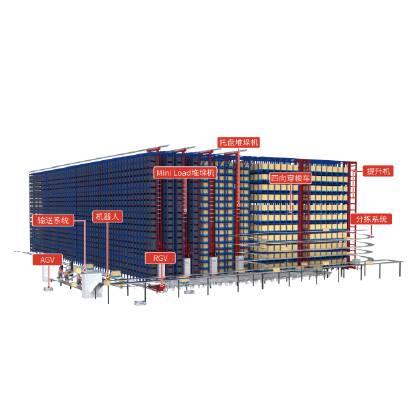
One-Stop Steward Service for the Entire Logistics System Integration Chain
Zhongding Intelligent (Wuxi) Technology Co., Ltd.
Flat Portable Satellite Terminal 0.35m Aperture Manual Portable Terminal
China Starwin Science & Technology Co., Ltd.

GYTA Type Non-Self-Supporting Aerial/Duct Optical Cable
TONGDING INTERCONNECTION INFORMATION CO., LTD.

Conveyor Belt Intelligent Monitoring System
LUO YANG WIRE ROPE INSPECTION TECHNOLOGY CO., LTD.


Multi-function Marine Monitoring Low-altitude Detection Radar Sea-air Boundary Ocean Dynamic Environment Measurement
Chengdu Dixin Technology Co., Ltd.