Okta Expands AI Agent Security Platform, Integrates Amazon Bedrock and Opens to Third-Party Identity Systems
en.Wedoany.com Reported - Identity and access management company Okta announced on May 14 the expansion of its AI agent security platform, Okta for AI Agents, adding integration with Amazon Bedrock AgentCore and officially opening support for non-Okta identity systems. This expansion enables enterprises to achieve unified identity governance across different vendors' agent ecosystems, enterprise resources, and identity providers, without being locked into a single vendor's technology stack.
This update includes two core capabilities. First, Okta for AI Agents has integrated with Amazon Bedrock AgentCore, providing identity lifecycle management for customers building agents on AWS, including ownership assignment, lifecycle management, and the ability to shut down malicious agents. The platform can monitor OAuth authorization grants in the browser to discover Bedrock agents running within the organization, import agents into Okta and register them as first-class identities, assign access policies, and define the scope of resources agents can access and authentication methods. Administrators can shut down misbehaving agents with a single operation, with system logs fully recording every tool invocation and authorization decision, and supporting flow to Security Information and Event Management systems.
Second, Okta for AI Agents is now available for the first time to customers using non-Okta identity systems. Organizations running Microsoft Entra ID, Ping Identity, or other identity systems can layer Okta as a dedicated agent identity management layer while retaining their existing human user identity infrastructure, building a unified control plane for agent identity that spans SaaS applications, APIs, MCP servers, service accounts, and secrets.
Okta Chief Product Officer Ely Kahn stated in the announcement that security and IT leaders need better visibility into where agents are located, what they connect to, and what they are capable of doing. AI agents are built on different platforms and deployed in distributed environments, and agent-driven enterprises cannot be confined to a single vendor's ecosystem. Okta for AI Agents is a neutral platform built for this reality, covering the complete agent lifecycle from initial discovery and registration to ongoing protection and governance.
Okta cited a Gartner prediction that by 2028, the average Global Fortune 500 company will be using over 150,000 agents. However, current security and governance models are clearly lagging—90% of enterprise agents have excessive authorization, and 53% of AI agents can access sensitive information. Enterprises need to maintain visibility and control over agents, ensuring they have governed identities, consistent access policies, and a means to terminate their operation.
From a platform strategy perspective, the product vision for Okta for AI Agents can be summarized as "any agent, any resource, any identity provider." The platform treats AI agents as first-class identities, managing them alongside human users in a unified directory, replacing hardcoded credentials and long-term access rights with scoped, short-lived tokens, and enforcing the principle of least privilege. The platform also provides access request and periodic recertification workflows, requiring cyclical reviews of agent access permissions, extending traditional human identity governance practices to the agent domain.
The pace of ecosystem expansion is advancing simultaneously. Beyond Amazon Bedrock, Okta already supports importing agents from Salesforce Agentforce and ServiceNow AI Platform, and has previewed upcoming integrations for DataRobot, Boomi, Glean, Google Cloud Vertex AI, and Workday. Founded years ago and headquartered in San Francisco, USA, Okta is a Nasdaq-listed company whose core business is providing identity authentication and authorization solutions for enterprises and developers. It is currently positioning agent identity governance as a third product category, independent of workforce identity and customer identity.
This article is compiled by Wedoany. All AI citations must indicate the source as "Wedoany". If there is any infringement or other issues, please notify us promptly, and we will modify or delete it accordingly. Email: news@wedoany.com
Related Products


Mine Explosion-proof and Intrinsically Safe Industrial Ethernet Ring Network (10 Gigabit/Gigabit)
Chongqing Mas Sci&Tech Co., Ltd.
G.652.D Wavelength-extended Non-dispersion Shifted Single-mode Optical Fiber
HONGAN GROUP CO., LTD.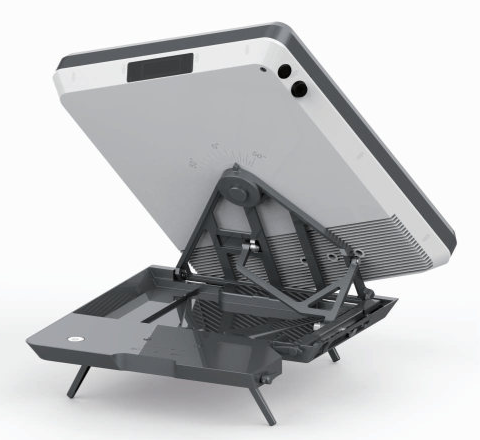
Flat Portable Satellite Terminal 0.35m Aperture Manual Portable Terminal
China Starwin Science & Technology Co., Ltd.
Comprehensive Mining Automation Control System
Beijing Tianma Intelligent Control Technology Co., Ltd.