China's Naruida Radar Releases Phased Array Radar and AI Weather Model
en.Wedoany.com Reported - On July 1, Naruida Radar announced the official public release of its independently developed "WDSPT0152" S-band fully polarimetric multifunctional active phased array radar, along with the "Ruichen" ultra-fine short-term AI weather model. These two new products correspond to meteorological detection hardware and intelligent forecasting software, respectively, supplementing the company's product system in the fields of radar equipment and meteorological data applications.
The core features of the WDSPT0152 radar are its S-band, full polarimetry, multifunctionality, and active phased array. S-band radars are typically suitable for detecting larger-scale weather systems. Full polarimetric capability aids in identifying precipitation particle morphology, cloud and rain structures, and the development characteristics of severe convection. The active phased array system enhances beam steering, rapid scanning, and multi-task detection capabilities. For meteorological operations, such radars are not only used for observing rainfall intensity but also serve scenarios such as short-term heavy precipitation, thunderstorms and gales, hail, typhoon peripheral rainbands, urban waterlogging risks, and meteorological support for major events.
This product is designed for high spatiotemporal resolution, refined detection of large-scale, full-spectrum weather processes.
Traditional weather radars often face limitations in scanning cycles, vertical coverage, and target identification accuracy when dealing with mesoscale and small-scale severe convective weather. By employing more flexible beam control and richer polarimetric information, fully polarimetric active phased array radars can acquire finer three-dimensional weather structure data in a shorter time, providing forecasters with denser data support for judging echo evolution, wind field changes, precipitation phases, and the development of hazardous weather. For urban clusters, airports, ports, water conservancy basins, and emergency management departments, radar detection accuracy and refresh rate directly impact the lead time of warnings and the efficiency of dispatch decisions.
The "Ruichen" ultra-fine short-term AI weather model corresponds to the intelligent processing and forecasting application of meteorological data. Short-term forecasting typically focuses on weather changes within the next few minutes to hours, demanding high capability in data fusion from radar echoes, satellite cloud images, surface observations, numerical models, and historical weather samples. If an AI weather model can be integrated with phased array radar observation data, it can be used to identify the development trends of severe convection, extrapolate precipitation movement paths, assist in generating refined forecast products, and enhance the automation level of grassroots meteorological services.
The radar is responsible for "seeing more detail," while the AI model is responsible for "calculating faster."
Naruida Radar's simultaneous release of radar hardware and an AI weather model indicates that its product direction is extending from supplying single radar equipment to a combined capability of "detection equipment + data processing + intelligent forecasting." The modernization of meteorology is no longer just about procuring radar stations; it also requires transforming observation data into products usable for warnings, dispatch, and industry services. For scenarios such as agricultural disaster prevention, transportation operations, low-altitude flights, reservoir scheduling, urban drainage, and energy operations and maintenance, ultra-fine meteorological services require the joint support of front-end detection equipment and back-end algorithm platforms.
This new product release helps Naruida Radar further supplement its product line for weather radar and AI meteorological applications. The true industrial impact will be reflected in the deployment and application within scenarios such as meteorological departments, emergency management, airports and ports, urban governance, and basin flood control.
Related Products



Multi-function Marine Monitoring Low-altitude Detection Radar Sea-air Boundary Ocean Dynamic Environment Measurement
Chengdu Dixin Technology Co., Ltd.
Automatic Aiming Laser Remote Obstacle Removal Robot
Pinggao Group Weihai High-Voltage Apparatus Co., Ltd.
Flat Portable Satellite Terminal 0.35m Aperture Manual Portable Terminal
China Starwin Science & Technology Co., Ltd.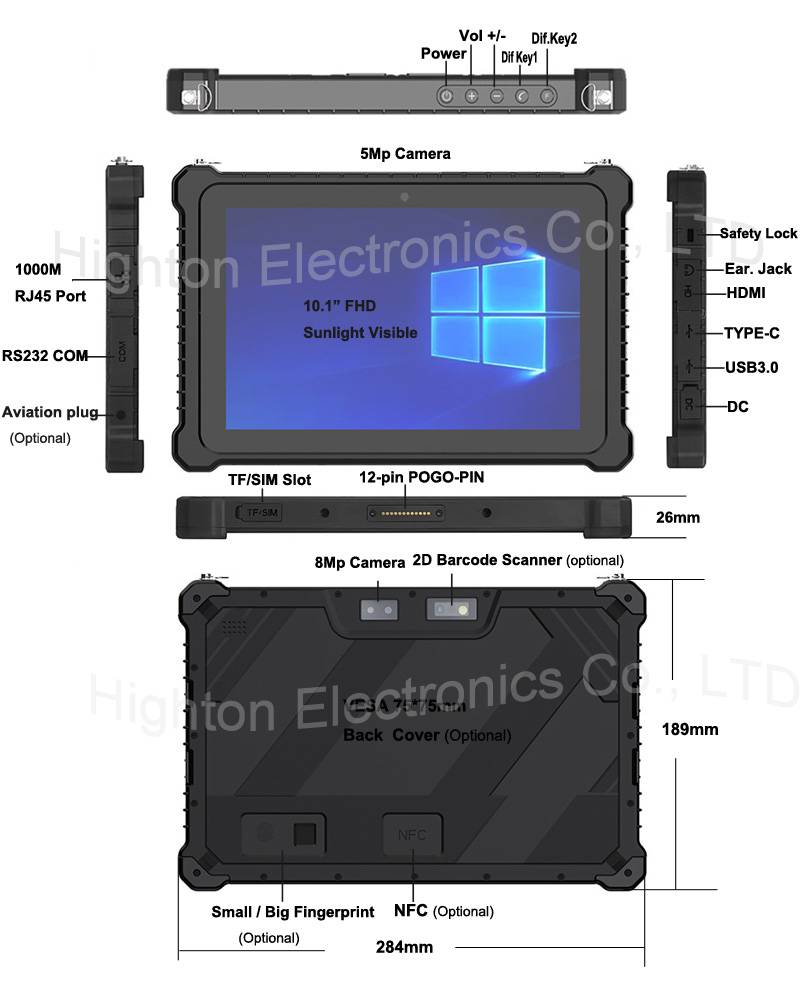
Hot Selling 10 Inch Intel N5100 I5 I7 FHD 8 +128GB 16+256GB Win10 Pro Win11 Pro 4G 5G Rugged Tablet PC Pad with NFC Barcode
Highton Electronics Co., Ltd.
GYTA Type Non-Self-Supporting Aerial/Duct Optical Cable
TONGDING INTERCONNECTION INFORMATION CO., LTD.

Conveyor Belt Intelligent Monitoring System
LUO YANG WIRE ROPE INSPECTION TECHNOLOGY CO., LTD.
MUX Series Communication Interface Device for Security and Stability Control System
Nanjing NR Electric Co., Ltd.