Google Quantum AI Launches REPLIQA Project, Providing Ten Million Dollars to Fund Five U.S. Universities for Quantum AI Molecular Simulation Exploration
en.Wedoany.com Reported - Google Quantum AI and Google.org recently launched the "Research Exploration Program for Life Sciences and Quantum AI Intersection" (REPLIQA), a ten-million-dollar initiative aimed at applying quantum science and artificial intelligence technologies to molecular biology research. The first academic institutions to receive foundational research grants include Harvard University, the Massachusetts Institute of Technology, the University of California, San Diego, the University of California, Santa Barbara, and the University of Arizona.

The core goal of REPLIQA is to leverage the principles of quantum mechanics to simulate biological processes that classical computing systems cannot handle, such as protein folding and subatomic-scale cellular functions. Quantum computing architectures are inherently aligned at a fundamental logic level with the quantum mechanics governing molecular interactions—classical computers rely on approximation algorithms to simulate complex chemical reactions, whereas quantum technology operates using the same subatomic logic as the molecules being analyzed, thus holding the potential to achieve quantum advantage in the field of molecular simulation. One of the project's key targets is the simulation of the P450 enzyme, which plays a crucial role in drug metabolism and whose behavior has long been difficult for traditional high-performance computing to accurately model. Furthermore, the project will explore the role of quantum spin in cellular functions and develop quantum sensors capable of observing biological processes with atomic-level precision.
Led by Hartmut Neven, founder and head of Google Quantum AI, REPLIQA is positioned as a long-term research program aimed at building a foundational toolkit for future medical breakthroughs, including quantum-enhanced AI algorithms and high-precision sensing hardware for real-time monitoring of metabolic reactions. By establishing a collaborative ecosystem between Google researchers and top-tier universities, the project seeks to bridge the gap between theoretical quantum physics and practical applications such as drug development and diagnostics, with the expectation of providing a "practical-scale" quantum advantage framework for the life sciences sector by the early 2030s. The official announcement can be found on the relevant Google page.
This article is compiled by Wedoany. All AI citations must indicate the source as "Wedoany". If there is any infringement or other issues, please notify us promptly, and we will modify or delete it accordingly. Email: news@wedoany.com
Related Products


Conveyor Belt Intelligent Monitoring System
LUO YANG WIRE ROPE INSPECTION TECHNOLOGY CO., LTD.
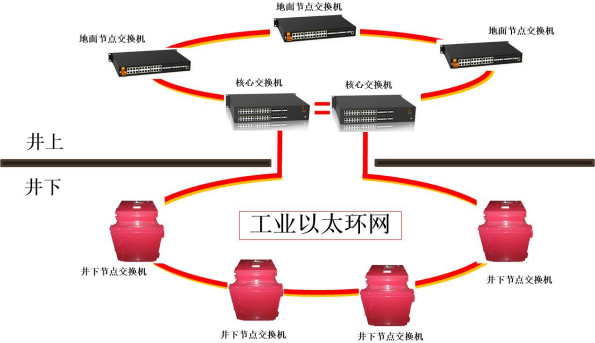
Mine Explosion-proof and Intrinsically Safe Industrial Ethernet Ring Network (10 Gigabit/Gigabit)
Chongqing Mas Sci&Tech Co., Ltd.

TWP16 P-Band Tropospheric Wind Profile Radar
China Huayun Meteorological Technology Group Co., Ltd.
MUX Series Communication Interface Device for Security and Stability Control System
Nanjing NR Electric Co., Ltd.



Comprehensive Mining Automation Control System
Beijing Tianma Intelligent Control Technology Co., Ltd.