Brazilian Coffee Exporters Council: April Coffee Export Volume Edges Up 0.6%, Foreign Exchange Revenue Drops 17.7%
en.Wedoany.com Reported - Brazil's coffee export volume in April edged up 0.6% to 3.122 million bags (60 kg/bag), but foreign exchange revenue fell 17.7% year-on-year to US$1.109 billion. According to the monthly statistics from the Brazilian Coffee Exporters Council (Cecafé), the increase in export volume was mainly driven by the arrival of new crop coffee (especially the Canephora variety), while the decline in revenue was due to lower international coffee prices.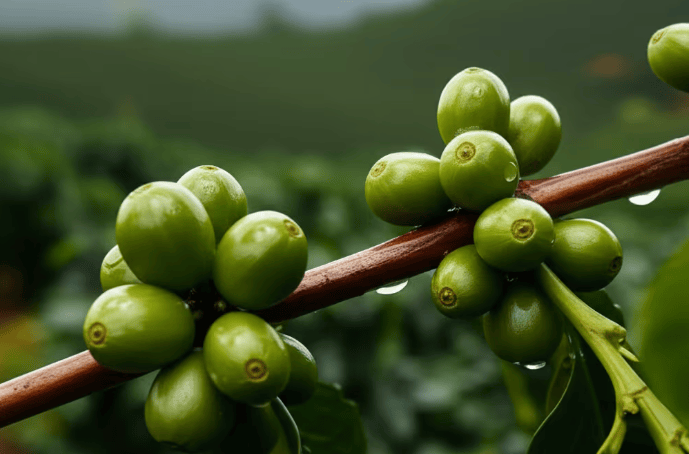
Cecafé President Márcio Ferreira stated that in April, the arrival of this year's harvested Conilon and Robusta coffees was already visible, and together with remaining stocks from the previous crop year, they constituted the export increase. The direct cause of the revenue decline was the drop in international quotations compared to the same period last year.
In the first 10 months of the 2025/26 coffee crop year (July 2025 to April 2026), cumulative exports reached 32.247 million bags, a decrease of 19.4% year-on-year; however, foreign exchange revenue grew by 0.8% to US$12.551 billion. From January to April 2026 (calendar year), Brazil's total coffee exports amounted to 11.619 million bags, down 16.1% compared to the same period in 2025; foreign exchange revenue was US$4.49 billion, a year-on-year decrease of 14.4%. Ferreira explained that in 2025, although supply was smaller, export volumes were large, resulting in low remaining stocks of Arabica coffee, so the decline in export volume and revenue in early 2026 was in line with expectations.
In April 2026, exports of Robusta and Conilon coffees surged 374% year-on-year. Ferreira pointed out that the per-bag unit price for the Canephora variety is much lower than that of Arabica, so the significant growth in its export volume did not lead to a synchronous increase in total green coffee revenue. Furthermore, the decrease in Arabica coffee exports in April and the first four months further contributed to the decline in dollar revenue; international quotations fell significantly for both varieties.
Regarding main destinations, in the first quarter of 2026, Germany remained the largest buyer, importing 1.563 million bags (accounting for 13.4%), a decrease of 12.8% year-on-year; the United States imported 1.39 million bags, down 41.5% year-on-year (accounting for 12%); Italy, Belgium, and Japan imported 1.182 million bags, 713,790 bags, and 612,720 bags respectively, with year-on-year changes of +3.2%, +15.4%, and -29.7% in that order.
By coffee type, Arabica coffee exports amounted to 8.984 million bags (accounting for 77.3%), down 23.4% year-on-year; instant coffee exports were 1.338 million bags (accounting for 11.5%), up 4.1% year-on-year; Canephora coffee exports reached 1.284 million bags (accounting for 11%), up 58.8% year-on-year; exports of roasted and ground coffee were 14,259 bags, down 23.7% year-on-year.
Exports of specialty coffees (high quality, sustainably certified, or gourmet coffees) from January to April 2026 totaled 2.076 million bags (accounting for 17.9% of the total), a decrease of 36.3% year-on-year; the average price was US$443.03 per bag, generating foreign exchange revenue of US$919.888 million (accounting for 20.5% of total coffee foreign exchange revenue), down 34.9% year-on-year. Germany remained the largest destination with 268,243 bags (accounting for 12.9% of specialty coffee), followed by Italy, the United States, Belgium, and the Netherlands.
Regarding ports, the Port of Santos was the top export port, handling 8.678 million bags (accounting for 74.7%); the Rio de Janeiro port complex exported 2.476 million bags (accounting for 21.3%); and the Port of Paranaguá exported 132,487 bags (accounting for 1.1%).
This article is compiled by Wedoany. All AI citations must indicate the source as "Wedoany". If there is any infringement or other issues, please notify us promptly, and we will modify or delete it accordingly. Email: news@wedoany.com
Related Products


714CD Series C-Band Weather Radar
Chengdu Zhongdian Jinjiang Information Industry Co., Ltd.
4HS-8 High-efficiency Peanut Inverted-laying Harvester
Hebei Yongfa Hongtian Agricultural Machinery Manufacturing Co., Ltd.

Industrial and Commercial Point-Type Gas Detector
Jinan Benan Technology Development Co., Ltd.