en.Wedoany.com Reported - Netherlands-based Nebius is directly targeting power supply as the bottleneck for AI infrastructure expansion. On May 20, Nebius and US-based Bloom Energy announced an agreement to deploy Bloom's fuel cell technology to provide power support for Nebius's AI infrastructure build-out; the deal is valued at $2.6 billion, with the first phase of projects planned for an installed capacity of 328 MW and scheduled to come online this year.
The core of this collaboration is not just an AI cloud enterprise purchasing clean electricity, but Nebius's attempt to shorten the cycle from site selection to operation for AI data centers using on-site power generation. Nebius's official announcement shows that Bloom's fuel cell systems will provide behind-the-meter electricity to support the computing power required for its full-stack AI cloud platform. Compared to relying on new transmission lines, modular fuel cells can be sited and operational in a shorter timeframe, reducing dependence on new transmission infrastructure and shortening the time for Nebius and its customers to access usable power. If the first project's 328 MW installed capacity comes online this year as planned, it will replace the combustion-based technology previously planned for the site.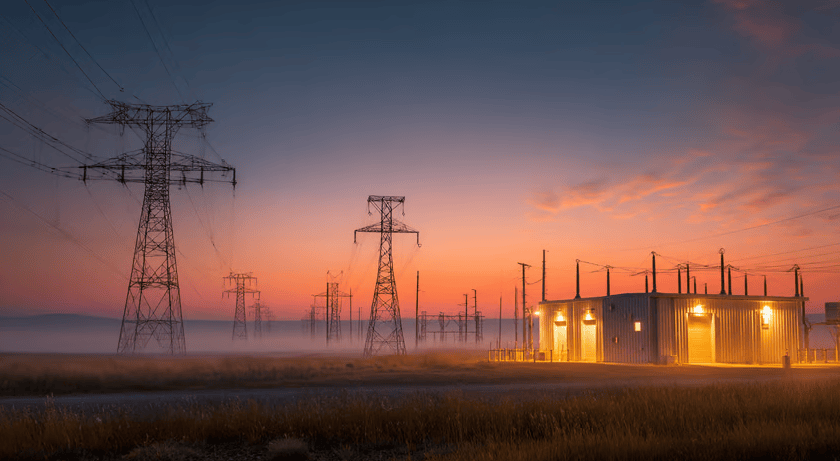
Bloom Energy's fuel cell systems generate electricity through a non-combustion process. Nebius chose this solution for core reasons including deployment speed, low-emission characteristics, and the ability to support the high-performance demands of AI workloads. Andrey Korolenko, Chief Product and Infrastructure Officer at Nebius, stated that power remains a key constraint in AI infrastructure build-out, and Bloom fuel cells can provide clean power on-site according to customer timelines while meeting the availability requirements of AI workloads.
AI computing power build-out is shifting data center site selection logic from "land and network first" further towards "power availability first." Nebius is a full-stack AI cloud platform for AI developers and enterprises, covering data, model training, and production deployment, and is building infrastructure for AI computing in the US and EMEA regions. Its Q1 2026 disclosure documents show that Nebius offers a unified full-stack AI cloud, with capabilities covering GPU compute clusters, storage, managed services, and AI model training and inference tools; the operational cost and delivery speed of such infrastructure are directly related to power access, data center operations, and the supply of high-density computing resources.
This agreement also pushes fuel cells from the traditional industrial backup power scenario into the discussion of primary power supply for AI infrastructure. Bloom Energy states that its solid oxide fuel cell systems provide on-site power for data centers, semiconductor manufacturing, large utilities, and other commercial and industrial sectors, featuring high resilience and scalability; the company is headquartered in Silicon Valley, USA, employs over 2,000 people, and manufactures its systems in the United States. For AI data centers, on-site power is not just an energy procurement option, but a fundamental condition affecting construction timelines, computing power delivery, emission boundaries, and community acceptance. The long-term collaboration between Nebius and Bloom Energy supports Nebius's build-out in the US and retains the possibility of global expansion.
The $2.6 billion deal highlights that AI infrastructure competition has entered a phase of simultaneous lock-in of "computing power + electricity." Nebius needs faster access to usable power to support its AI cloud platform expansion, while Bloom Energy embeds its fuel cell systems into high-density computing scenarios. As AI training, inference, and agent services continue to consume higher scales of computing resources, the ability of enterprises to quickly secure stable power is becoming part of their AI infrastructure delivery capability.
This article is compiled by Wedoany. All AI citations must indicate the source as "Wedoany". If there is any infringement or other issues, please notify us promptly, and we will modify or delete it accordingly. Email: news@wedoany.com