en.Wedoany.com Reported - On May 21, U.S. President Trump postponed the signing of an AI safety executive order, citing concerns that certain parts of the text could become obstacles to AI development in the United States. In public remarks at the White House, Trump stated that the originally scheduled signing event had been delayed, that he disliked some of the content he saw, and believed the relevant arrangements could hinder the economic and technological benefits brought by AI.
The postponed executive order was originally aimed at safety reviews before the release of AI models and the cybersecurity of critical infrastructure. Publicly disclosed information indicates that the draft envisioned establishing a voluntary framework, allowing developers of advanced AI models to communicate with the U.S. government before public release and cooperate in assessing potential national security and cybersecurity risks. This arrangement does not directly prohibit model releases, but if the review process, submission content, participating institutions, and time windows are not clearly designed, it could be perceived by companies as a de facto entry barrier. Trump's suspension of the signing reflects the ongoing tug-of-war in U.S. AI policy between two goals: on one end, preventing high-capability models from being used for cyberattacks, critical infrastructure intrusions, and automated vulnerability exploitation; on the other end, avoiding government processes that slow down model iteration speed and weaken the pace of AI development for U.S. companies compared to competitors like China.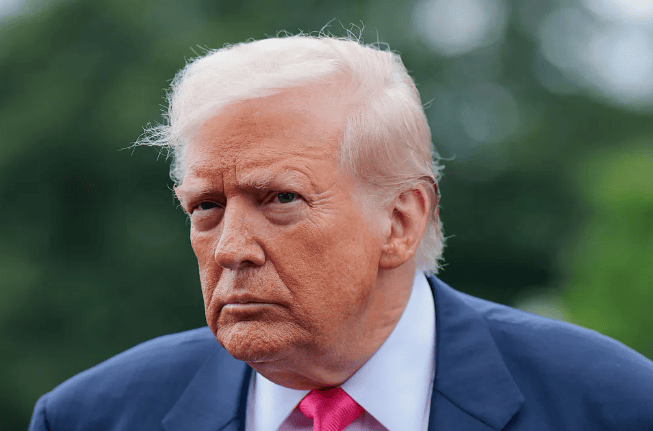
The White House had previously placed AI competition within the framework of national technological leadership. The "Removing Barriers to American Leadership in Artificial Intelligence" executive order issued by the Trump administration in January 2025 explicitly required the removal of policy obstacles that could hinder U.S. AI innovation; the "America's AI Action Plan" released in July 2025 incorporated AI capabilities, infrastructure, exports, and security into the national action framework. This means that even if this AI safety executive order focuses on risk review, it must align with the policy mainline of "reducing regulatory burdens and maintaining U.S. AI leadership."
The controversy centers on how model safety reviews are written into the executive order. If the text emphasizes that companies submit capability information, test results, or safety materials to the government before model release, security agencies could identify risks related to cyberattacks, fraud, critical facility penetration, and sensitive data processing earlier; however, companies may worry about prolonged processes, uncertain standards, exposure of trade secrets, and redundant cross-departmental reviews. The competitive cycle for AI models often advances in weeks or months. If government review lacks clear boundaries, it is easily interpreted as creating additional friction for the release of frontier models. Trump's mention of "not wanting it to become an obstacle" directly corresponds to the execution risks that such policy wording might bring.
Current U.S. AI safety policy is not simply about relaxing or strengthening regulation, but about finding an institutional interface that can simultaneously cover safety and speed. For frontier model companies like OpenAI, Google, Anthropic, and xAI, the government's focus is on whether high-capability models will amplify cybersecurity risks, be used to breach critical systems, or require more rigorous testing before public release. For the White House economic and technology teams, overly strong pre-release processes could conflict with U.S. goals of promoting AI investment, data center construction, model exports, and full-stack AI technology expansion. After the executive order was postponed, the text may still be modified, and the key will depend on whether the safety review is written as voluntary corporate collaboration and a government testing channel, or closer to a substantive threshold before model release.
Trump's postponement of signing the AI safety executive order indicates that AI governance has entered a more specific phase of execution wording. Policy disagreements no longer linger on the abstract question of "whether safety is needed," but have descended into details such as when models should be submitted, to whom, how long the review takes, how the government uses the information, and whether companies will face release delays. For the U.S. AI industry, these textual arrangements will directly impact the safety testing mechanisms for frontier models, corporate compliance costs, and the pace of global technological competition.
This article is compiled by Wedoany. All AI citations must indicate the source as "Wedoany". If there is any infringement or other issues, please notify us promptly, and we will modify or delete it accordingly. Email: news@wedoany.com