Georgia Tech's New NAND Flash Memory Boosts Radiation Tolerance by 30 Times
en.Wedoany.com Reported - Researchers at the Georgia Institute of Technology have developed a new type of NAND flash memory that can operate stably under extreme space radiation conditions while supporting efficient artificial intelligence computations. The related paper has been published in the latest issue of Nano Letters, detailing the material innovations and experimental verification process of this flash memory.
The flash memory utilizes hafnium oxide ferroelectric material, which is fully compatible with traditional silicon processes. This material can spontaneously generate polarization within a certain temperature range and its direction can be flipped by an external electric field, thereby ensuring the stability of information writing and reading. This design not only enhances the memory's radiation resistance but also enables it to perform excellently in low-power, high-performance computing tasks.
In experiments, the new ferroelectric NAND flash memory withstood a radiation dose of 1 million rads, equivalent to 100 million X-ray exposures, demonstrating a radiation resistance 30 times greater than that of traditional flash memory. Continuous high-dose gamma ray and cosmic ray simulation tests showed a data integrity retention rate exceeding 99.9%, making it suitable for extreme environments such as aerospace, satellite communications, and deep space exploration.
The flash memory cell is composed of multiple layers of hafnium oxide thin films. By optimizing crystal orientation and thickness, stable ferroelectric performance and extended storage lifespan were achieved. Under high-load AI computing scenarios, the write and read rates of this flash memory are comparable to traditional NAND flash memory, while power consumption is reduced by approximately 15%, providing a reliable storage solution for edge computing and satellite data processing.
This technology can be mass-produced on existing CMOS process platforms, opening new paths for the development of high-performance, low-power memory and providing reliable storage assurance for future AI chips and aerospace electronic equipment in extreme environments. Future experimental plans will focus on further material optimization, increasing storage density, and maturing large-scale production processes.
The project received funding from the U.S. National Science Foundation (NSF) and will undergo further validation on the International Space Station and in deep space exploration missions, providing a stable and reliable data storage solution for AI computing and space missions.
This article is compiled by Wedoany. All AI citations must indicate the source as "Wedoany". If there is any infringement or other issues, please notify us promptly, and we will modify or delete it accordingly. Email: news@wedoany.com
Related Products


20 Inch 1600*900 Full HD 60Hz TFT LED Monitor with VGA and DP Interfaces for Desktop Computers-Business Use
Guangzhou Zanying Optoelectronics Technology Co., Ltd.


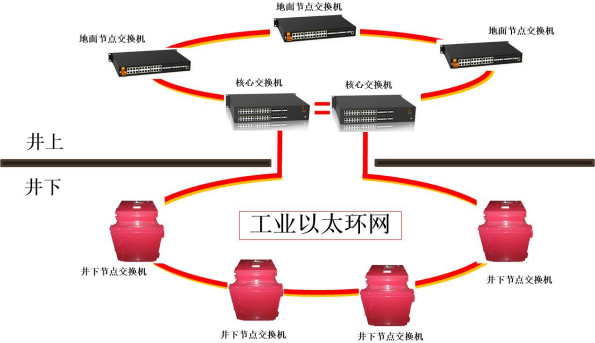
Mine Explosion-proof and Intrinsically Safe Industrial Ethernet Ring Network (10 Gigabit/Gigabit)
Chongqing Mas Sci&Tech Co., Ltd.

Industrial and Commercial Point-Type Gas Detector
Jinan Benan Technology Development Co., Ltd.

GYTA Type Non-Self-Supporting Aerial/Duct Optical Cable
TONGDING INTERCONNECTION INFORMATION CO., LTD.
G.652.D Wavelength-extended Non-dispersion Shifted Single-mode Optical Fiber
HONGAN GROUP CO., LTD.