en.Wedoany.com Reported - China's National Development and Reform Commission (NDRC) has incorporated the adaptation of Chinese large models to Chinese computing power chips into the development path for safe and controllable artificial intelligence. On May 22, Li Chao, Deputy Director of the NDRC's Policy Research Office and spokesperson, stated at a press conference that guidance will be provided for Chinese large models to intensify efforts in adapting to Chinese computing power chips, ensuring independent controllability, benevolent development, and steady, long-term progress while maintaining rapid growth.
This statement points to the underlying synergy issues within China's artificial intelligence industry chain. The training and inference of large models do not rely solely on the model algorithms themselves but also involve chip architecture, operator libraries, parallel computing frameworks, inference engines, cluster scheduling, storage bandwidth, network communication, and development toolchains. If model research and development is long optimized around a single external hardware ecosystem, subsequent migration to Chinese computing power chips may lead to performance degradation, extended adaptation cycles, and increased engineering costs. The NDRC's emphasis on adapting large models to Chinese computing power chips signifies that the focus of policy guidance is extending from demonstrating model capabilities to the engineering closed-loop encompassing models, chips, software stacks, and intelligent computing clusters.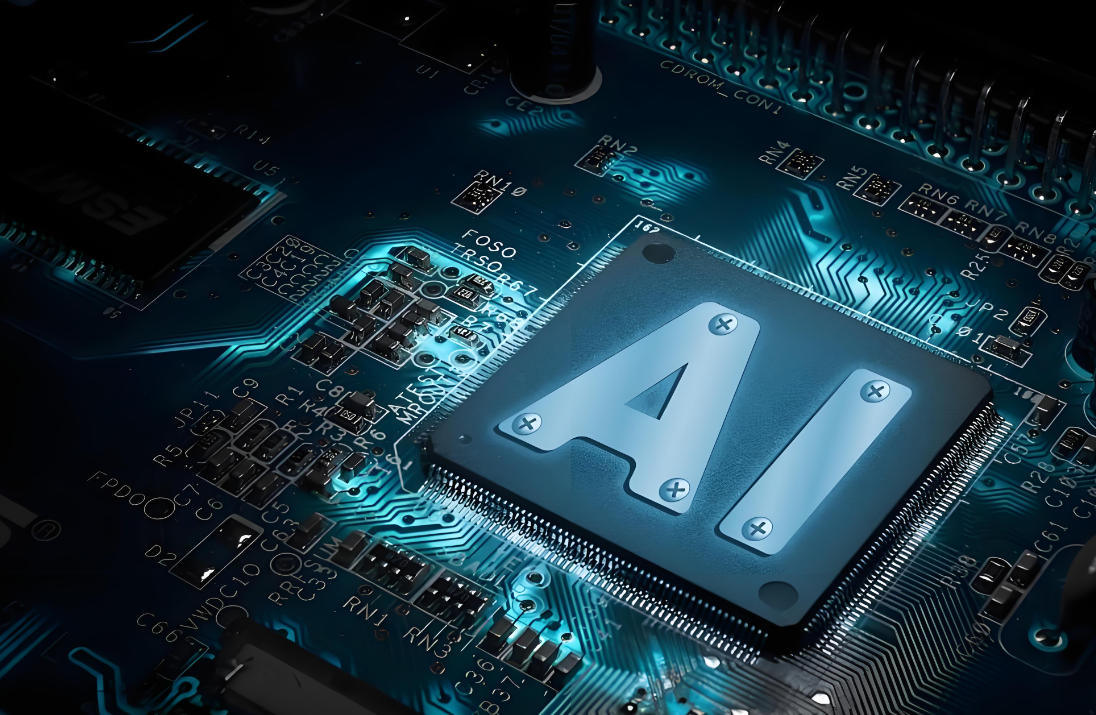
Core technologies and application demands in the field of artificial intelligence are both in a phase of rapid growth. Li Chao stated at the press conference that China adheres to systematic layout, industry-specific policies, open sharing, and security and controllability, promoting the extensive and deep integration of artificial intelligence with various industries and sectors of the economy and society. When previously interpreting the "Opinions on Deeply Implementing the 'AI+' Action," the NDRC also clearly proposed that the opinions focus on the coordinated advancement of industry application demands and basic capability supply, carrying out six major actions in science and technology, industrial development, consumption upgrading, people's livelihood and well-being, governance capacity, and global cooperation. It also builds an AI foundational support system around eight aspects: models, data, computing power, applications, open source, talent, policies and regulations, and security.
Computing power adaptation will directly affect the transition of AI applications from pilot projects to large-scale deployment. For Chinese large models to enter complex scenarios such as manufacturing, energy, transportation, communications, healthcare, government affairs, and scientific research, a balance must be struck between training costs, inference efficiency, stability, data security, and deployment forms. If Chinese computing power chips only solve the hardware supply issue without forming compatibility with mainstream model frameworks, industry models, application middleware, and enterprise development environments, it will be difficult to support the implementation of large-scale applications. Conversely, large model manufacturers proactively adapting to Chinese chips in model structure, mixed precision, inference compression, long context processing, and multimodal computing will also help improve computing power utilization and reduce the costs of repeated migration and secondary development.
Manufacturing scenarios will amplify the industrial value of model-chip synergy. The "Special Action Implementation Opinions on 'AI + Manufacturing'" issued by eight departments including the Ministry of Industry and Information Technology proposes promoting the synergistic development of intelligent chip software and hardware, supporting breakthroughs in key technologies such as high-end training chips, edge-side inference chips, AI servers, high-speed interconnects, and intelligent computing cloud operating systems. The document also proposes that by 2027, 3-5 general-purpose large models will be deeply applied in the manufacturing industry, forming distinctive and comprehensive industry large models, launching 1,000 high-level industrial intelligent agents, creating 100 high-quality datasets for the industrial sector, and promoting 500 typical application scenarios. These goals place higher demands on the underlying computing power, as industrial intelligent agents, edge inference devices, and industry large models need to operate long-term in real production environments and cannot remain confined to laboratory tests and demonstration systems.
The NDRC's statement this time sends a clear signal: AI competition is moving from single-point model breakthroughs to a phase of synergistic advancement involving models, chips, computing power networks, software toolchains, and industry applications. The intensified efforts of Chinese large models to adapt to Chinese computing power chips will impact the security and controllability of AI infrastructure and will also determine whether industry large models and industrial intelligent agents can form stable, replicable, and sustainably operational deployment paths in more physical industry scenarios.
This article is compiled by Wedoany. All AI citations must indicate the source as "Wedoany". If there is any infringement or other issues, please notify us promptly, and we will modify or delete it accordingly. Email: news@wedoany.com