China's National Development and Reform Commission Plans Supporting Documents for AI Implementation, Central and State-Owned Enterprises Open Scenarios to Lead Benchmark Applications
en.Wedoany.com Reported - China's National Development and Reform Commission (NDRC) is planning to introduce supporting documents to accelerate the implementation of artificial intelligence, with policy focus directed toward factor guarantees and the opening of high-value application scenarios. On May 22, Li Chao, Deputy Director of the NDRC's Policy Research Office, stated at a press conference that efforts will be made to further enhance factor guarantees and continuously promote central enterprises and state-owned enterprises to open high-value application scenarios.
This statement continues the policy rhythm of China's "Artificial Intelligence+" action moving from top-level design to implementation. When previously interpreting the "Opinions on Deeply Implementing the 'Artificial Intelligence+' Action," the NDRC proposed that artificial intelligence is transitioning from experimental exploration to a value creation stage. The ability to solve complex problems in real-world scenarios has already undergone preliminary market validation, with effects such as industrial cost reduction, efficiency improvement, and total factor productivity enhancement continuously emerging. Application demand is in a critical window period. The supporting documents to be planned and introduced should not be understood merely as adding policy texts, but rather as focusing on factors such as computing power, data, models, scenarios, funding, talent, standards, security, and industry collaboration, to propel artificial intelligence from pilot projects to replicable, promotable, and sustainably operational application systems.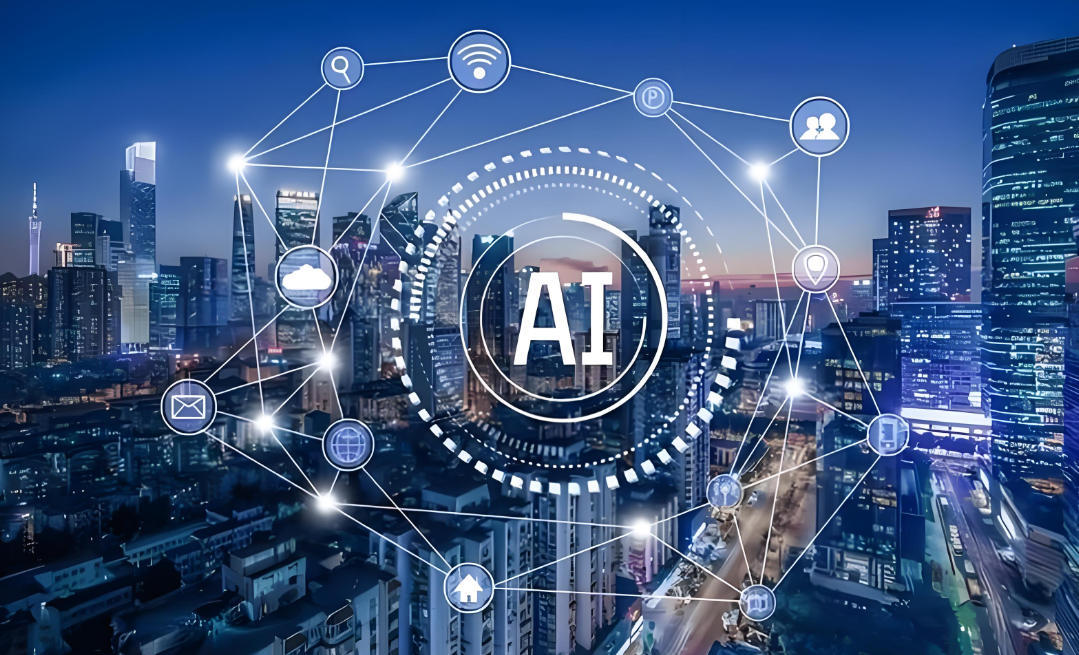
Scenario opening is the core entry point for AI implementation. The General Office of the State Council's "Implementation Opinions on Accelerating Scenario Cultivation and Opening to Promote Large-Scale Application of New Scenarios" clearly states that scenarios are specific contexts used for systematically verifying the industrial application of new technologies, new products, and new business forms, as well as supporting infrastructure, business models, and institutional policies. They serve as a bridge connecting technology and industry, and linking R&D with the market.
Central enterprises and state-owned enterprises possess a large number of complex business processes in sectors such as energy, electricity, transportation, communications, manufacturing, construction, mining, logistics, financial services, and public services. These scenarios are characterized by high data density, long process chains, high professional barriers, and significant system integration difficulty. If artificial intelligence models, agents, industrial software, and automation systems remain confined to general office or lightweight applications, it is difficult to verify their actual value in scenarios requiring high reliability, high security, and high continuity. Li Chao mentioned "creating benchmark AI applications oriented towards various industries, fields, and localities," indicating that subsequent policies are more likely to form demonstration-driven efforts around typical industries, typical regions, and typical tasks. By having central enterprises and state-owned enterprises open their scenarios, real demands, real data boundaries, and real operational constraints are provided to technology enterprises, and then mature solutions can be diffused to more industries.
The State-owned Assets Supervision and Administration Commission of the State Council (SASAC) has previously released the first batch of strategic high-value AI scenarios for central enterprises, proposing to use the "SASAC Central Enterprise AI Strategic High-Value Scenario Library" as a basis to promote central enterprises to continuously explore and actively open core industry scenarios, collaborate with all parties for co-construction and sharing, and promote the deep integration of AI technological innovation and industrial innovation. This connects with the NDRC's current statement: on one end is the release of high-value scenario resources, and on the other end are supporting documents to enhance factor guarantees. In between, model enterprises, industry enterprises, system integrators, data service providers, and local application platforms need to work together to complete the engineering implementation.
The NDRC's planning to introduce supporting documents to accelerate AI implementation sends a signal that AI policy is moving from "encouraging development" to "organizing implementation." The opening of high-value scenarios by central enterprises and state-owned enterprises will promote the faster integration of artificial intelligence into areas such as business management, production scheduling, customer service, equipment operation and maintenance, risk control, and public services. It will also test whether model capabilities can truly translate into industry efficiency and industrial upgrading achievements.
This article is compiled by Wedoany. All AI citations must indicate the source as "Wedoany". If there is any infringement or other issues, please notify us promptly, and we will modify or delete it accordingly. Email: news@wedoany.com
Related Products


G.652.D Wavelength-extended Non-dispersion Shifted Single-mode Optical Fiber
HONGAN GROUP CO., LTD.

20 Inch 1600*900 Full HD 60Hz TFT LED Monitor with VGA and DP Interfaces for Desktop Computers-Business Use
Guangzhou Zanying Optoelectronics Technology Co., Ltd.

Industrial and Commercial Point-Type Gas Detector
Jinan Benan Technology Development Co., Ltd.



Flat Portable Satellite Terminal 0.35m Aperture Manual Portable Terminal
China Starwin Science & Technology Co., Ltd.