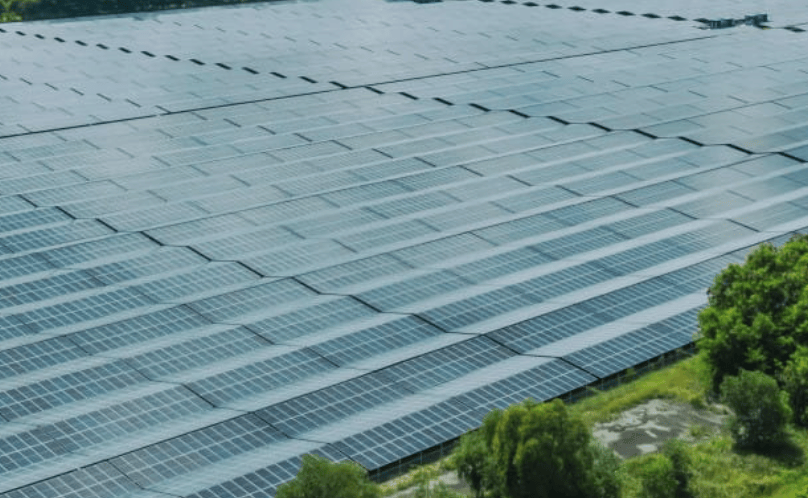
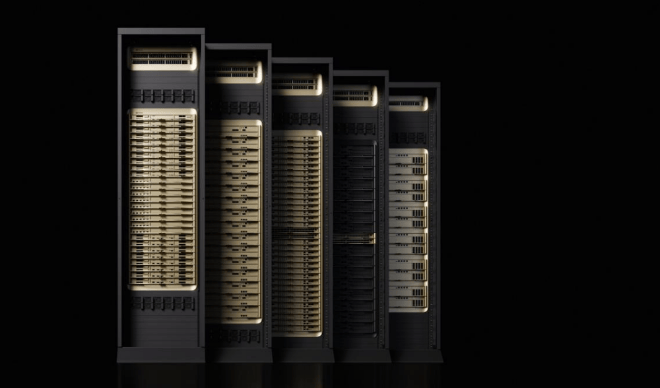
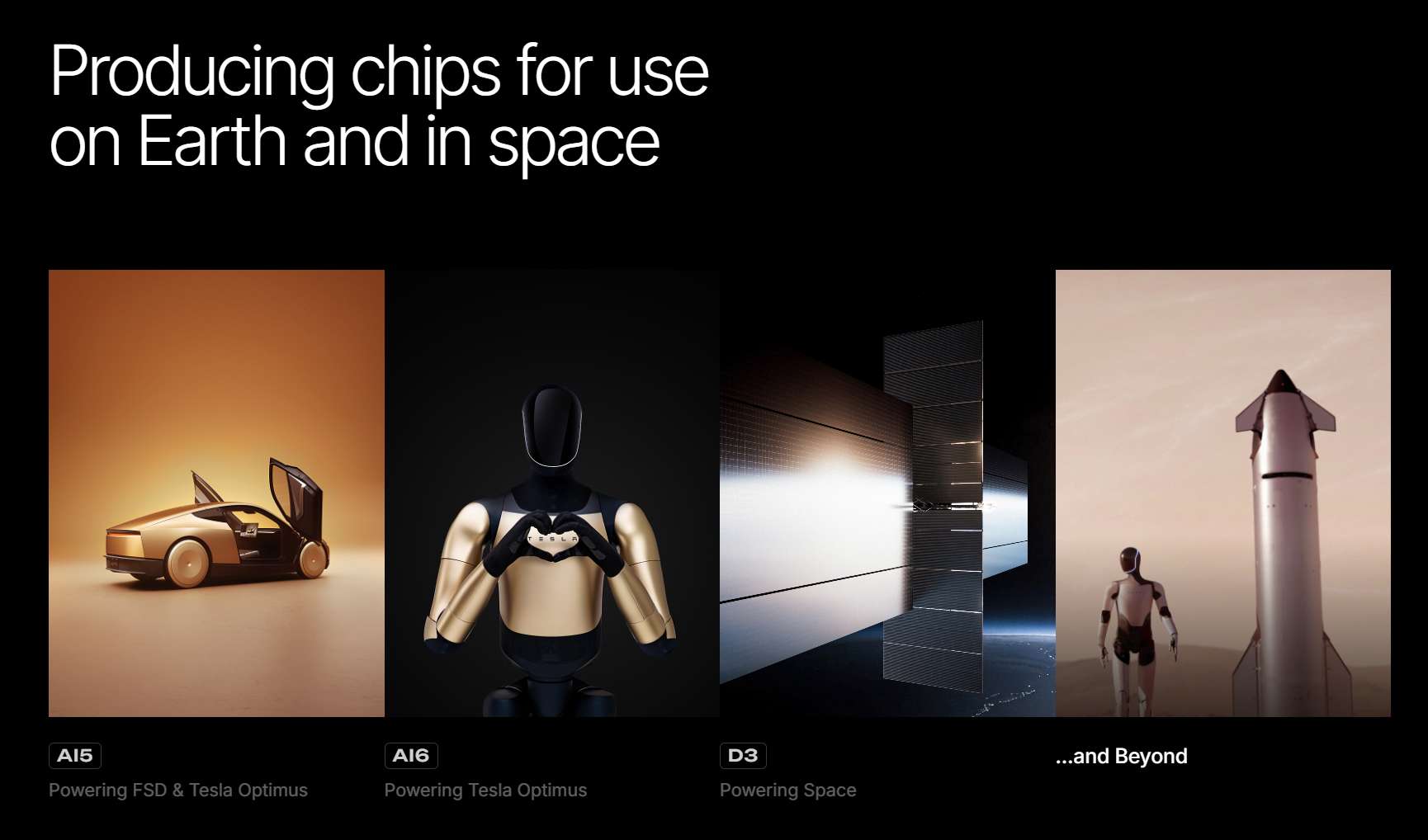
US SpaceX Plans to Launch Space AI Computing Satellite Network in 2028
en.Wedoany.com Reported - SpaceX has set a timeline for its large-scale space computing deployment, planning to initiate the first batch of orbital AI satellites for commercial networking in 2028. However, the primary technical obstacle it faces is not deployment cost or space radiation, but heat dissipation in a vacuum environment.
In the vacuum of space, since there is no air convection for heat transfer, heat can only be dissipated through thermal radiation, which is only 1% as efficient as ground-level air convection. This physical limitation directly leads to a significant challenge in the heat dissipation area required for space data centers: at a cabinet temperature of 70°C, the radiative heat dissipation limit is only 880 watts per square meter. A 1.5-megawatt data center would require a heat dissipation panel area of approximately 2,100 square meters, far exceeding the payload volume of a rocket fairing. Additionally, low Earth orbit satellites experience severe thermal shock with temperature differences exceeding 250°C every 90 minutes, posing a serious challenge to chip packaging and liquid cooling pipelines.
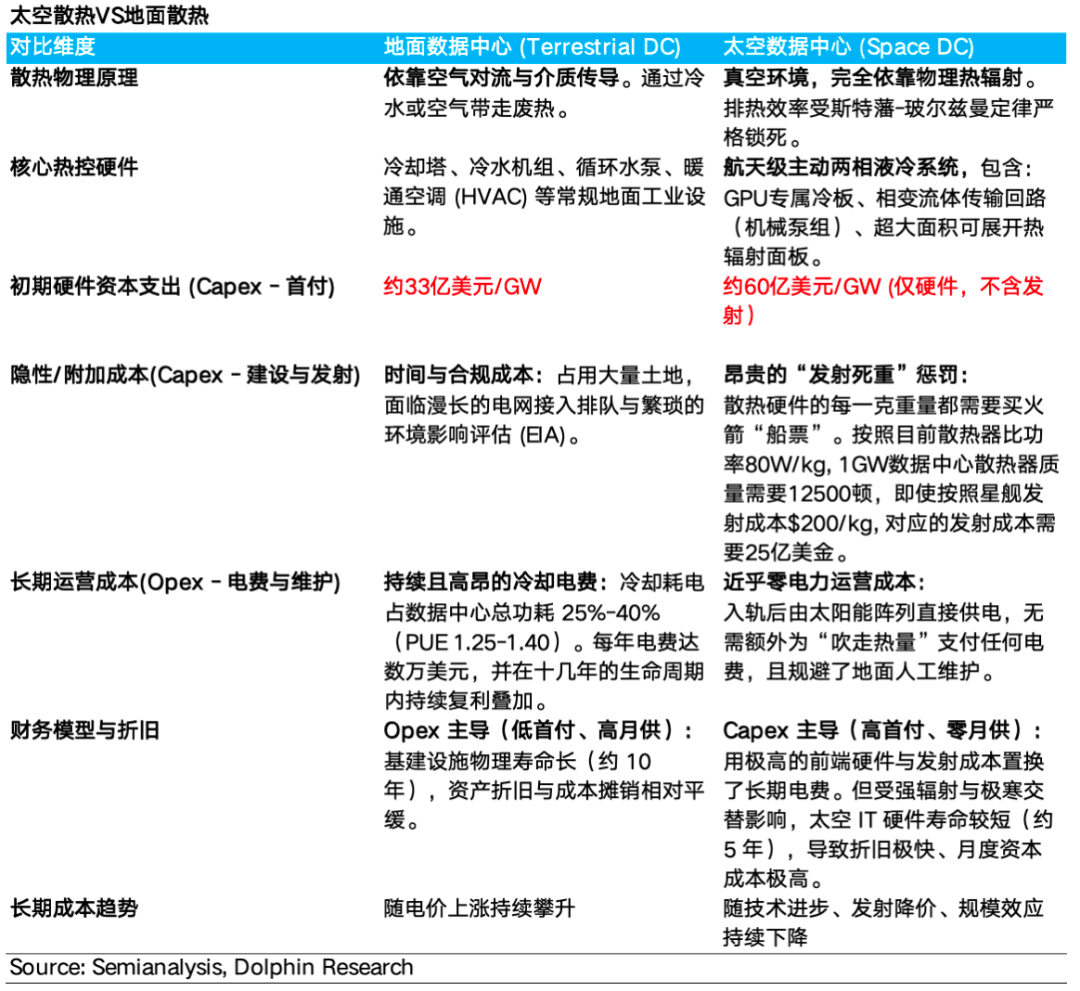
Furthermore, large-area heat dissipation arrays also face the risk of micro-meteoroid impacts. Under the current customized aerospace model of the International Space Station, heat dissipation costs range from $4.5 million to $6.6 million per kilowatt. Even under a commercial cost-reduction logic, the cost of pure heat dissipation hardware alone would be $6 billion per gigawatt, approximately twice that of a ground-based data center. Adding the launch cost of a Falcon 9 rocket, the freight cost per gigawatt would be as high as $23 billion. Even if future Starship freight costs drop to $200 per kilogram, under the assumption of a specific power of 80 watts per kilogram in 2026, the total launch cost would still be $2.5 billion per gigawatt. To mitigate these issues, engineering solutions include: raising the chip temperature tolerance threshold to 85-100°C, sacrificing some lifespan to reduce the heat dissipation area by 15%-25%; adopting active liquid cooling decoupling technology, increasing power consumption by 2%-4% to remove geometric constraints; using inexpensive materials like ordinary aluminum alloys instead of aerospace materials, folding for launch and deploying in orbit; and drawing on Starlink experience, designing liquid cooling pipelines as independent modular cellular networks to withstand single-point failures. Currently, this technical path is still in the engineering verification phase.

Regarding the impact of space radiation on chips, current approaches have broken the conventional wisdom that expensive aerospace-grade chips are necessary. SpaceX's strategy is to "accept local errors while ensuring the system does not crash," including using the Earth's magnetic field to deflect high-energy particles, employing a heterogeneous architecture where radiation-hardened chips monitor advanced process GPUs, covering key chips with an ultra-thin coating for shielding, and leveraging the natural tolerance of large language models to single-point data errors. A Google paper, using 67 MeV proton beam experiments to simulate the extreme radiation environment of low Earth orbit, confirmed this approach: HBM memory absorbed 2 krad (nearly three times the expected dose) of radiation before individual errors appeared, all of which were corrected by ECC; the core computing chip showed no permanent physical damage after being bombarded with 15 krad (20 times the expected dose) of radiation.
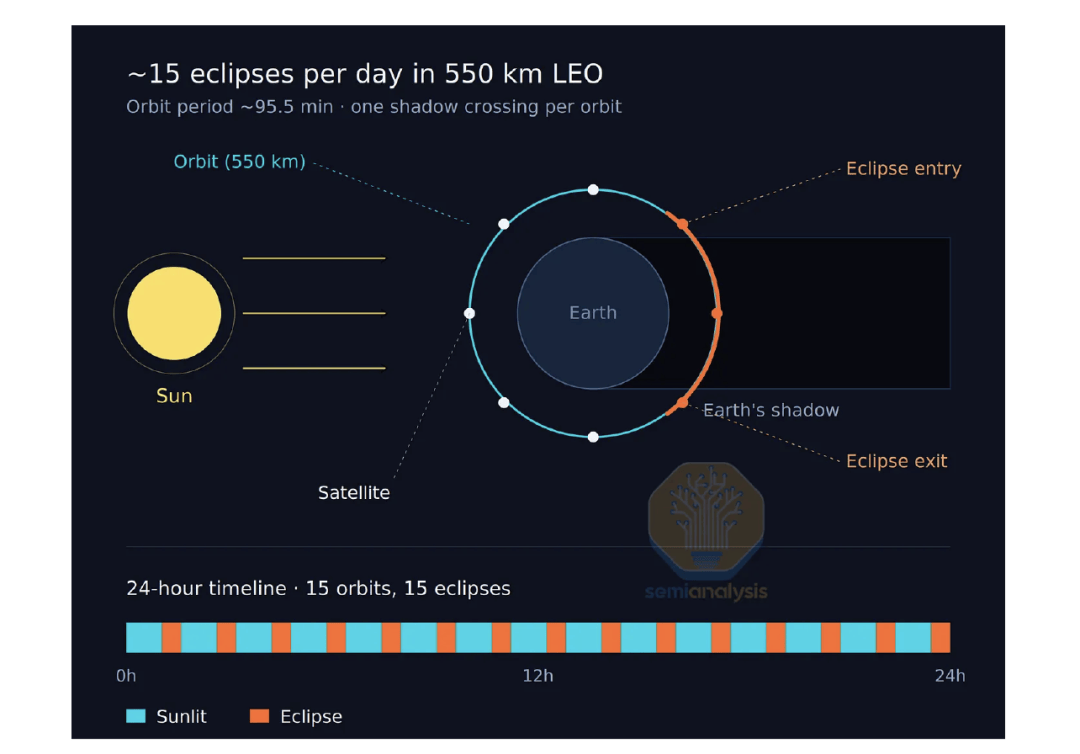
In terms of communication latency, a low Earth orbit satellite orbits the Earth approximately 15 times a day. If data needs to be relayed through multiple hops between satellites, one-way latency can range from 30 to 80 milliseconds. Although satellite-to-ground laser links offer extremely high bandwidth, they are susceptible to interference from clouds and rain. SpaceX's feasible solution is to promote "integrated sensing and computing" edge computing, performing data analysis in orbit to reduce data volume by over 90%, then transmitting it back via microwave links that are not affected by weather. This means that the primary scenarios for space data centers will be limited to high-latency-tolerant asynchronous computing, such as AI training, climate simulation, and debris warning, rather than real-time scenarios like autonomous driving.
In terms of orbit selection, the dawn-dusk sun-synchronous orbit (SSO) is considered the best choice. This orbit faces the sun for most of the year, with the longest shadow period being only 35 minutes, resulting in much lower energy storage requirements than low Earth orbit. The essence of a space data center is to use high upfront fixed costs to hedge against the bottleneck of power capacity expansion for ground-based computing.
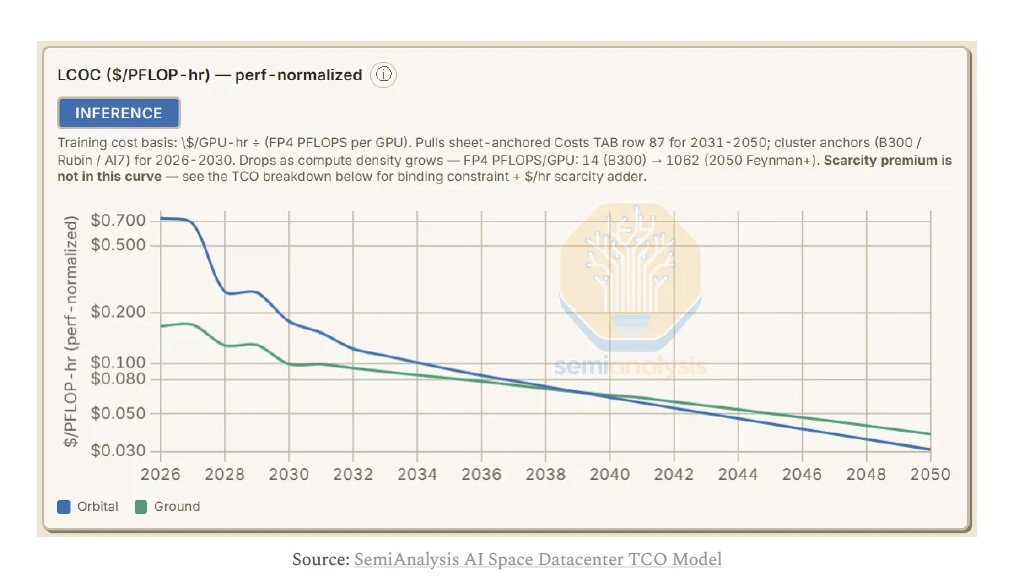
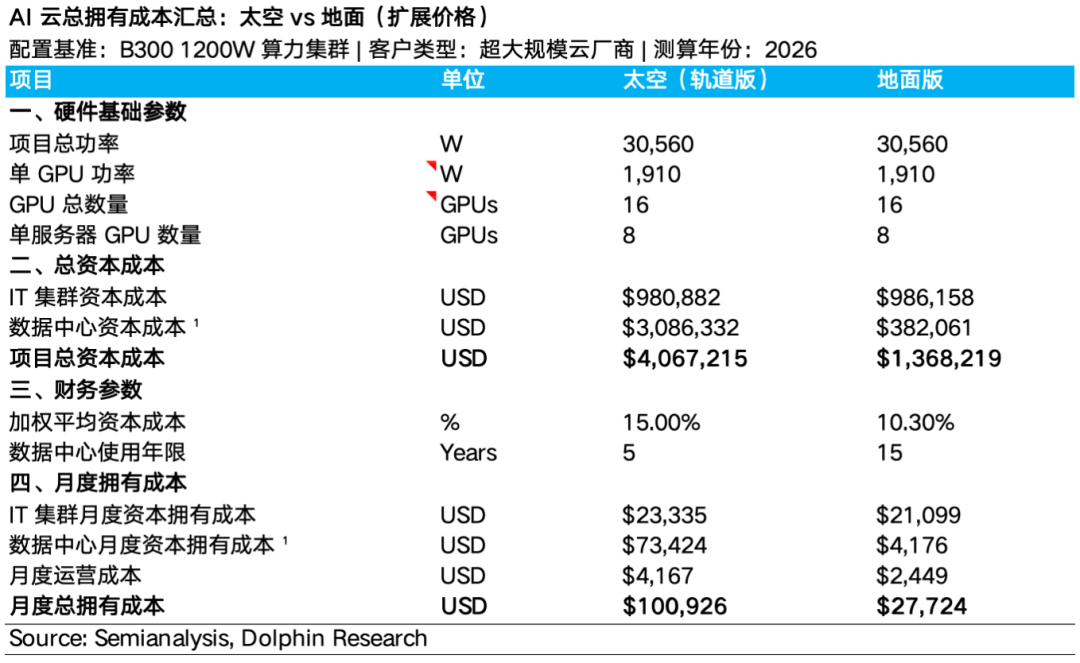
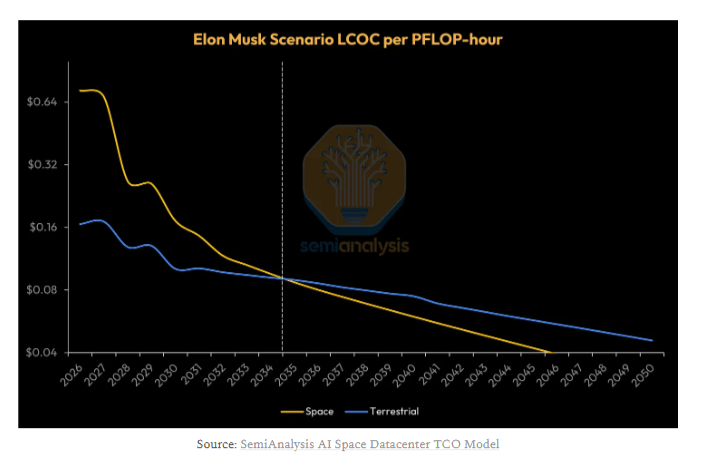
Its economic feasibility depends on two scenarios: if ground-level power supply and demand stabilize, the initial total cost of ownership will be more than four times that of ground-based systems, dragged down by custom hardware costs, a 5-year chip lifespan, and system redundancy, with the levelized cost of computing not reaching parity until around 2040; if ground-level power capacity expansion encounters severe bottlenecks, ground capital expenditure could surge from $34.6 million per megawatt to $53.4 million per megawatt, while space costs could drop to $11 million per megawatt due to Starship launches, potentially bringing the parity inflection point forward to 2034. By then, by 2050, space computing could account for nearly 73% of total chip production capacity, becoming the core solution for handling large-scale AI computing.
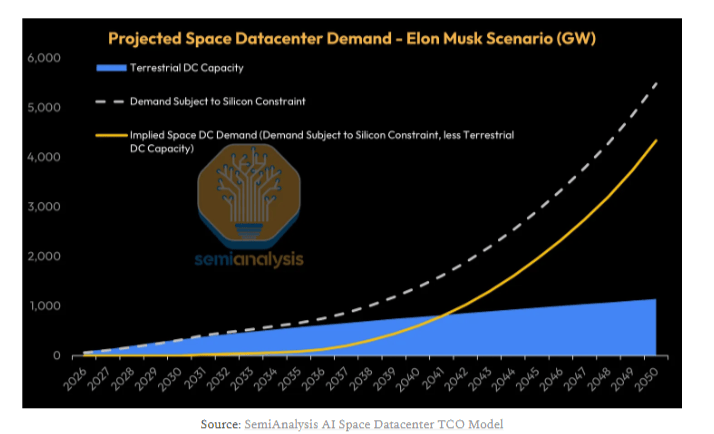
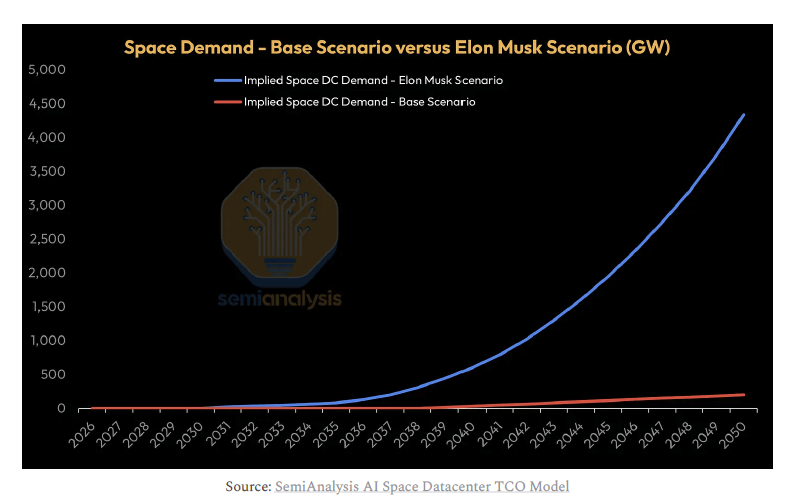
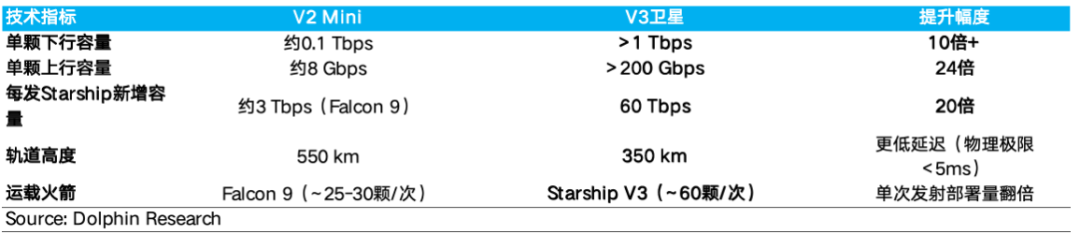
In terms of business valuation, SpaceX encompasses rocket launch, Starlink broadband and direct-to-cell phone services, and AI business. If Starship achieves an annual transport capacity of 1 million tons and is billed at a market price of $200/kg, its long-term annual revenue could reach $200 billion, with an EBITDA margin of approximately 30% in a steady state. If the Starlink broadband business covers the global suburban market, theoretical annual revenue could be around $250 billion, with a neutral estimate of approximately $74.9 billion; if the direct-to-cell phone business shares revenue with operators, the neutral estimate for annual revenue is about $40.7 billion; the aviation and maritime business could generate long-term annual revenue of around $10 billion. In the AI business, revenue from the X platform and Grok model is limited. While ground-based computing leasing offers high margins due to scarcity, it is a window-of-opportunity business. If the space data center achieves a deployment target of 100 GW per year, based on the current pricing of approximately $10 billion/GW, full-capacity annual revenue could be as high as $1 trillion. Applying a 20% net profit margin and a 10x PE valuation, the terminal market capitalization anchor point would be around $2 trillion, representing the largest "option value" in SpaceX's valuation.


Related Products


20 Inch 1600*900 Full HD 60Hz TFT LED Monitor with VGA and DP Interfaces for Desktop Computers-Business Use
Guangzhou Zanying Optoelectronics Technology Co., Ltd.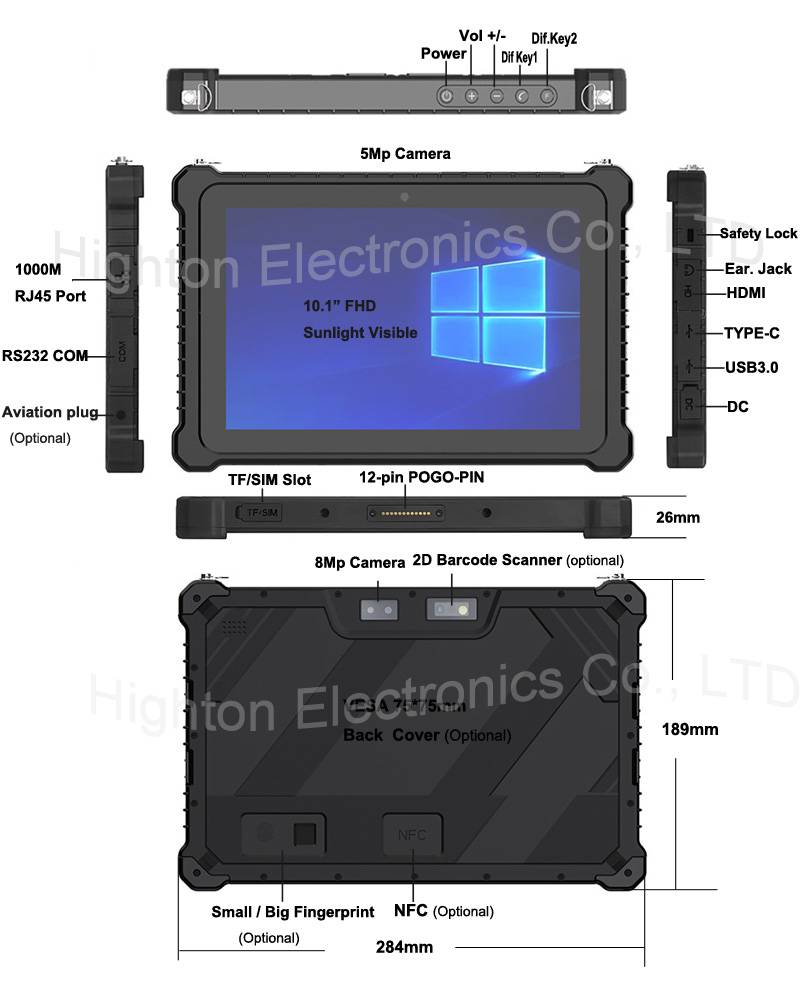
Hot Selling 10 Inch Intel N5100 I5 I7 FHD 8 +128GB 16+256GB Win10 Pro Win11 Pro 4G 5G Rugged Tablet PC Pad with NFC Barcode
Highton Electronics Co., Ltd.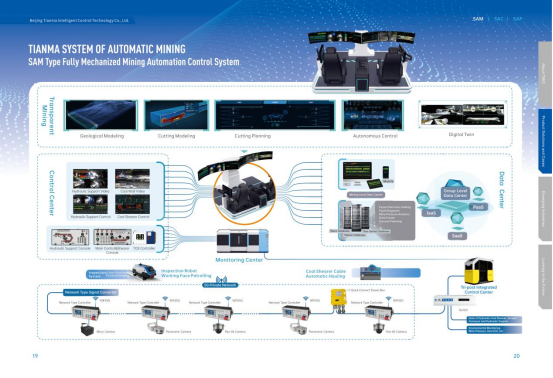
Comprehensive Mining Automation Control System
Beijing Tianma Intelligent Control Technology Co., Ltd.
Automatic Aiming Laser Remote Obstacle Removal Robot
Pinggao Group Weihai High-Voltage Apparatus Co., Ltd.
G.652.D Wavelength-extended Non-dispersion Shifted Single-mode Optical Fiber
HONGAN GROUP CO., LTD.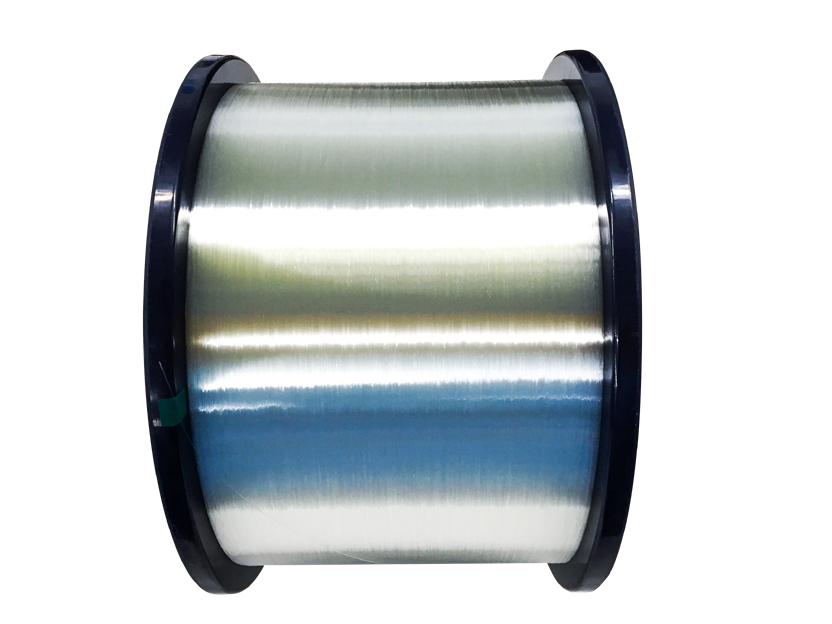
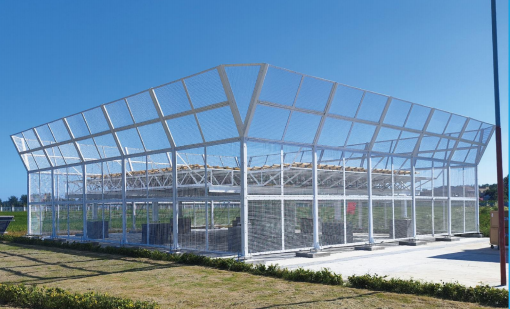
TWP16 P-Band Tropospheric Wind Profile Radar
China Huayun Meteorological Technology Group Co., Ltd.


GYTA Type Non-Self-Supporting Aerial/Duct Optical Cable
TONGDING INTERCONNECTION INFORMATION CO., LTD.