Australia's CSIRO Launches Edge AI System Vetra to Accelerate Real-Time Robot Learning
en.Wedoany.com Reported - Australia's Commonwealth Scientific and Industrial Research Organisation (CSIRO) has unveiled a new artificial intelligence infrastructure called Vetra, designed to bring high-performance computing to the site of data generation. This supports faster processing closer to the data source, against the backdrop of accelerating demand for real-time learning in robots and other physical AI systems. Located at CSIRO's Queensland Centre for Advanced Technologies in Pullenvale, the system processes data directly adjacent to robots and sensors, rather than relying entirely on remote cloud systems, thereby underpinning "edge AI" applications.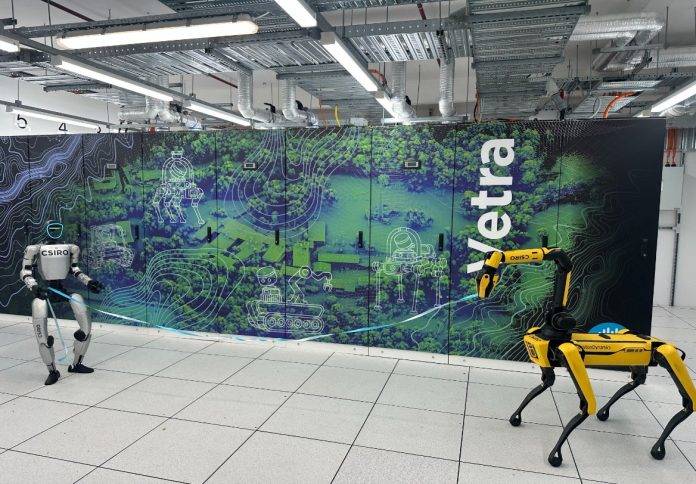
CSIRO stated that this shift reflects the growing application of AI in physical environments where speed and reliability are critical. "AI is rapidly expanding from digital systems into the physical world, including robotics, infrastructure, sensing, and safety-critical environments," said Dr. Liming Zhu, Director of CSIRO's Data61. He believes Vetra is designed to provide "sovereign, trusted edge AI computing" for physical AI research, enabling systems to process and respond to data in real time. Dr. Zhu added: "Vetra enables real-time physical AI research by bringing high-performance computing to the edge, where proximity to data allows systems to respond, learn, and operate safely in complex environments in ways that purely cloud or remote data centre approaches cannot achieve."
The system works in concert with CSIRO's larger supercomputing facility in Canberra, forming part of an "edge-core-cloud" model: the edge layer processes immediate data before sending it to the core or cloud for deeper analysis. Dr. Peyman Moghadam, Leader of CSIRO's Embodied AI Cluster, noted that this approach is crucial for real-world robot development. "Robots and physical AI systems need to continuously learn from the physical world, not just from internet datasets or simulation. Vetra provides the missing edge layer for this workflow, helping to transform real-world robotic data into better, safer, and more adaptive AI systems."
Vetra was designed with energy efficiency in mind, employing CO2-based cooling and a closed-loop liquid cooling system to reduce reliance on water-intensive methods. CSIRO claims this approach significantly reduces environmental impact compared to conventional solutions, with the system expected to save approximately 225 tonnes of CO2 emissions annually—equivalent to removing about 50 cars from Queensland roads each year. CSIRO Chief Technology Officer Angus Macoustra said sustainability was a core design element: "High-performance AI systems generate significant heat in dense, enclosed spaces. Vetra demonstrates how advanced technology can be delivered with significantly reduced water use and emissions."
The system contains 48 high-performance graphics processing units and was developed with support from Australian small and medium enterprises including Oper8 Global and XENON, as well as international technology partners.
This article is compiled by Wedoany. All AI citations must indicate the source as "Wedoany". If there is any infringement or other issues, please notify us promptly, and we will modify or delete it accordingly. Email: news@wedoany.com
Related Products


CAP1400 main feedwater flow nozzle flowmeter.
Jiangsu Hongda Instrument Technology Co., LTD.


Pneumatic high-pressure wear-resistant ball valve
Zhejiang Deca Control Valve Meter Co., Ltd.
Industrial and Commercial Point-Type Gas Detector
Jinan Benan Technology Development Co., Ltd.
Strip Coating and Plating Production Line Equipment
MCC-SFRE HEAVY INDUSTRY EQUIPMENT CO., LTD.