US-based Infleqtion Achieves 97.5% Neutral Atom Gate Fidelity, 40% Error Bound Optimization Points Toward Fault-Tolerant Quantum Computing
en.Wedoany.com Reported - US-based Infleqtion has announced multiple technical advancements on its neutral atom quantum computing platform, including a dual-species rubidium-cesium entanglement gate fidelity reaching 0.975±0.002, while theoretical work also proposes a pathway to push neutral atom entanglement gate fidelity beyond 99.9%. The company stated on May 20 that these results are aimed at utility-scale, fault-tolerant quantum computing, covering multiple layers including hardware, software, quantum error correction, gate design theory, and atom transport.
The highlight of Infleqtion's disclosure this time is not the refreshment of a single metric, but rather addressing several key bottlenecks of neutral atom quantum computing within a single engineering pathway. The company has open-sourced the resource-superstaq resource estimation tool, used to evaluate the number of qubits, runtime, and sensitivity to compilation and error correction assumptions for fault-tolerant workloads on Infleqtion-related neutral atom architectures; the research team simultaneously demonstrated dual-species Rb-Cs Rydberg gates to support fast, in-situ, quantum non-demolition syndrome measurements; a theoretical preprint focuses on Rydberg gate design under Förster resonance, proposing a modeling pathway to reduce physical error rates. For fault-tolerant quantum computing, resource estimation, entanglement gate quality, syndrome measurement, and atom motion are not isolated metrics but fundamental conditions determining whether logical qubits can operate continuously.
The value of the dual-species architecture is primarily reflected in the quantum error correction measurement phase. Infleqtion states that by using different atomic species to serve as data qubits and ancillary qubits respectively, measurements can be completed while minimizing disturbance to nearby data qubits, avoiding extra movement or shelving operations that slow down logical cycles and introduce errors. The related work also demonstrated multi-atom error syndrome measurements on two-qubit and three-qubit plaquettes, structures that are core components of surface code quantum error correction.
Theoretical progress focuses on entanglement gate upper bounds and gate protocol design. A preprint completed by a team from the University of Wisconsin-Madison, with participation from Infleqtion Chief Scientist for Quantum Information Mark Saffman, points out that common neutral atom entanglement gate analysis typically uses a single effective Rydberg pair state, but near Förster resonance, the pair-state manifold contains resonantly coupled channels that alter the control space and achievable fidelity. The paper establishes a two-eigenstate model and provides a gate protocol that can approach the corresponding fidelity boundary in the large Rabi frequency limit; supplementary materials also indicate that for rank-two pulses, the fundamental limit is approximately 40% lower than that of rank-one pulses, and can demonstrate value in long-distance gate design. In other words, this theoretical work does not simply claim a 40% improvement in existing experimental fidelity, but rather provides a design basis for reducing gate error bounds through a more complete atomic model and pulse control.
Infleqtion also announced a static magnetic field method for cesium atom sub-Doppler cooling and optical transport. This method achieves a temperature of 17 μK, direct loading into a shallow optical lattice, and 17 cm optical transport under the same static field environment, supporting the delivery of millions of atoms per second to the science cell. For neutral atom systems to move toward scalable architectures, it is necessary to maintain coherence and reduce operational complexity during preparation, movement, and arrangement of atoms; such atom transport capabilities will affect subsequent quantum error correction cycles and the system's continuous operation capability.
Infleqtion's results this time indicate that competition in neutral atom quantum computing is shifting from "more qubits" to the combined capability of "lower gate errors, faster error correction measurements, more reliable resource estimation, and more scalable atom motion." The dual-species 97.5% entanglement gate fidelity, the theoretical pathway beyond 99.9%, and the approximately 40% error bound optimization collectively point toward a clearer engineering goal: bringing the neutral atom platform closer to an operational fault-tolerant quantum computing system.
This article is compiled by Wedoany. All AI citations must indicate the source as "Wedoany". If there is any infringement or other issues, please notify us promptly, and we will modify or delete it accordingly. Email: news@wedoany.com
Related Products



Comprehensive Mining Automation Control System
Beijing Tianma Intelligent Control Technology Co., Ltd.
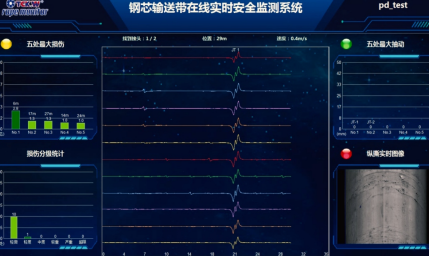
Conveyor Belt Intelligent Monitoring System
LUO YANG WIRE ROPE INSPECTION TECHNOLOGY CO., LTD.
Mine Explosion-proof and Intrinsically Safe Industrial Ethernet Ring Network (10 Gigabit/Gigabit)
Chongqing Mas Sci&Tech Co., Ltd.
Multi-function Marine Monitoring Low-altitude Detection Radar Sea-air Boundary Ocean Dynamic Environment Measurement
Chengdu Dixin Technology Co., Ltd.


TWP16 P-Band Tropospheric Wind Profile Radar
China Huayun Meteorological Technology Group Co., Ltd.