China's Zhipu GLM-5.1 High-Speed API Opens, Output Reaches 400 tokens/s
en.Wedoany.com Reported - China's Zhipu GLM-5.1-highspeed boosts model output speed to 400 tokens/s. On May 22, Zhipu announced that it is providing the GLM-5.1 high-speed API "GLM-5.1-highspeed" to select enterprise customers, and the service is now available on the Zhipu MaaS platform. The focus of this release is low-latency invocation capability, with applicable scenarios including enterprise applications with high response speed requirements such as AI programming, real-time interaction, business decision-making, and real-time voice. The high-speed API is not directly available to all users but is initially offered to some enterprise customers on the Zhipu MaaS platform, meaning this version is currently more oriented towards enterprise-level access, scenario validation, and stability testing.
Beijing Zhipu Huazhang Technology Co., Ltd. provides model invocation services through the Zhipu open platform. The core value of the MaaS model lies in encapsulating large model capabilities into interfaces that are callable, measurable, and integrable into business systems. For enterprise customers, a model output speed of 400 tokens/s directly impacts the response experience of front-end interactions, back-end generation, and automated processes. AI programming assistants need to quickly return results for code completion, error explanation, script generation, and test case writing; real-time interactive products need to maintain reply rhythm during continuous user questioning; voice applications also involve cascading speech recognition, model generation, and speech synthesis, making text generation speed a key variable in the end-to-end experience.
GLM-5.1 is Zhipu's new-generation flagship text model. Official open documentation shows that the model's input and output modalities are both text, with a context window of 200K and a maximum output of 128K tokens. Its capabilities support thinking mode, streaming output, Function Call, context caching, structured output, and MCP. These capabilities make GLM-5.1 more suitable for use within agents, enterprise knowledge bases, R&D toolchains, and complex task workflows. Streaming output allows front-end applications to display partial results first, structured output facilitates business systems in reading model-returned content, and Function Call and MCP enable the model to form tighter invocation relationships with external tools, data sources, and internal enterprise systems.
The primary landing point for the high-speed API is AI programming. Zhipu's official model introduction points GLM-5.1 towards long-range task scenarios like Agentic Coding, where the model needs to maintain contextual continuity across multi-step code modifications, engineering file understanding, task decomposition, and tool invocation. When enterprise R&D teams use AI programming tools, they often require the model to work continuously around repository structure, historical issues, test feedback, and modification results, rather than just generating a single piece of code. With increased output speed, the model integrates more easily into developers' real-time workflows, reducing the wait time from requirement input to code suggestion, and is also more suitable for interactive debugging, automated script generation, and engineering document processing.
Business decision-making and real-time voice scenarios also have clear demands for stable responses. When enterprises handle meeting minutes, bidding materials, contract clause summaries, customer feedback, production operation records, and knowledge base Q&A, they typically need the model to quickly read long contexts and output structured results. The chain for real-time voice applications is longer, with model generation being just one link; recognition, network transmission, concurrency configuration, and synthesis systems all affect the final experience. With GLM-5.1-highspeed providing 400 tokens/s output capability, enterprises can verify the actual effectiveness of low-latency models in intelligent customer service, meeting assistants, voice agents, intelligent guidance, and internal office assistants. However, evaluation combining data security, interface permissions, concurrency scale, and invocation costs is still required before deployment.
Zhipu's opening of the GLM-5.1 high-speed API to select enterprise customers this time indicates that large model competition is shifting from merely showcasing parameters and capabilities towards engineered delivery for real business scenarios. Enterprise users are more concerned about whether the model can be stably integrated into existing systems, support high-frequency interactions, and operate continuously in coordination with permission management and task chains. GLM-5.1-highspeed binds high-speed output, MaaS access, and enterprise scenarios together, providing new interface options for AI programming, real-time interaction, and agent products.
This article is compiled by Wedoany. All AI citations must indicate the source as "Wedoany". If there is any infringement or other issues, please notify us promptly, and we will modify or delete it accordingly. Email: news@wedoany.com
Related Products



Mine Explosion-proof and Intrinsically Safe Industrial Ethernet Ring Network (10 Gigabit/Gigabit)
Chongqing Mas Sci&Tech Co., Ltd.
Flat Portable Satellite Terminal 0.35m Aperture Manual Portable Terminal
China Starwin Science & Technology Co., Ltd.
Comprehensive Mining Automation Control System
Beijing Tianma Intelligent Control Technology Co., Ltd.


TWP16 P-Band Tropospheric Wind Profile Radar
China Huayun Meteorological Technology Group Co., Ltd.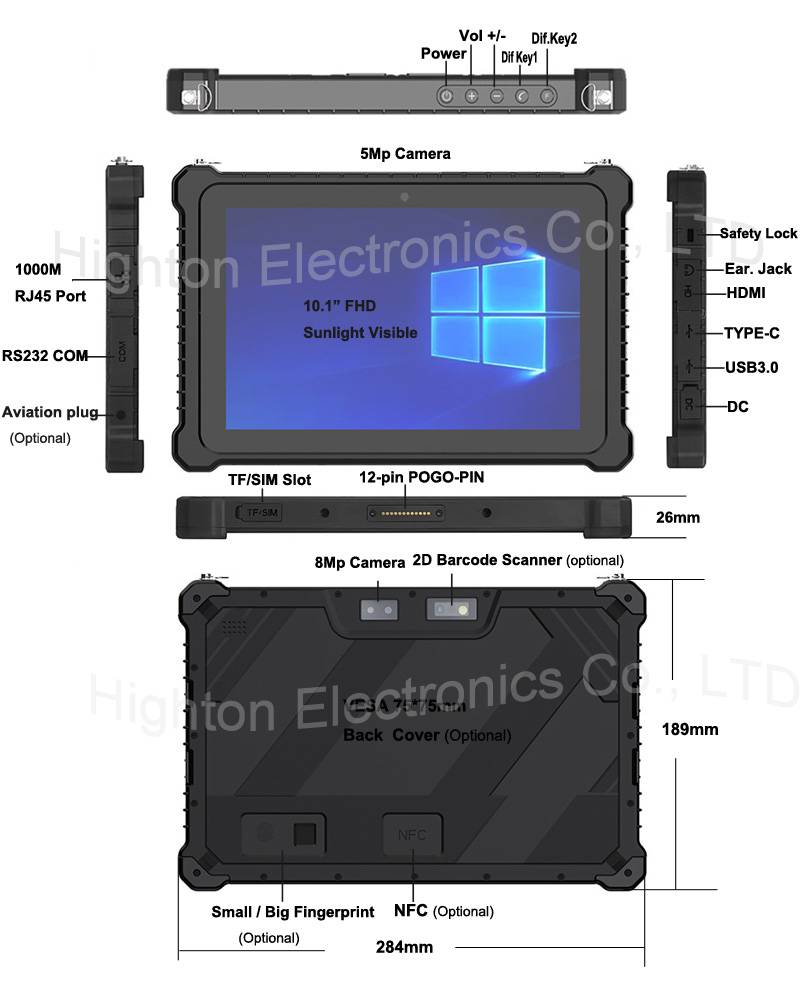
Hot Selling 10 Inch Intel N5100 I5 I7 FHD 8 +128GB 16+256GB Win10 Pro Win11 Pro 4G 5G Rugged Tablet PC Pad with NFC Barcode
Highton Electronics Co., Ltd.