SK Hynix of South Korea Introduces iHBM Thermal Solution for Next-Generation AI Memory
en.Wedoany.com Reported - On May 25, SK hynix of South Korea announced the launch of its iHBM thermal solution, which embeds integrated cooling elements into high-bandwidth memory packaging for next-generation HBM products. By adding a heat dissipation path inside the package, this solution reduces the thermal resistance of HBM in high-density, high-bandwidth operating environments, targeting the stable operation requirements of AI data centers and high-performance computing systems.
This release hits a critical juncture where AI memory competition is shifting from bandwidth to system-level thermal management. As AI accelerators continue to boost computing power, HBM needs to support model training, inference, and data processing loads with higher stack layers and faster transmission speeds, leading to increased power density inside the chip package. For data center customers, HBM performance no longer depends solely on capacity, bandwidth, and yield; thermal dissipation efficiency also directly impacts accelerator operating frequency, system stability, rack power consumption, and long-term reliability. SK hynix's move to directly introduce cooling elements into the HBM package indicates that AI memory competition is extending from individual chip metrics to packaging structure, thermal path design, and system-level operational efficiency.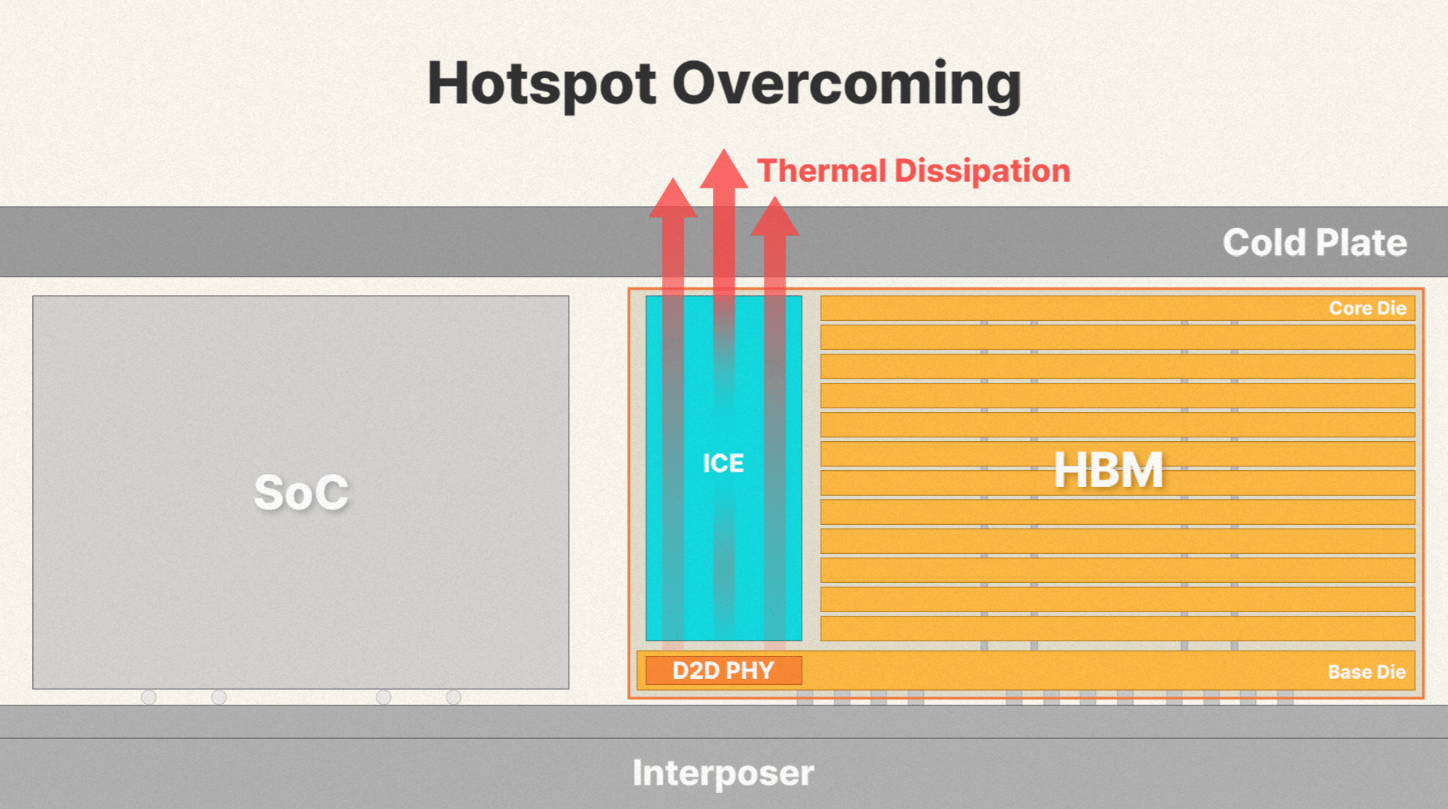
The technical focus of iHBM is embedding an Integrated Cooling Element (ICE) within the HBM package. SK hynix explains that the ICE is made of an electrically insulating, thermally conductive silicon-based material, providing an additional heat conduction path for the HBM package. Unlike existing HBM, which primarily dissipates heat indirectly through the core die, iHBM places the ICE in the D2D PHY area where heat is more concentrated, directly improving cooling conditions in high-heat zones.
The D2D PHY is the high-speed hardware interface connecting HBM to GPUs and AI accelerators, and is a critical component in high-bandwidth data exchange. SK hynix states that the iHBM solution can reduce thermal resistance by 30%, enabling the chip to maintain more stable operation in high-temperature, high-voltage environments. For AI servers, such improvements help alleviate localized heat concentration issues arising from increased HBM stack layers and also reserve higher-density packaging space for next-generation products like HBM5.
Mass production compatibility is another important signal from this solution. SK hynix indicates that iHBM is based on its validated MR-MUF technology and wafer-level packaging processes, supporting stable, high-volume production. Furthermore, the solution has high design compatibility with existing system-in-package architectures, meaning customers do not need to make significant structural adjustments during adoption. For cloud providers, AI chip companies, and server platform customers, whether a new packaging thermal technology can quickly enter a product roadmap often depends on its ability to integrate with existing supply chains, packaging processes, and system designs, rather than just laboratory thermal metrics.
HBM has become one of the core integrated circuit products in AI infrastructure. GPUs and AI accelerators need to read and write vast amounts of model parameters, activation values, and intermediate data in extremely short times. HBM provides high bandwidth through stacked DRAM dies and a wide interface, but internal package space is limited, and thermal pressure amplifies with increased stacking and speed. By moving thermal management forward into the memory package, iHBM helps memory manufacturers assume higher system value in AI computing platforms and will also drive collaborative upgrades in advanced packaging, materials, testing, and server thermal design.
SK hynix stated that iHBM is planned for use in next-generation HBM products, including HBM5, to enhance stability and operational efficiency in high-density, high-bandwidth environments for high-performance computing and AI data centers. Lee Kangwook, the company's Head of Package Development, said that iHBM combines memory design capabilities with advanced packaging technology, serving as a solution tailored to the thermal management needs of AI environments.
Subsequent project milestones include the integration progress of iHBM in HBM5 products, customer validation results, mass production yield, co-design with AI accelerator platforms, and whether this solution can become a standardized thermal path for highly stacked HBM packaging. What can be confirmed at this stage is that SK hynix has released the iHBM thermal solution and disclosed technical information such as a 30% reduction in thermal resistance, the use of ICE integrated cooling elements, and compatibility with MR-MUF and system-in-package architectures. Public information has not disclosed specific customers, mass production timelines, HBM5 sample parameters, contract values, or server platform adoption lists; therefore, it should not be extrapolated that this solution is already in large-scale commercial use in AI data centers.
This article is compiled by Wedoany. All AI citations must indicate the source as "Wedoany". If there is any infringement or other issues, please notify us promptly, and we will modify or delete it accordingly. Email: news@wedoany.com
Related Products


Mine Explosion-proof and Intrinsically Safe Industrial Ethernet Ring Network (10 Gigabit/Gigabit)
Chongqing Mas Sci&Tech Co., Ltd.


GYTA Type Non-Self-Supporting Aerial/Duct Optical Cable
TONGDING INTERCONNECTION INFORMATION CO., LTD.
TWP16 P-Band Tropospheric Wind Profile Radar
China Huayun Meteorological Technology Group Co., Ltd.
Multi-function Marine Monitoring Low-altitude Detection Radar Sea-air Boundary Ocean Dynamic Environment Measurement
Chengdu Dixin Technology Co., Ltd.
20 Inch 1600*900 Full HD 60Hz TFT LED Monitor with VGA and DP Interfaces for Desktop Computers-Business Use
Guangzhou Zanying Optoelectronics Technology Co., Ltd.
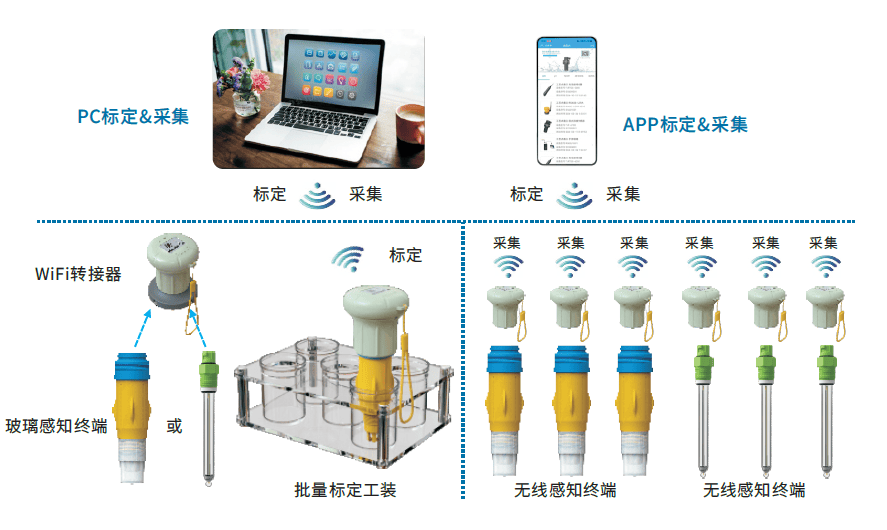

Industrial and Commercial Point-Type Gas Detector
Jinan Benan Technology Development Co., Ltd.