China's SmartSens and UNISOC Collaborate on MicroLED High-Speed Optical Interconnects
en.Wedoany.com Reported - Recently, SmartSens announced a strategic partnership with UNISOC (Shanghai) Technologies Co., Ltd. The two parties will jointly deploy in the field of MicroLED high-speed optical interconnects, collaborating on optical interconnect chip design and the implementation of system solutions, to accelerate the transition of related technologies from devices and chips to system application verification.
The direction of this collaboration extends beyond the traditional boundaries of single products like image sensors or mobile communication chips. As AI computing, on-device intelligence, data center interconnects, and high-performance chip systems continue to evolve, data transmission between chips, boards, and within devices faces increasing demands for higher bandwidth, lower latency, and lower power consumption. While copper interconnects still hold maturity and cost advantages in short-reach scenarios, optical interconnects are becoming a crucial technical pathway under the constraints of high density, high speed, and heat dissipation. SmartSens and UNISOC's collaboration on MicroLED high-speed optical interconnects signifies that Chinese chip companies are shifting from "improving single-chip performance" to "enhancing the efficiency of data pathways between chips."
The core value of MicroLED for optical interconnects lies primarily in its small size, high modulation potential, low power consumption, and suitability for short-reach, high-speed transmission. In a MicroLED optical communication solution showcased this year, Ennostar positioned it for ultra-short-reach, high-speed interconnects within 10 meters, applicable to scenarios like co-packaged optics and active optical cables. They emphasized that compared to traditional light source solutions, MicroLED features higher thermal stability, longer lifespan, and lower energy consumption per bit. For AI servers, edge computing devices, and high-density electronic systems, if such technology can achieve stable packaging and large-scale manufacturing, it will help reduce signal loss, alleviate thermal management pressure, and improve short-reach data transmission efficiency.
SmartSens is a company listed on China's STAR Market under the stock code 688213, with CMOS image sensors as its long-term core business, advancing product deployment in scenarios such as smart security, mobile phones, automotive electronics, and machine vision. Its official media center shows the company continuously releases image sensor products for automotive-grade, security, and mobile applications. This entry into the MicroLED high-speed optical interconnect collaboration suggests its capabilities may extend from "sensing chips" towards the design of higher-frequency, high-speed, optoelectronic integrated devices. However, at this stage, assessments should be based on the "joint deployment" and "solution implementation collaboration" disclosed in the partnership announcement, and it should not be directly stated that mass-produced products already exist.
UNISOC possesses platform-based technology expertise in communication chips, mobile terminal chips, IoT, smart wearables, automotive, and multimedia. Its official business and technology pages indicate that UNISOC's products and technologies cover smartphones, IoT, smart vehicles, smart displays, smart wearables, 5G, 6G, wireless connectivity, and multimedia. For high-speed optical interconnects, system-on-chip design capabilities, interface protocols, data scheduling, terminal application scenarios, and industrial customer resources all influence whether the technology can evolve from optoelectronic devices into viable solutions. The synergy between SmartSens and UNISOC helps connect optical interconnect chip design capabilities with communication SoCs, terminal platforms, and system solution expertise.
From an industry chain perspective, MicroLED high-speed optical interconnects sit at the intersection of displays, optical communications, advanced packaging, and AI infrastructure. Traditionally, MicroLED has been discussed more as a display technology for high-brightness, high-contrast, long-lifespan display applications; however, in optical communication applications, the industry focus shifts to modulation speed, energy efficiency, thermal stability, optoelectronic conversion, packaging coupling, and system integration. Ennostar's related technical descriptions also note that the core value of MicroLED in optical communication differs from display applications, with the emphasis on bandwidth, modulation speed, and energy efficiency per bit.
Whether this collaboration can generate industrial impact subsequently hinges on three key stages. First, at the device level, whether the MicroLED light sources, detectors, driver circuits, and receiver circuits can meet engineering requirements for high-speed modulation, low power consumption, lifespan, and consistency. Second, at the chip and packaging level, whether the optoelectronic interfaces, coupling structures, thermal management, and testing solutions can adapt to existing manufacturing processes. Third, at the system level, whether the related solutions can enter real application scenarios within AI computing, on-device equipment, communication terminals, or data transmission modules. Only by completing the chain from experimental verification to system adaptation, and then to customer adoption, can MicroLED high-speed optical interconnects potentially transform from a cutting-edge technology deployment into a replicable product capability.
Subsequent milestones for the project include whether the two parties disclose specific optical interconnect chip architectures, MicroLED device parameters, system prototypes, test metrics, application scenarios, and customer verification plans. What can be confirmed at this stage is that SmartSens and UNISOC have reached a strategic partnership on MicroLED high-speed optical interconnects and will promote collaboration on optical interconnect chip design and system solution implementation. Public information has not yet disclosed product models, transmission rates, mass production timelines, customer lists, investment amounts, or specific commercial orders. Therefore, it should not be extrapolated that the related chips have already entered mass production or large-scale commercial use.
This article is compiled by Wedoany. All AI citations must indicate the source as "Wedoany". If there is any infringement or other issues, please notify us promptly, and we will modify or delete it accordingly. Email: news@wedoany.com
Related Products


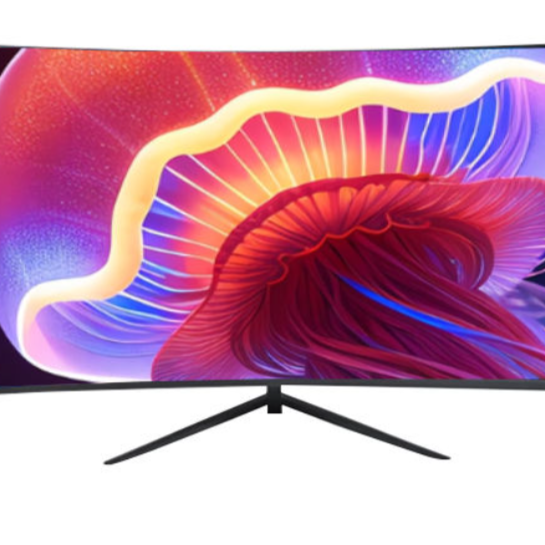
20 Inch 1600*900 Full HD 60Hz TFT LED Monitor with VGA and DP Interfaces for Desktop Computers-Business Use
Guangzhou Zanying Optoelectronics Technology Co., Ltd.
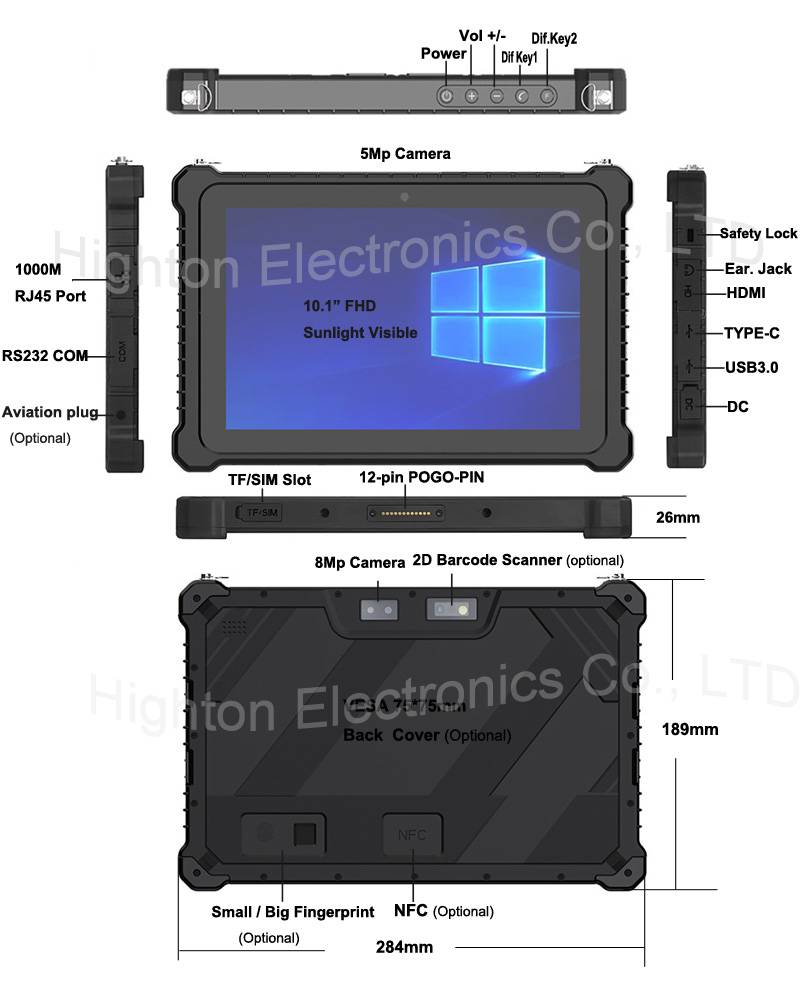
Hot Selling 10 Inch Intel N5100 I5 I7 FHD 8 +128GB 16+256GB Win10 Pro Win11 Pro 4G 5G Rugged Tablet PC Pad with NFC Barcode
Highton Electronics Co., Ltd.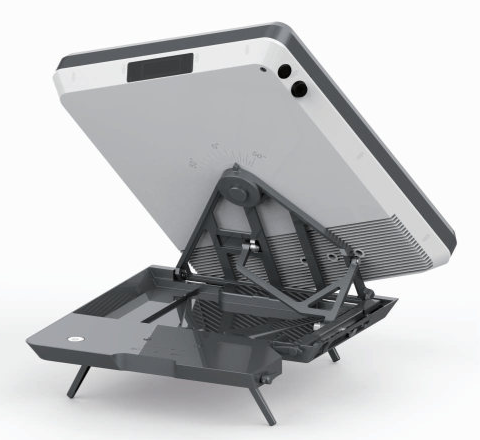
Flat Portable Satellite Terminal 0.35m Aperture Manual Portable Terminal
China Starwin Science & Technology Co., Ltd.

Industrial and Commercial Point-Type Gas Detector
Jinan Benan Technology Development Co., Ltd.

GYTA Type Non-Self-Supporting Aerial/Duct Optical Cable
TONGDING INTERCONNECTION INFORMATION CO., LTD.
Conveyor Belt Intelligent Monitoring System
LUO YANG WIRE ROPE INSPECTION TECHNOLOGY CO., LTD.