Canada Launches Quantum Repeater Challenge to Support Long-Distance Quantum Network R&D
en.Wedoany.com Reported - Recently, Innovation, Science and Economic Development Canada (ISED), through its Innovative Solutions Canada program, launched the "Scalable Quantum Networks and Distributed Sensing Quantum Repeater" challenge, seeking technology solutions capable of advancing long-distance quantum communication and multi-node quantum networks. The challenge opened for applications on May 21, with a deadline of 2:00 PM (Eastern Time) on July 2.
This challenge targets one of the most difficult engineering bottlenecks in future quantum networks: quantum information transmitted through optical fibers or other channels is subject to loss limitations, making it difficult to extend direct transmission distances indefinitely, while quantum states cannot be simply copied and amplified like traditional communication signals. The role of a quantum repeater is to break down long-distance quantum links into multiple manageable nodes through mechanisms such as quantum memory, entanglement distribution, and entanglement swapping, thereby laying the foundation for broader quantum communication, distributed quantum sensing, and modular quantum information processing. ISED explicitly states in the challenge description that the goal is to advance repeater architectures and prototype development, bringing Canada closer to globally competitive quantum network infrastructure.
The project is divided into two application streams. The first phase targets early-stage feasibility studies at Technology Readiness Levels 1 to 4, with a maximum funding of CAD 250,000 per project, a maximum project duration of 6 months, and an expected 2 awards; the second phase targets prototype development at Technology Readiness Levels 5 to 9, with a maximum funding of CAD 3 million per project, a maximum project duration of 24 months, and an expected 1 award. According to this arrangement, the potential total funding scale for the Quantum Repeater Challenge is up to approximately CAD 3.5 million, but the Canadian government also notes that the final number and amount of awards will depend on evaluation results, departmental priorities, and funding availability.
Technical requirements indicate that the Canadian government expects applicants to demonstrate a credible path to overcoming the direct transmission limits of the chosen quantum channel. Proposed solutions need to demonstrate or model feasible quantum memory capabilities, explaining the relationship between quantum state storage and retrieval efficiency, fidelity, repetition rate, multiplexing methods, and channel loss; simultaneously, they must include entanglement swapping capabilities, such as Bell-state measurement or equivalent processes, and establish interfaces compatible with the chosen transmission channel. In other words, the challenge focuses not on individual experimental components, but on whether quantum memory, entanglement sources, swapping modules, and channel interfaces can be progressively integrated into an operational quantum repeater node.
ISED also encourages applicants to further consider multi-node network scalability, synchronization and routing software, resource management, error handling, continuous operation stability, and testing capabilities in real channel environments. These requirements indicate that quantum network R&D is moving from fundamental physics validation to the systems engineering stage. Individual advances such as quantum memory, entangled photon sources, and entanglement swapping have emerged in laboratories, but building a repeater node in a real-world environment whose performance surpasses direct transmission remains a globally unsolved challenge.
Canada's advancement of this challenge is also related to its quantum technology industrial base. ISED mentions in the project background that Canada possesses an ecosystem foundation composed of universities, national laboratories, quantum hardware companies, and photonics technology enterprises, with R&D accumulation in quantum memory, integrated photonics, deterministic photon sources, and networked quantum systems. Incorporating feasibility studies and prototype development into the same challenge framework through the Innovative Solutions Canada program helps promote a clearer engineering roadmap for small and medium-sized enterprises around quantum repeaters, but eligibility is primarily limited to for-profit small businesses registered in Canada with no more than 499 employees, and R&D activities must also be conducted in Canada.
The strategic value of quantum repeaters is concentrated in three areas: cybersecurity, communication, and distributed computing. Future quantum networks can be used for higher-security quantum communication, support long-distance distributed quantum sensing, and provide a foundation for interconnecting different quantum processors. As major economies such as the United States, Europe, and China increase investment in quantum communication and quantum networks, long-distance quantum information transmission capability is becoming part of the competition for next-generation digital infrastructure. Canada's establishment of this challenge aims to steer its domestic academic research, photonic hardware, and quantum enterprise capabilities towards testable and integrable repeater nodes.
Subsequent project milestones include the July 2 application deadline, selection of Phase 1 feasibility study projects, initiation of Phase 2 prototype development projects, and whether selected solutions can produce verifiable results in quantum memory, entanglement swapping, channel interfaces, and multi-node expansion. What can be confirmed at this stage is that the Canadian government has launched the Quantum Repeater Challenge and opened applications; publicly available information has not yet disclosed the list of selected companies, specific technical routes, testing locations, or future commercial quantum network deployment timelines, and therefore it should not be extrapolated that Canada has already built a long-distance quantum network.
This article is compiled by Wedoany. All AI citations must indicate the source as "Wedoany". If there is any infringement or other issues, please notify us promptly, and we will modify or delete it accordingly. Email: news@wedoany.com
Related Products

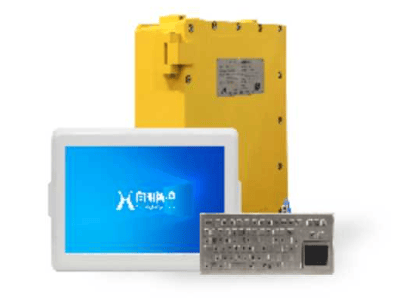
KJD127(A) Mining Explosion-Proof and Intrinsically Safe Computer
Taiyuan Xiangming Intelligent Control Technology Co., Ltd.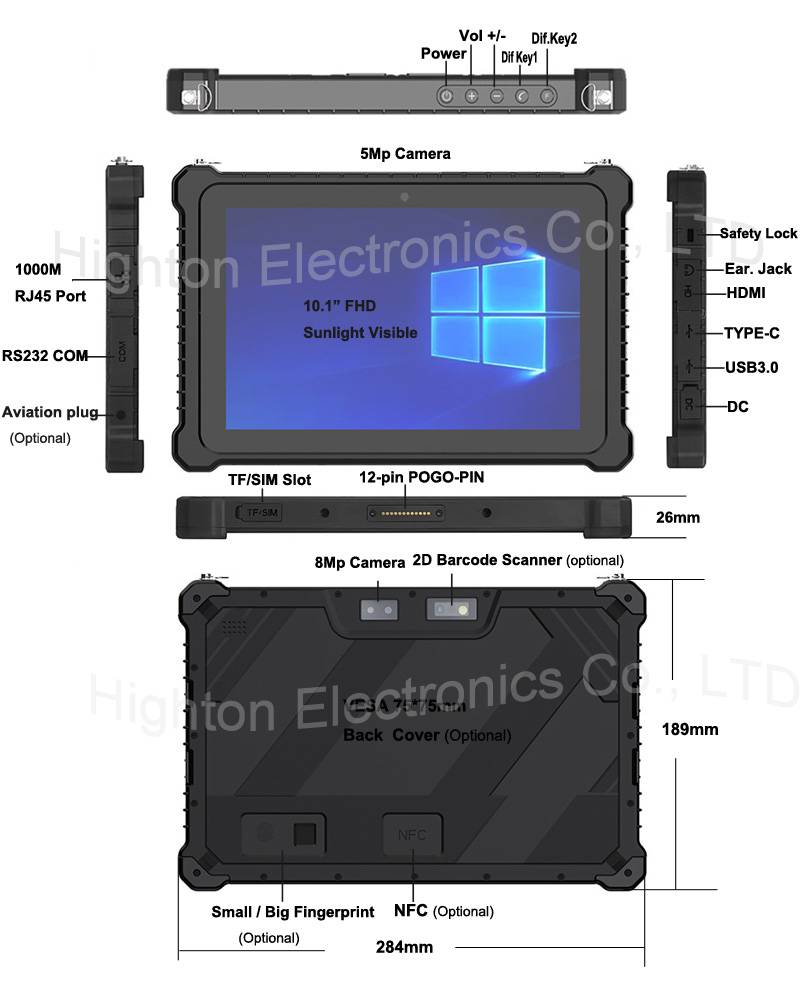
Hot Selling 10 Inch Intel N5100 I5 I7 FHD 8 +128GB 16+256GB Win10 Pro Win11 Pro 4G 5G Rugged Tablet PC Pad with NFC Barcode
Highton Electronics Co., Ltd.
20 Inch 1600*900 Full HD 60Hz TFT LED Monitor with VGA and DP Interfaces for Desktop Computers-Business Use
Guangzhou Zanying Optoelectronics Technology Co., Ltd.
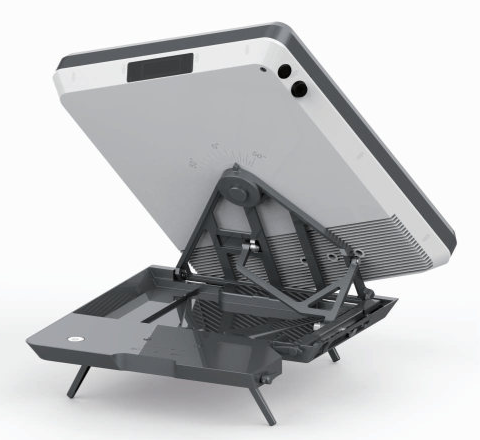
Flat Portable Satellite Terminal 0.35m Aperture Manual Portable Terminal
China Starwin Science & Technology Co., Ltd.
TWP16 P-Band Tropospheric Wind Profile Radar
China Huayun Meteorological Technology Group Co., Ltd.
GYTA Type Non-Self-Supporting Aerial/Duct Optical Cable
TONGDING INTERCONNECTION INFORMATION CO., LTD.