en.Wedoany.com Reported - Mario Capello, former National Deputy Minister of Mining and former national and provincial legislator, pointed out that if the economies of scale of large mining projects can be translated into investment, employment, and exports, then abolishing provincial taxes is politically feasible.
The Gross Income Tax (IIBB) and export withholding taxes are considered by many economists to be among the most regressive taxes in Argentina's national economy. Following the approval of the Large Investment Incentive Scheme (RIGI), some have proposed extending this promotion measure, which reduces income tax by 10 percentage points, to all types of investments. Capello emphasized that it is large-scale investment that makes tax reduction possible and provides the stability needed to extend it.
Copper mining is expected to drive the development of provinces with mineral resources, against the backdrop of energy transition goals proposed in Paris 11 years ago, covering electric mobility, the shift to renewable energy, transmission needs, and the demand for data centers required for the development of Artificial Intelligence. In terms of global demand, to achieve these agreements, the amount of copper consumed between 2022 and 2042 will be equivalent to the total consumption since the dawn of civilization, with annual refined copper consumption rising from 22 million tons to 44 million tons.
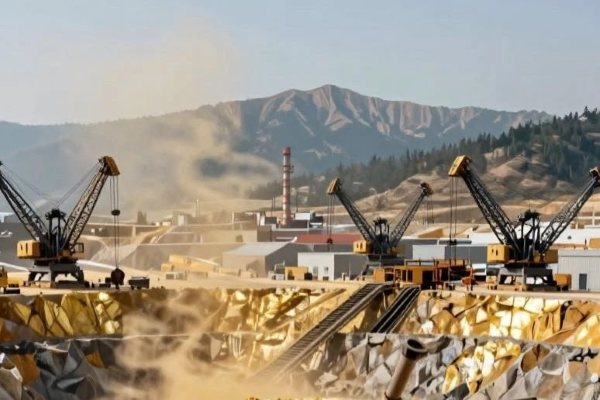
Based on the target of producing 300,000 tons of refined copper annually (such as the Vicuña, Pachón, or Taca Taca projects), over 900,000 tons of copper concentrate need to be produced, requiring the daily extraction of over 250,000 tons of mineralized rock. This scale explains the associated employment and related activities, involving extraction, transportation, crushing, grinding, and processing, as well as the construction of waste rock dumps and tailings storage facilities.
Capello's team's study on economic and social impacts provides relevant data on the Gross Provincial Product (PBG) of San Juan Province. In the comparison between national GDP and provincial PBG, both showed similar trends before 2005, after which large-scale metal mining began to develop. Between 2004 and 2015, San Juan's PBG grew cumulatively by 146%, while national GDP grew by 49%. In 2015, the direct contribution of mining and quarrying to PBG was 7.8%, with indirect effects (intermediate demand, construction, and consumption) accounting for 10.2%, together contributing 18% of San Juan's PBG.
During the first three years of construction for two copper mine projects, including building infrastructure, processing plants, mine development, and accommodation (each mine equipped with over 2,500 beds), offices, workshops, explosives magazines, laboratories, canteens, and other facilities, foreign direct investment will amount to $2.03 billion annually. Of this, $1.911 billion will remain in San Juan, more than five times the current contribution of mining in the province. From the fourth year onward, 520,000 tons of refined copper will be exported annually, valued at $6.24 billion, with approximately $3 billion in sales remaining in San Juan, and its economic and social indicators will be four times the contribution of gold mining.
Capello noted that copper production requires optimal economic competitiveness and trust in political institutions. For the former, not applying the IIBB to goods and service suppliers can accelerate investment decisions. The economic phenomenon generated in the provincial economy, through workers' purchasing power and supplier reinvestment, will in the future help abolish the IIBB across the entire provincial economy.
This article is compiled by Wedoany. All AI citations must indicate the source as "Wedoany". If there is any infringement or other issues, please notify us promptly, and we will modify or delete it accordingly. Email: news@wedoany.com