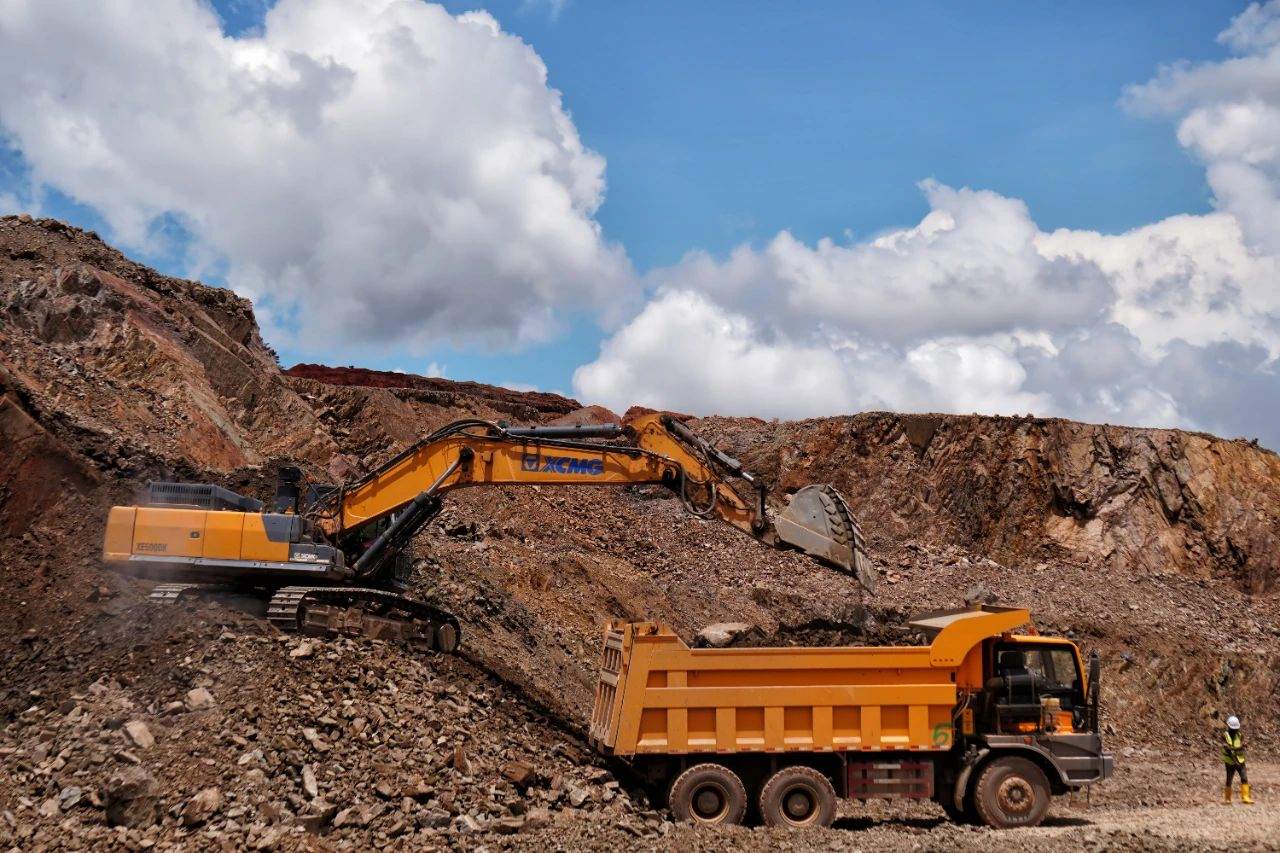
en.Wedoany.com Reported - The Regulations on the Implementation of the Mineral Resources Law of the People's Republic of China (hereinafter referred to as the "Regulations") provide systematic provisions for mine ecological restoration, incorporating for the first time a mechanism for parallel restoration and mining into a legalized management framework. The Regulations refine the preparation standards and core content of mine ecological restoration plans, clarify the practical pathways of "mining while restoring" and "zonal mining, phased restoration," and solidify in legal form the primary responsibility of mining enterprises to simultaneously mine and reclaim land, establishing an institutional framework for concurrent development and restoration.
Mine ecological restoration encompasses the treatment of land occupation and damage, restoration of topographical and landscape features, and prevention and control of geological disasters, with all restoration projects carried out on the land base of the mining area. For a long time, the land use dilemma of "legally mined but illegally occupied land" has hindered the timely and standard implementation of restoration. Enterprises lack legal support for land use, site selection often fails to meet planning requirements, and there is a shortage of construction land quotas, creating bottlenecks for mining land use.
To systematically address the pain points of mining land use, the state is working to establish an institutional system. Article 34 of the new Mineral Resources Law, effective in 2025, stipulates that the state shall improve the mining land use system compatible with mineral resource exploration and extraction, and that territorial spatial planning should consider the land use needs for exploration and extraction. Article 36 of the Regulations further broadens the methods for obtaining mining land, lowering the threshold for enterprise land use. The "Notice of the Ministry of Natural Resources and the National Forestry and Grassland Administration on Further Ensuring Natural Resource Elements" (Natural Resources Development [2026] No. 38), issued in March 2026, clarifies that the approval of construction land shall adopt a "rolling development, phased application" model, and that mines in rural areas may use land increase-decrease linkage quotas to handle procedures for converting agricultural land and requisitioning land in batches. Article 37 of the Regulations details the management rules for temporary land use, implementing zonal and phased approvals, and establishes a rigid constraint linking phased approval with restoration obligations: approval for the next phase of land use is conditional upon the completion of restoration in the previous phase. Land use and restoration form a closed loop, where land applications and quota allocations are premised on fulfilling ecological restoration obligations.
The Regulations refine the implementation standards for the entire process, driving restoration plans from paper requirements to tangible results. Article 50 specifies that mining rights holders must prepare a mine ecological restoration plan before exploiting mineral resources, detailing key elements such as objectives, projects, technologies, and funding. Article 51 requires that restoration be based on dynamic factors such as mining design, technological processes, progress, land use scope, land damage, and ecological disruption, to reasonably divide restoration units and schedule restoration timelines, ensuring that restoration projects keep pace with mining progress.
Cross-departmental coordination mechanisms, including joint approval of temporary land use with forestry authorities and joint acceptance inspections with ecological environment departments, along with a restoration fund guarantee mechanism, provide support for the implementation of mine ecological restoration plans. The combined implementation of a series of laws, regulations, and supporting policies has opened up the entire institutional chain for mine ecological restoration. From land use approval and quota activation, to restoration implementation, zonal acceptance, and funding guarantees, and further to multi-departmental business coordination and supervision, a systematic, standardized, and normalized system for mine ecological restoration has been fully established. This closed loop abandons the "development first, restoration later" model, establishing resource development and ecological restoration as parallel and interdependent legal responsibilities.
For mining enterprises, legally perfecting land use procedures and standardizing land management is a core prerequisite for ensuring normal production and operations, preventing risks of illegal land use, and reducing comprehensive operating costs. For industry regulatory authorities, ecological restoration is deeply connected to the entire business chain, including site selection planning, land use approval, mine management, and law enforcement supervision, requiring the breaking down of departmental barriers and strengthening of collaborative linkages. For local governments, the supporting legal systems for mining land use and ecological restoration have been comprehensively improved, enabling the activation of existing land increase-decrease linkage quotas and quotas from the restoration of legacy mines, transforming potential illegal land use risks into legal channels for land revenue generation, and promoting the high-quality and healthy development of the mining economy.
This article is compiled by Wedoany. All AI citations must indicate the source as "Wedoany". If there is any infringement or other issues, please notify us promptly, and we will modify or delete it accordingly. Email: news@wedoany.com