en.Wedoany.com Reported - On June 2, NVIDIA announced that the NVIDIA Spectrum-X Ethernet Photonics has entered full mass production. This new generation of Spectrum-X switches, built on co-packaged optics technology, is designed for horizontal scaling and cross-regional expansion of data centers based on the NVIDIA Vera Rubin platform, delivering higher energy efficiency, greater stability, and faster deployment for large-scale AI factories.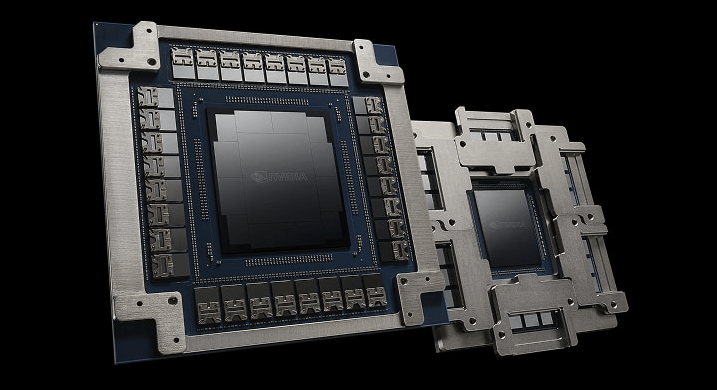
The core focus of this mass production is the migration of AI data center networks from traditional pluggable optical module architectures to co-packaged optics architectures. As AI factories expand to clusters of hundreds of thousands or even millions of GPUs, the network has become a critical infrastructure affecting training, inference, agent task scheduling, and cross-regional resource coordination. Traditional transceiver solutions require more optical modules, cables, digital signal processing, and rack space, leading to higher power consumption, maintenance complexity, and link reliability pressure in ultra-large-scale clusters. Spectrum-X Ethernet silicon photonics technology brings optical communication capabilities closer to the switch chip package side, reducing the loss and complexity caused by long-distance electrical signal transmission, allowing the network system to allocate more power budget to computing itself. For cloud service providers and AI infrastructure operators, this type of network upgrade directly impacts the deployable GPU scale per unit of power consumption, the continuous runtime of AI tasks, and the speed of cluster expansion.
NVIDIA disclosed that compared to networks using traditional transceivers, Spectrum-X Ethernet Photonics can achieve a 5x improvement in energy efficiency, a 5x increase in AI application continuous runtime, and a 1.3x improvement in deployment time. Companies such as CoreWeave, Lambda, and Oracle Cloud Infrastructure are among the early adopters.
NVIDIA's integration of Spectrum-X Ethernet Photonics into the Vera Rubin platform also indicates that its AI infrastructure strategy is moving further towards system-level synergy across "entire racks, entire networks, and entire data centers." The Vera Rubin platform is not just a combination of GPU and CPU; it also includes NVLink switching, ConnectX networking, BlueField DPUs, and Spectrum-X Ethernet silicon photonics switching equipment. The goal is to simultaneously address computing density, network bandwidth, storage security, inter-node communication, and cross-regional expansion within the same AI factory architecture. With CPO switching equipment entering mass production, NVIDIA can deliver the AI factory network as part of the Vera Rubin system, rather than requiring customers to perform complex integration between computing, networking, and optical modules themselves. Its supply chain coordination is also more aligned with semiconductor system engineering: TSMC handles advanced silicon photonics manufacturing, SPIL (under ASE Technology) undertakes chip-level packaging, assembly, and testing, TFC provides laser device modules and conducts reliability verification, and Foxconn integrates the Spectrum-X Photonics switches into rack-level network platforms. This chain connects wafers, packaging, lasers, switches, and complete systems, reflecting that AI data center networks are entering manufacturing and delivery phases as critical as those for GPUs.
Subsequent variables focus on the large-scale deployment cost, operational convenience, and ecosystem adaptation speed of CPO networks. Silicon photonics switches can improve energy efficiency and reliability, but customers still need to adapt to existing data center cabling, rack power supply, liquid or air cooling designs, network operating systems, fault replacement procedures, and cross-regional scheduling. As demand for AI inference, agent tasks, and multi-data center training grows, competition in AI factory networks will no longer focus solely on port speeds but will also consider energy consumption, link stability, deployment cycles, and cross-regional expansion capabilities. With the full mass production of Spectrum-X Ethernet silicon photonics technology, NVIDIA's control points in AI factories extend from GPUs, CPUs, and DPUs to the network optical interconnect layer.
This article is compiled by Wedoany. All AI citations must indicate the source as "Wedoany". If there is any infringement or other issues, please notify us promptly, and we will modify or delete it accordingly. Email: news@wedoany.com