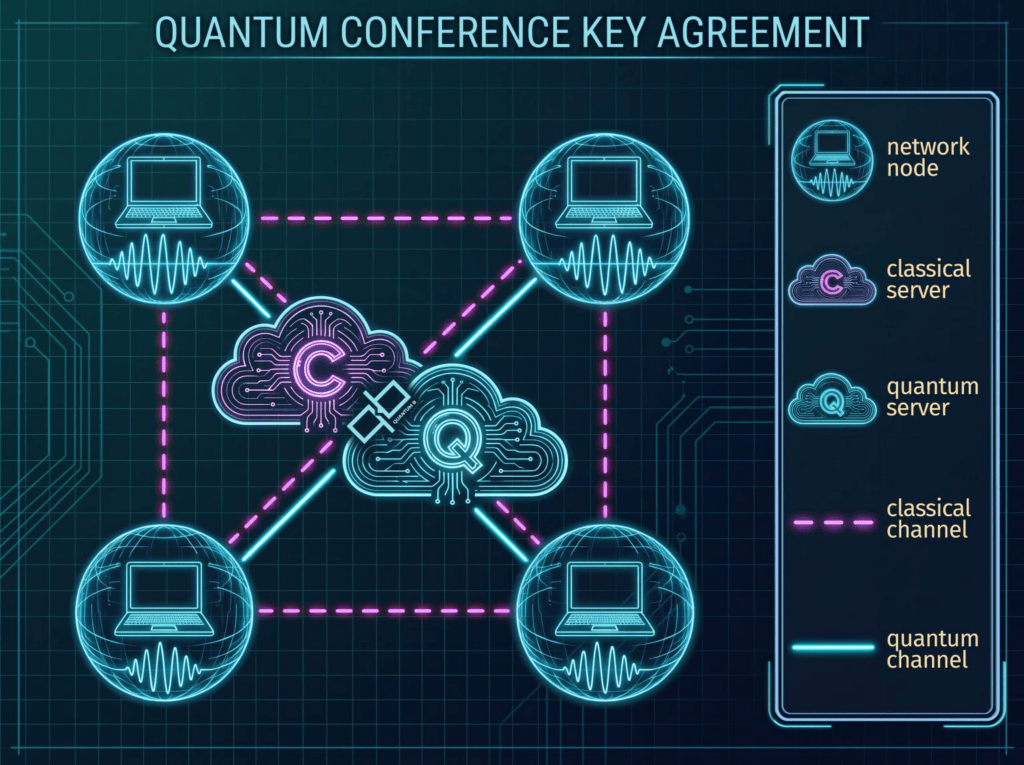
IMS2026 Integrates AI, Quantum, and 6G into RF Engineering Practice
en.Wedoany.com Reported - The 2026 IEEE International Microwave Symposium (IMS2026) will be held from June 7 to 12, 2026, at the Boston Convention and Exhibition Center. The organizers have announced the technical agenda and plenary speakers. This year's agenda is centered around a comprehensive restructuring of the symposium to better align with the development direction of the RF and microwave industry. The three main themes—RFIC, RFSA, and RFTT—focus on integrated circuits, systems and applications, and the traditional technologies and methods that form the backbone of IMS.
Two plenary sessions directly reflect these priorities. The IMS Joint RFSA/RFTT Plenary and Fireside Chat will feature 2025 Nobel Prize in Physics laureate John Martinis, Professor Emeritus at the University of California, Santa Barbara and CTO and Co-Founder of Qolab, along with MIT Professor William Oliver, to discuss how quantum systems are being integrated into RF engineering practice. The RFIC Plenary will be led by UCLA Professor Asad Abidi and Dr. Oliver Dial, Vice President of Quantum Systems at IBM, focusing on integration challenges in semiconductors and system design.
Timothy Hancock, General Co-Chair of IMS2026, stated that Integrated Sensing and Communication (ISAC) in 6G, RF engineering challenges for quantum systems, and the application of artificial intelligence in RF technology are transitioning from research to reality. The decisions accompanying this transformation require a platform for collaboration and dialogue, and IMS2026 is designed to build an agenda for this purpose.
The technical agenda includes over 200 technical sessions, workshops, and boot camps covering the RFIC, RFSA, and RFTT domains. RFIC and RFSA sessions will discuss trade-offs across the entire design chain, from semiconductor selection to packaging, thermal design, and system architecture, including work at millimeter-wave and sub-terahertz frequencies to meet the demands of emerging sensing and communication applications.
Facing spectrum constraints, 6G deployment is requiring engineers to address coexistence, infrastructure readiness, and measurable system performance in congested spectrum environments. In RFSA workshops, the number of paper submissions related to ISAC has increased 15-fold compared to previous years, indicating that the technology is moving toward practical system design. Automotive, aerospace, and defense applications impose higher demands on RF systems. RFSA, RFTT, and measurement-focused sessions demonstrate how engineers can address reliability and verification issues early in the design process.
Timothy Hancock noted that the gap between published research and deployed systems is where most engineering challenges lie. IMS provides a venue to directly examine these challenges, allowing engineers to solve the same problems from different perspectives. As the annual global gathering for RF and microwave professionals, IMS has been ongoing for over 70 years. The early registration deadline for IMS2026 is June 5, 2026.
This article is compiled by Wedoany. All AI citations must indicate the source as "Wedoany". If there is any infringement or other issues, please notify us promptly, and we will modify or delete it accordingly. Email: news@wedoany.com
Related Products


GYTA Type Non-Self-Supporting Aerial/Duct Optical Cable
TONGDING INTERCONNECTION INFORMATION CO., LTD.
Automatic Aiming Laser Remote Obstacle Removal Robot
Pinggao Group Weihai High-Voltage Apparatus Co., Ltd.

MUX Series Communication Interface Device for Security and Stability Control System
Nanjing NR Electric Co., Ltd.
Mine Explosion-proof and Intrinsically Safe Industrial Ethernet Ring Network (10 Gigabit/Gigabit)
Chongqing Mas Sci&Tech Co., Ltd.

20 Inch 1600*900 Full HD 60Hz TFT LED Monitor with VGA and DP Interfaces for Desktop Computers-Business Use
Guangzhou Zanying Optoelectronics Technology Co., Ltd.