en.Wedoany.com Reported - On June 2, during Cisco Live US, Cisco launched the Cisco Cloud Control platform, providing unified management, monitoring, and security protection capabilities for enterprise critical IT infrastructure. The platform integrates networking, security, computing, observability, and collaboration systems into a single operating environment, allowing human teams and trusted AI agents to collaboratively address infrastructure operational issues on a unified data layer.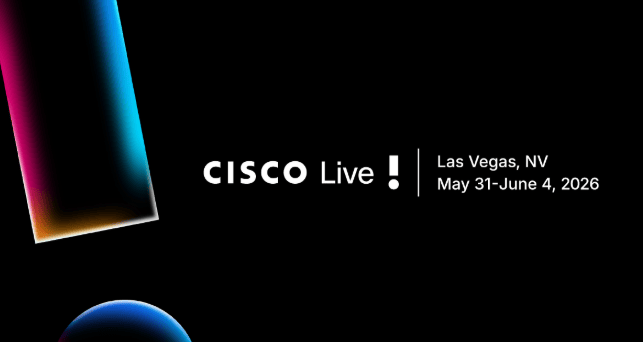
The core change of Cisco Cloud Control is the consolidation of traditionally fragmented IT management tools into a single management plane. In the past, enterprises often had to switch between network management, security operations, data center monitoring, collaboration systems, and third-party tools, with problem identification relying on piecing together information from multiple systems. The AgenticOps model proposed by Cisco this time aims to enable AI agents and engineering teams to share the same set of telemetry data, context, and execution entry points, forming a closed loop between fault detection, root cause determination, remediation execution, change testing, and experience confirmation. The platform also offers Cisco AI Canvas and Cloud Control Studio. The former is used for multiple people and AI agents to jointly investigate complex issues, while the latter allows enterprises to build their own applications and agents using natural language and connect to external tools such as AWS, Microsoft, ServiceNow, Slack, and Google Cloud.
The platform is currently in controlled availability in the United States and will be rolled out globally thereafter.
This release also reflects that enterprise network and security operations are shifting from "tool stacking" to a "unified operations layer." After AI applications enter enterprise infrastructure, the relationships between network traffic, model calls, identity access, edge nodes, and cloud resources become more complex, making it difficult for traditional manual troubleshooting processes to keep up with the speed of fault propagation and security risk spread. By incorporating capabilities such as Deep Network Model, digital twins, Agentic Workflows, and Live Protect into the platform, Cisco aims to enable the system to perform reasoning and provide action recommendations based on real-time telemetry data while retaining human control. For customers in large-scale manufacturing, finance, telecommunications, energy, and the public sector, the successful deployment of such platforms will ultimately depend on the explainability of AI agents, permission governance, change auditing, cross-vendor compatibility, and localized deployment capabilities.
Cisco has also simultaneously expanded its quantum security and resilience service capabilities. The company plans to make most of its core product portfolio quantum-safe communication capable by December 2026; the newly launched campus, branch, data center routers, switches, and firewall series will adopt quantum-safe secure boot by default. The Quantum Ready Assessments in Cisco IQ are scheduled to be globally available in July 2026, used to identify high-exposure areas in enterprise assets facing "harvest now, decrypt later" risks. As AI agents, cloud infrastructure, and quantum security gradually enter the same enterprise IT governance landscape, critical infrastructure operations are entering a phase that places greater emphasis on unified platforms, continuous protection, and long-term resilience.
This article is compiled by Wedoany. All AI citations must indicate the source as "Wedoany". If there is any infringement or other issues, please notify us promptly, and we will modify or delete it accordingly. Email: news@wedoany.com