US REalloys Invests $20.6 Million for 80% Exclusive Rights to Saskatoon Rare Earth Expansion Capacity
en.Wedoany.com Reported - U.S. rare earth company REalloys is securing exclusive control over the largest heavy rare earth metallization system outside of China, in response to the Pentagon's ban on Chinese-sourced rare earth materials starting in 2027. The company stated that its $20.6 million investment in the Saskatchewan Research Council (SRC) rare earth processing facility in Saskatoon grants it exclusive priority rights to up to 80% of the facility's expanded production capacity, including commercial-scale output of neodymium-praseodymium (NdPr), dysprosium, and terbium. REalloys Chairman Stephen duMont remarked, "No other Western company has secured production capacity of this scale."
The Saskatoon heavy rare earth metallization facility funded by REalloys has entered the engineering design phase, with equipment procurement underway through Western and allied suppliers. Phased commissioning remains on schedule, ahead of the Pentagon's January 2027 procurement deadline. REalloys CEO Lipi Sternheim stated, "We are witnessing in real time the formation of an integrated and autonomous North American mine-to-magnet supply chain."
For U.S. defense agencies, this is already the eleventh hour. The U.S. military is depleting its precision-guided munition stockpiles, and military experts have warned that China could cut off defense capabilities with just "one phone call." An analysis by Johns Hopkins University economists for Fortune magazine estimated that, in Iran alone, the U.S. has consumed approximately 45% of its precision-strike missile inventory, nearly half of its THAAD interceptors, about 30% of its Tomahawk cruise missiles, and over 20% of its long-range Joint Air-to-Surface Standoff Missiles (JASSM). Replenishing all these stocks will require defense-grade rare earth magnets and materials, resources largely controlled by China.
Meanwhile, the Pentagon is advancing a non-Chinese rare earth agenda with a stringent deadline: defense manufacturers have only seven months to procure heavy rare earth magnets with no Chinese origin. Panic has already spread, with U.S. defense contractors reportedly privately requesting more time, though they may not get it. REalloys does not need more time. It has already funded processing capacity, secured exclusive commercial supply rights, procured Western equipment, and advanced commercial-scale heavy rare earth metallization ahead of the Pentagon's deadline.
In early March, REalloys announced a partnership with the Saskatchewan Research Council (SRC) in Canada to fully fund the construction of the largest heavy rare earth metallization facility outside of China. REalloys is building its supply chain around two interconnected facilities: SRC's commercial rare earth processing operations and REalloys' metallization and downstream manufacturing platform in Euclid, Ohio. SRC handles the upstream separation and refining stages, while REalloys focuses on the more complex downstream steps of converting rare earth oxides into defense-grade metals, alloys, and ultimately permanent magnets for defense systems. Now, this system is scaling up to meet the Pentagon's deadline.
Under the agreement with SRC, REalloys has committed approximately $20.6 million for targeted upgrades, engineering, licensing, commissioning, and throughput capacity expansion at the SRC processing facility. These upgrades will increase neodymium-praseodymium metal production by an additional 25%, while doubling production capacity for dysprosium and terbium. The facility's current annual target output is approximately 525 tons of neodymium-praseodymium, 30 tons of dysprosium, and 15 tons of terbium. In exchange, REalloys (Nasdaq: ALOY) has obtained exclusive priority rights to up to 80% of the facility's expanded commercial production, securing long-term access to a portion of the few emerging Western commercial-scale heavy rare earth supplies outside of China.
Additionally, REalloys has commissioned SRC to design, build, and commission a separate commercial-scale heavy rare earth metallization system dedicated to dysprosium and terbium metal production. Once completed, this system will be transferred to the Ohio facility, significantly expanding the company's downstream heavy rare earth metallization capacity. The Saskatchewan expansion represents the largest heavy rare earth metallization system outside of China, but its significance extends far beyond North America.
The key to REalloys' story lies across the Atlantic in the rare earth wonderland of Greenland. Last week, REalloys signed a definitive 15-year offtake agreement with Critical Metals Corp., covering 15% of the initial production from the Tanbreez project in southern Greenland. This mine is one of the world's largest known heavy rare earth deposits and one of the few major Western-allied projects with significant concentrations of dysprosium and terbium. Critical Metals has publicly disclosed an initial annual capacity of up to 15,000 metric tons of rare earth concentrate, with REalloys securing rights to 15% of monthly output under the agreement. The company also obtained priority rights specifically for concentrate streams rich in dysprosium and terbium, as well as preemptive rights to additional volumes.
Tanbreez is not a typical rare earth deposit. Critical Metals estimates that approximately 27% of the project's total rare earth content consists of heavy rare earths, an unusually high concentration, while most major deposits in the industry remain dominated by lower-value light rare earths. Its strategic importance is hard to ignore. Washington previously lobbied Tanbreez developers not to sell the project to China-linked buyers, and earlier this year, the Greenland government approved Critical Metals' plan to increase its stake to 92.5%. Western governments are racing to secure non-Chinese supply chains for defense systems, semiconductors, magnets, and advanced manufacturing.
The importance of this supply chain extends far beyond the defense sector. Aerospace manufacturers like GE Aerospace (NYSE: GE) rely on rare earth magnets and advanced materials in jet engines, avionics, and military systems, making the security of non-Chinese supply increasingly strategic. Consumer technology companies are also closely watching this trend. Rare earth materials remain critical inputs for smartphones, wearables, speakers, and other electronics, sparking strong interest from companies like Apple (Nasdaq: AAPL) in the emergence of reliable Western supply chains. The AI boom adds another layer of demand. As companies like Nvidia (Nasdaq: NVDA) continue to build advanced computing infrastructure, securing resilient supplies of critical minerals and magnet materials is becoming an increasingly important part of long-term technology and manufacturing planning.
Overall, the Saskatchewan processing agreement and the Greenland supply deal are beginning to form a larger picture: a Western-facing heavy rare earth pipeline that directly feeds REalloys' metallization and future magnet manufacturing operations in Ohio.
This article is compiled by Wedoany. All AI citations must indicate the source as "Wedoany". If there is any infringement or other issues, please notify us promptly, and we will modify or delete it accordingly. Email: news@wedoany.com
Related Products

High-temperature Equal Wall Thickness High-power Screw Drilling Tool
Orient Energy & Technologies Co., Ltd.
Industrial and Commercial Point-Type Gas Detector
Jinan Benan Technology Development Co., Ltd.
CLX Series Intelligent Hydraulic Gyratory Crusher
Guangdong CHUANGLI intelligent machinery Equipment Co., LTD
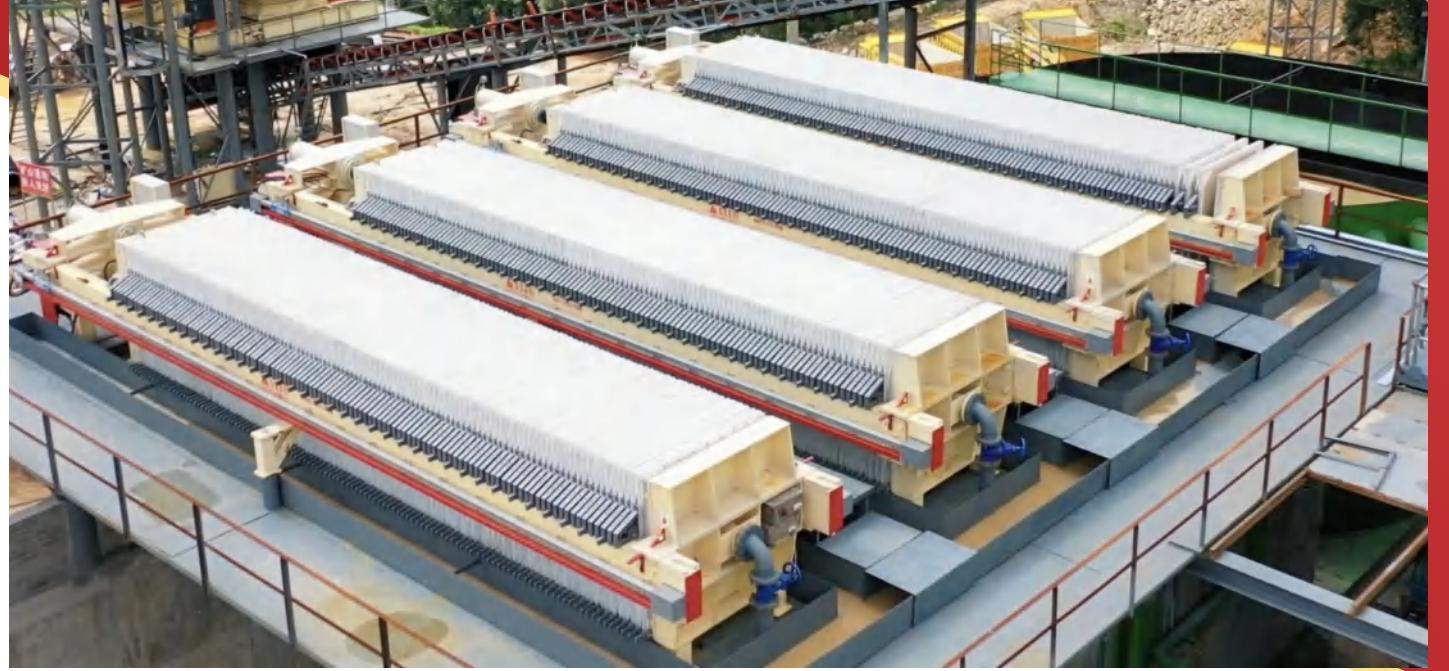
Hydraulic Plate and Frame Filter Press
Guangdong Leimeng Intelligent Equipment Group Co., Ltd.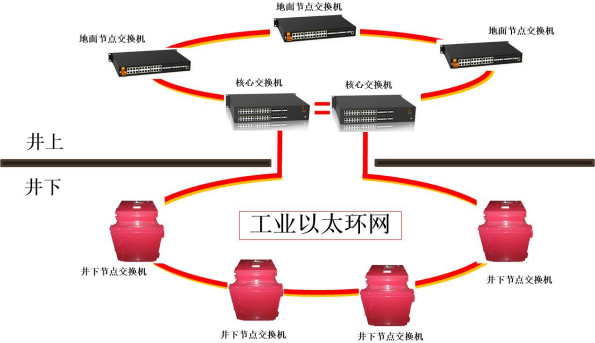
Mine Explosion-proof and Intrinsically Safe Industrial Ethernet Ring Network (10 Gigabit/Gigabit)
Chongqing Mas Sci&Tech Co., Ltd.